
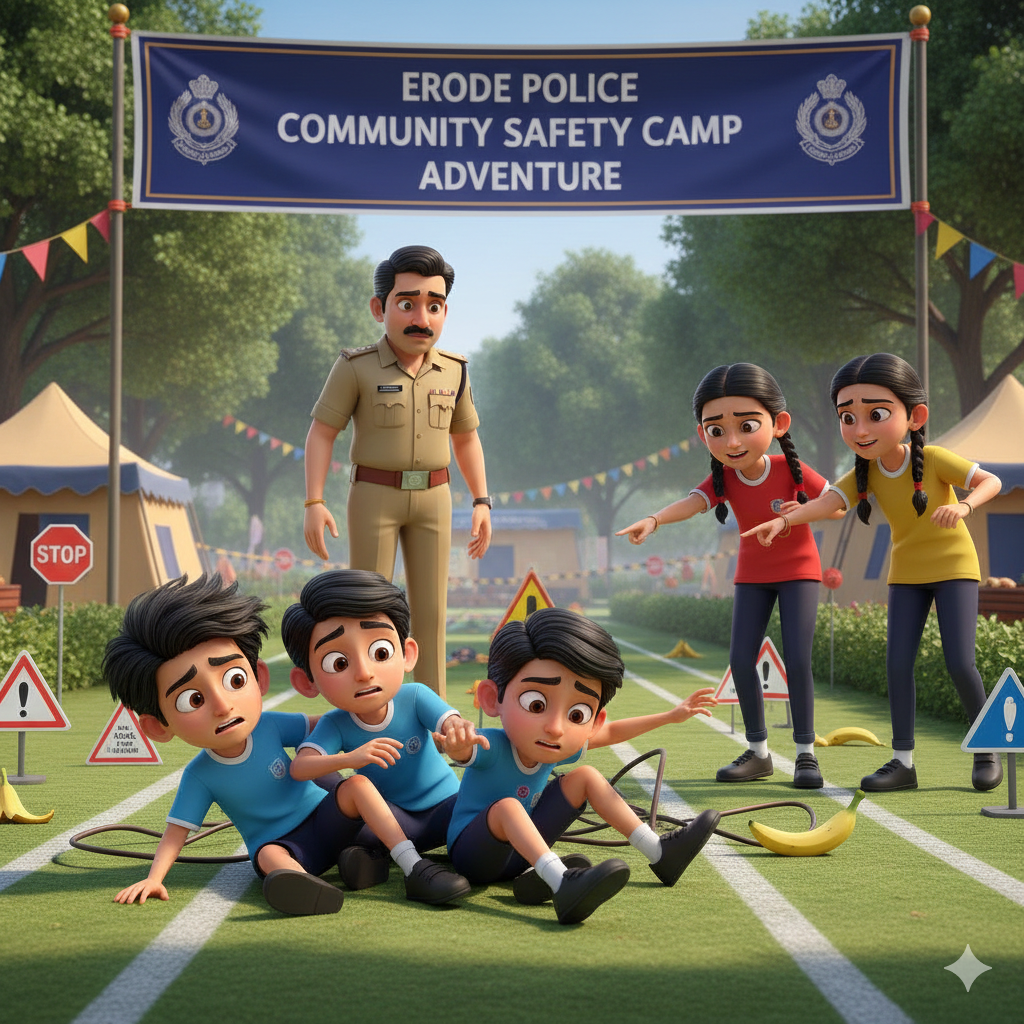
In a bustling Erode police station, 14-year-old Karthik tagged along with his dad, Inspector Suresh, during school holidays. Karthik rushed into games without planning, like biking fast without brakes. At the community safety camp adventure—a obstacle race with safety puzzles—his team dashed ahead but tripped on “hidden dangers” like fake wires. They lost badly. Classmate Priya’s team won by checking ahead.
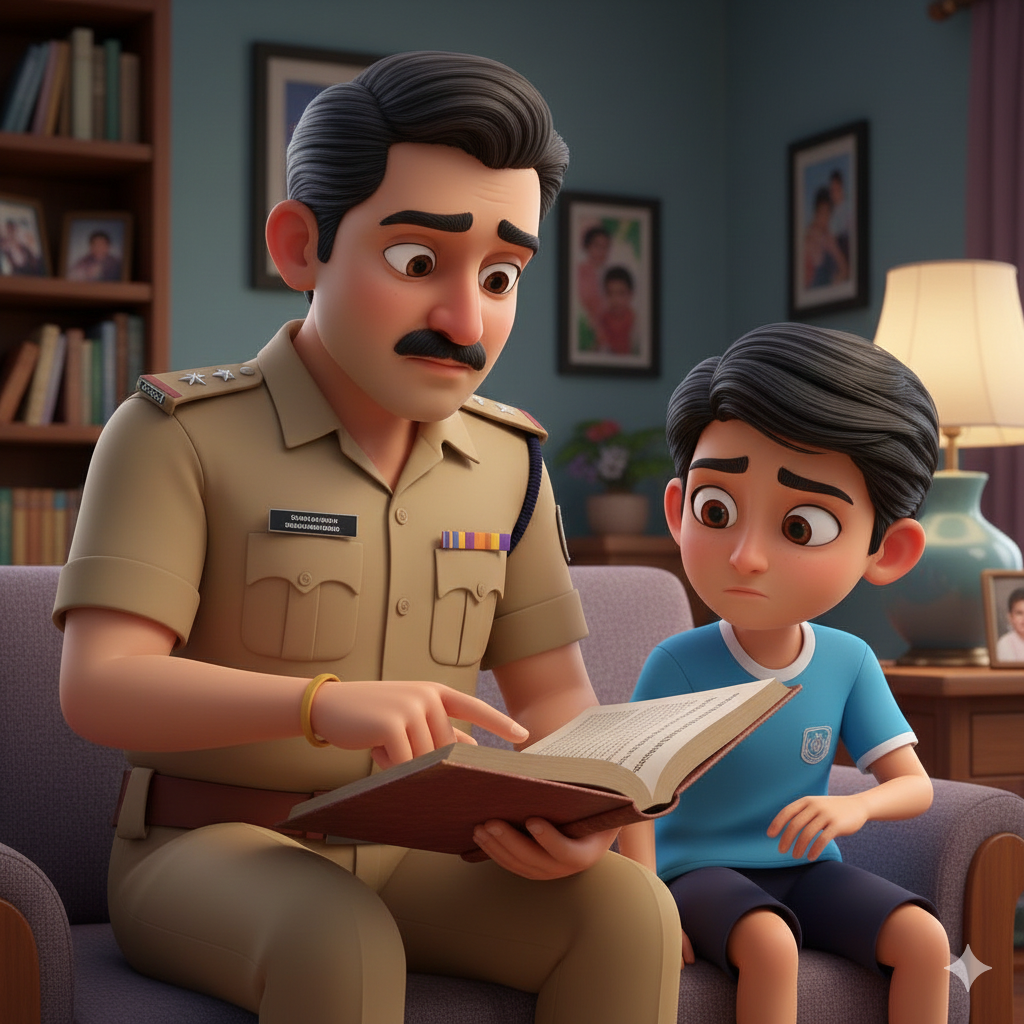
Inspector Suresh shared a vital Tamil Kural that evening:
Etiratāk kākkum aṟiviṉārk killai
Atira varuvadōṉ nōy.
எதிரதாக் காக்கும் அறிவினார்க் கில்லை
அதிர வருவதோர் நோய்.
“Karthik, the wise foresee and prevent harm—no illness strikes the prepared. Think ahead to stay safe!”
Karthik applied it next day. Storm clouds gathered mid-race; others panicked, slipping on wet paths. Karthik spotted risks: muddy spots, loose ropes. He warned, rerouted safely using dad’s safety tips, and built quick bridges from sticks. His team zipped through puzzles—spotting “fire hazards,” tying secure knots—finishing first! Everyone safe and victorious.

Dad clapped: “Your foresight saved the day—true wisdom!” Karthik stood tall, a planner for life.
Moral
There is no harm that comes unexpectedly to those who foresee and guard against it with knowledge.
Let’s read the same story in Tamil..
முன்னறிவு தீமைகளைத் தடுக்கும்
ஈரோட்டில் பரபரப்பாக இயங்கும் ஒரு காவல் நிலையத்தில் 12 வயது கார்த்திக் தனது தந்தை இன்ஸ்பெக்டர் சுரேஷுடன் பள்ளி விடுமுறையில் சில நாட்கள் கழித்தான். கார்த்திக்குக்கு ஒரு பழக்கம் இருந்தது. எதையும் முன்கூட்டியே யோசிக்காமல் உடனே செய்து விடுவான். சைக்கிள் ஓட்டும்போதும் கூட வேகமாக ஓடுவான்; ஆனால் பிரேக் சரியாக இருக்கிறதா என்று பார்க்க மாட்டான்.
ஒருநாள் ஊரில் “சமூக பாதுகாப்பு முகாம்” நடத்தப்பட்டது. அதில் மாணவர்களுக்காக சுவாரஸ்யமான தடைகள் நிறைந்த ஓட்டப் போட்டியும், பாதுகாப்பு புதிர்களும் இருந்தன. கார்த்திக் தனது அணியுடன் போட்டியில் கலந்து கொண்டான்.
போட்டி தொடங்கியவுடன் கார்த்திக் அணி வேகமாக ஓடத் தொடங்கியது. ஆனால் வழியில் “மறைந்த அபாயங்கள்” இருந்தன. போலியான மின்கம்பிகள், வழுக்கலான பாதைகள் போன்றவற்றை கவனிக்காமல் அவர்கள் அவசரமாக ஓடியதால் தடுமாறினர். இறுதியில் அவர்கள் தோல்வியடைந்தார்கள்.
அதே நேரத்தில், பிரியா தலைமையிலான அணி ஒவ்வொரு தடையையும் முன்கூட்டியே பார்த்து கவனமாகச் சென்றதால் வெற்றி பெற்றது.
அன்று மாலை இன்ஸ்பெக்டர் சுரேஷ் கார்த்திக்கிடம் ஒரு திருக்குறளைச் சொன்னார்:
எதிரதாக் காக்கும் அறிவினார்க் கில்லை
அதிர வருவதோர் நோய்.
பின்னர் அவர் விளக்கினார்:
“கார்த்திக், முன்கூட்டியே யோசித்து அபாயத்தைத் தடுக்கிறவர்களுக்கு எதிர்பாராத தீங்கு வராது. அதுதான் உண்மையான அறிவு.”
அந்த வார்த்தைகள் கார்த்திக்குப் பெரிய பாடமாக அமைந்தது.
அடுத்த நாள் போட்டியின் இறுதி சுற்று தொடங்கியது. அப்போது திடீரென கருமேகங்கள் திரண்டு மழை பெய்யத் தொடங்கியது. பாதைகள் வழுக்கலாகின. பல மாணவர்கள் பதற்றத்தில் தவறி விழத் தொடங்கினர்.
ஆனால் கார்த்திக் அமைதியாகச் சுற்றி பார்த்தான். எங்கு சேறு இருக்கிறது, எங்கு கயிறு தளர்ந்து இருக்கிறது என்று முன்கூட்டியே கவனித்தான். தந்தையிடம் கற்ற பாதுகாப்பு முறைகளை நினைத்துக் கொண்டு தனது அணியினருக்கு எச்சரிக்கை செய்தான்.
சில இடங்களில் குச்சிகளை வைத்து சிறிய பாலம் போல் அமைத்தான். பாதுகாப்பாக வழியை மாற்றி தனது அணியை வழிநடத்தினான். “தீ அபாயம்” போன்ற புதிர்களையும் சரியாக கண்டுபிடித்து, கயிறுகளை உறுதியாகக் கட்டினர்.
அவர்களின் அணி வேகமாகவும் பாதுகாப்பாகவும் அனைத்து சவால்களையும் கடந்து முதல் இடத்தைப் பெற்றது.
இன்ஸ்பெக்டர் சுரேஷ் மகிழ்ச்சியுடன் கைத்தட்டினார்.
“முன்னெச்சரிக்கையுடன் யோசித்ததால்தான் இன்று நீ வெற்றி பெற்றாய்,” என்றார்.
கார்த்திக் பெருமையுடன் சிரித்தான். அந்த நாளிலிருந்து எந்த செயலும் செய்யும் முன் யோசித்து செயல்பட வேண்டும் என்று முடிவு செய்தான்.
நீதி:
முன்கூட்டியே அபாயத்தை உணர்ந்து அதைத் தடுக்கிறவர்களுக்கு
எதிர்பாராத தீங்கு
எதுவும் வராது.
எழுத்துப்பிரதி
Etiratāk kākkum aṟiviṉārk killai
atira varuvadōṉ nōy.
மூலத் தமிழ்
எதிரதாக் காக்கும் அறிவினார்க் கில்லை
அதிர வருவதோர் நோய்.
Breaking it down
- எதிரதாக் (Etiratāk) – எதிர்கால தீமைகளை (Future harms, accusative), anticipated dangers.
- காக்கும் (Kākkum) – காப்பது (Protecting), guarding action.
- அறிவினார்க் (Aṟiviṉārk) – அறிவுடையவர்களுக்கு (To the knowledgeable, dative), wise people.
- கில்லை (Killai) – இல்லை (There is no), negation of existence.
- அதிர (Atira) – திடீர் (Sudden/unexpected), startling arrival.
- வருவதோர் (Varuvadōṉ) – வருவது (That which comes, relative), approaching calamity.
- நோய் (Nōy) – நோய்/தீமை (Disease/harm), misfortune or illness.
Trivia
- நோய் (Nōy) from Proto-Dravidian *nōy “sickness”; prominent in Sangam medical poems (c. 200 BCE), still core Tamil for “disease,” retained in Tulu as “nōyi” for ailment.
- Aligns with Seneca (Stoic, c. 50 CE): “Foresight is the safeguard of life—prepare for ills before they strike,” mirroring Valluvar’s proactive wisdom.
This bilingual story from ancient Tamil wisdom makes timeless life lessons accessible to readers worldwide — whether you’re discovering these universal truths for the first time, or sharing the beauty of your Tamil heritage with friends from any culture. Reading both English and Tamil versions side by side helps build language confidence, cultural connection, and a lifelong love for meaningful stories — perfect for classrooms, families, and friends around the globe.
Record your kid telling this story and the Kural, we will host it on our youtube page
<Youtube link>