
In a busy Coimbatore neighborhood, 12-year-old Dhanush joined his school’s debate club, led by strict teacher Ms. Indira. He loved arguing but always pointed out others’ flaws first. During the inter-school debate adventure—a city-wide contest on “Save the Environment”—his teammate Riya stammered on facts, and opponent team whispered cheats. Dhanush snapped, “Riya, you’re messing up again! Those guys are sneaky cheaters!” The team lost focus, and they bombed the first round.
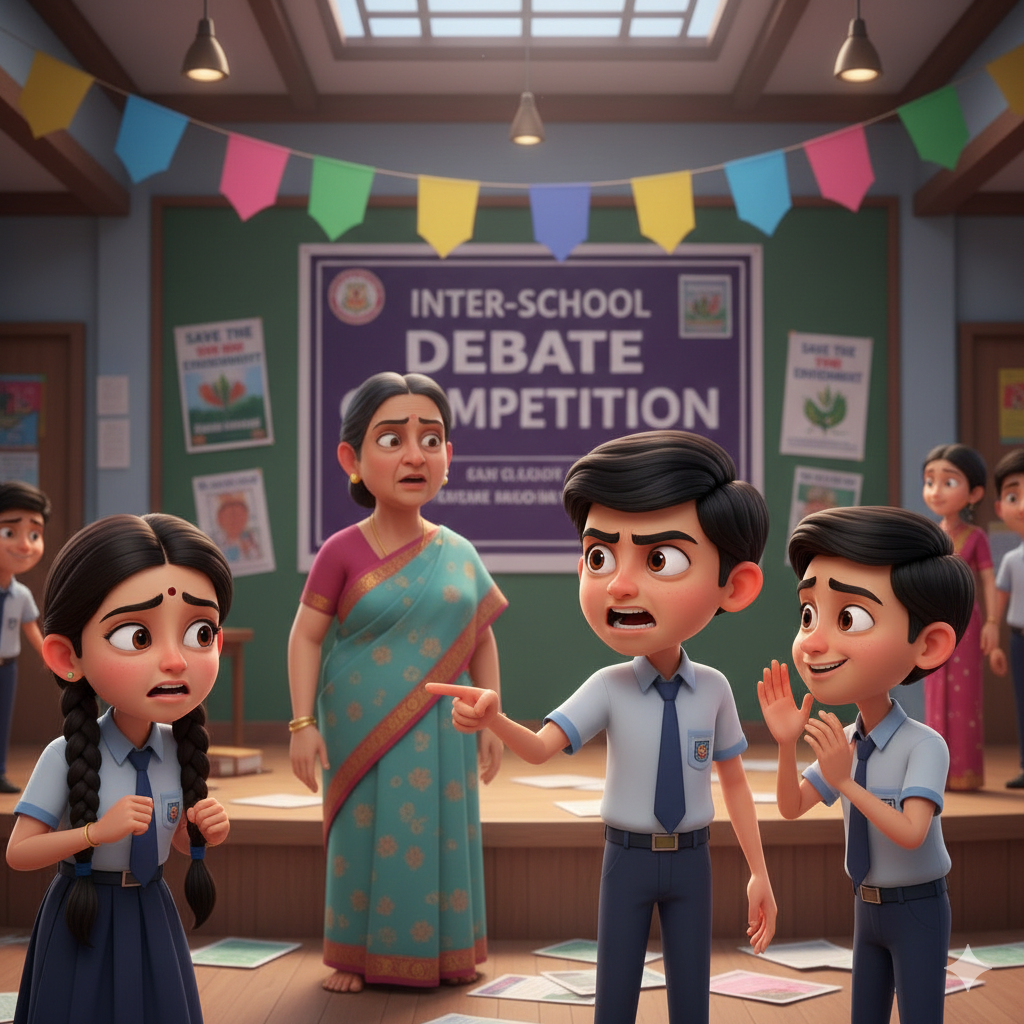
Hurt but honest, Ms. Indira pulled him aside. She recited an ancient Tamil Kural:
Taṉkuṟṟam nīkkip piṟarkuṟṟaṅ kāṇkiṟkippiṉ
Eṉkuṟṟam ākum iṟaikkū.
தன்குற்றம் நீக்கிப் பிறர்குற்றங் காண்கிறபின்
என்குற்றம் ஆகும் இறைக்கு.
“This Kural says, Dhanush: Remove your own faults before spotting others’. If not, it becomes your fault in God’s eyes. Self-check first!”
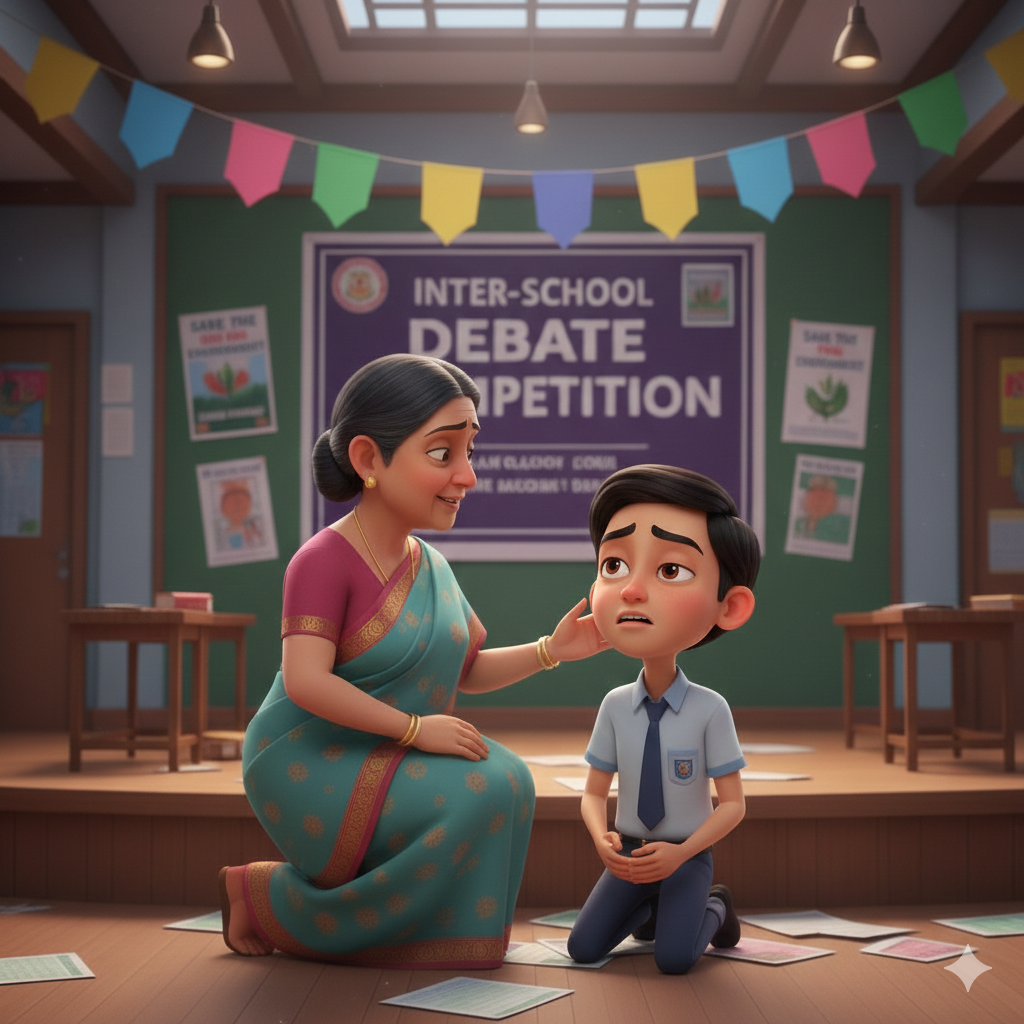
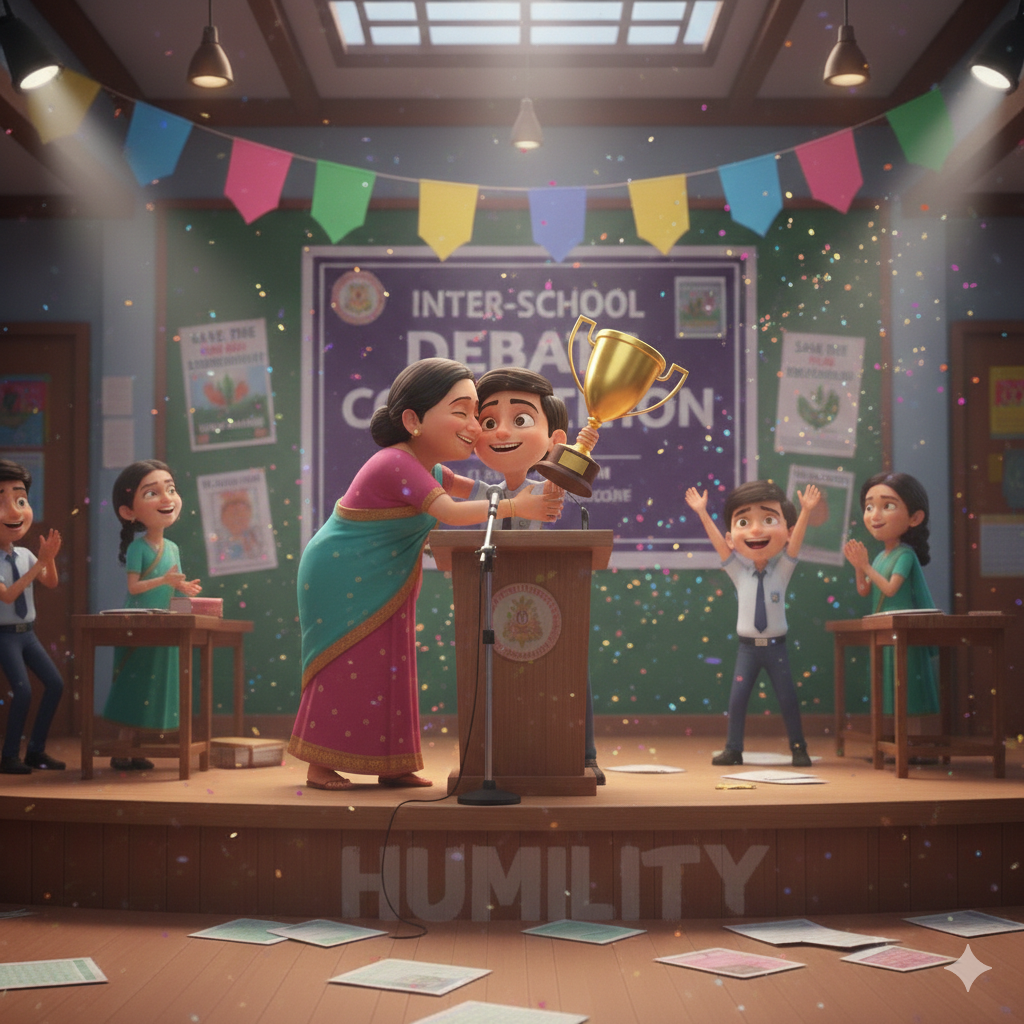
Dhanush embraced the lesson. In the wildcard rematch, chaos struck: mics failed, lights flickered. Instead of blaming Riya’s nerves, he realized his loud voice drowned her out! He fixed it—spoke softer, passed notes smoothly, and prepped cheat-proof facts. “My mistake first—now we’re unstoppable!” Riya shone with confidence, the team countered opponents calmly, and they won the finals amid cheers! Judges praised their unity.
Ms. Indira hugged him: “Perfect, Dhanush! Fixing yourself united everyone.” Dhanush glowed, ready to lead with humility.
Moral
If you see others’ faults after removing your own, that becomes your fault before God.
Let’s read the same story in Tamil..
தவறை உணர்ந்த தருணம்
கோயம்புத்தூரின் பரபரப்பான ஒரு குடியிருப்பு பகுதியில் 12 வயது தனுஷ் வாழ்ந்து வந்தான். பள்ளியில் நடைபெறும் விவாதக் கழகத்தில் அவன்
மிகவும் ஆர்வமாகச் சேர்ந்திருந்தான். அந்தக் கழகத்தை கடுமையான
ஒழுக்கத்துடன் நடத்திவந்தார் இந்திரா மேடம்.
தனுஷுக்கு பேசும் திறன் நல்லதுதான். ஆனால் ஒரு பழக்கம் இருந்தது —
மற்றவர்கள் தவறு செய்தால் உடனே சுட்டிக்காட்டி கண்டிப்பது. தன்னுடைய தவறுகளைப் பற்றி அவன் சிந்தித்ததே இல்லை.
ஒருநாள் நகரம் முழுவதும் பள்ளிகள் கலந்து கொள்ளும் “சுற்றுச்சூழலை
காப்போம்” என்ற தலைப்பில் பெரிய விவாதப் போட்டி அறிவிக்கப்பட்டது.
தனுஷ், ரியா, அரவிந்த் ஆகியோர் பள்ளியை பிரதிநிதித்துவப்படுத்தினர்.
முதல் சுற்றில் பேசும்போது ரியா சில தகவல்களைச் சொல்லும்போது
தடுமாறினாள். உடனே தனுஷ் சினந்தான்.
“ரியா, நீ எப்போதும் இப்படித்தான்! சரியாகப் பேச முடியாதா?” என்று அவன் கோபமாகச் சொன்னான்.
அதை கேட்ட ரியா இன்னும் பதட்டமடைந்தாள். குழுவில் குழப்பம் ஏற்பட்டது. எதிர் அணியினர் அமைதியாக பேசிக் கொண்டே முன்னேறினர். இறுதியில் அந்த சுற்றில் தனுஷ் குழு தோல்வியடைந்தது.
போட்டி முடிந்த பிறகு இந்திரா மேடம் தனுஷை அழைத்தார். அமைதியாக
அவர் ஒரு திருக்குறளை சொன்னார்:
தன்குற்றம் நீக்கிப் பிறர்குற்றங் காண்கிற்பின்
என்குற்றம் ஆகும் இறைக்கு.
பின்னர் மெதுவாக விளக்கினார்.
“தனுஷ், முதலில் நம்முடைய தவறுகளை சரி செய்ய வேண்டும். பிறகு தான் மற்றவர்களின் குறையை சொல்லலாம். இல்லையென்றால் அது நம்முடைய தவறாகவே ஆகிவிடும்.”
அந்த வார்த்தைகள் தனுஷின் மனதில் ஆழமாக பதிந்தன.
“நான்தான் ரியாவை பதட்டப்படுத்திவிட்டேன்…” என்று அவன் உணர்ந்தான்.
அடுத்த சுற்றில் எதிர்பாராத சிக்கல் ஏற்பட்டது. மைக் சரியாக வேலை
செய்யவில்லை. பலரும் பதட்டமடைந்தனர். இந்த முறை தனுஷ் அமைதியாக இருந்தான்.
“ரியா, கவலைப்படாதே. நம்மால் முடியும். நீ பேசு… நான் குறிப்புகளை
உதவுகிறேன்,” என்றான்.
அவன் மெதுவாக பேசினான். ரியாவுக்கு துணைநின்றான். குழுவில்
ஒற்றுமை உருவானது. ரியா தன்னம்பிக்கையுடன் பேசினாள். அவர்களின்
அணியின் வாதங்கள் மிகவும் தெளிவாக இருந்தன.
இறுதியில், அந்தப் போட்டியில் தனுஷ் குழுவே வெற்றி பெற்றது. மேடையில் பரிசு வாங்கும்போது இந்திரா மேடம் சிரித்தார்.
“தனுஷ், இன்று நீ பெரிய பாடம் கற்றுக்கொண்டாய். முதலில் தன்னைச் சரிசெய்தால் எல்லாம் சரியாகிவிடும்,” என்றார்.
தனுஷ் மகிழ்ச்சியாக சிரித்தான். அந்த நாளிலிருந்து, மற்றவர்களின்
குறையைச் சொல்லும் முன் தன்னையே முதலில் பார்ப்பது அவன் பழக்கமாகிவிட்டது.
நீதி:
முதலில் தன் தவறை உணர்ந்து திருத்திக்
கொண்டால் தான் உண்மையான
முன்னேற்றம் கிடைக்கும்.
எழுத்துப்பிரதி
Taṉkuṟṟam nīkkip piṟarkuṟṟaṅ kāṇkiṟkippiṉ
eṉkuṟṟam ākum iṟaikkū.
மூலத் தமிழ்
தன்குற்றம் நீக்கிப் பிறர்குற்றங் காண்கிற்பின்
என்குற்றம் ஆகும் இறைக்கு.
Breaking it down
- தன் (Taṉ) – தனது (One’s own), personal possession.
- குற்றம் (Kuṟṟam) – தவறு (Fault), moral wrongdoing.
- நீக்கி (Nīkki) – நீக்கிய (Having removed), action of eliminating.
- பிறர் (Piṟar) – மற்றவர்கள் (Others), people besides oneself.
- குற்றங் (Kuṟṟaṅ) – குற்றங்கள் (Faults, accusative), others’ errors.
- காண்கிற்பின் (Kāṇkiṟkip piṉ) – காணும்போது (If one sees), conditional observation.
- என் (Eṉ) – எனது (My own), first-person possession.
- குற்றம் (Kuṟṟam) – குற்றம் (Fault), repeated for one’s own.
- ஆகும் (Ākum) – ஆகும் (Becomes), transforms into.
- இறைக்கு (Iṟaikkū) – கடவுளுக்கு (To God, dative), divine judgment.
Trivia
- குற்றம் (Kuṟṟam) derives from Sangam-era Tamil for “crime/fault”; still widely used today in legal contexts like “kuṟṟam” (crime), and survives in Telugu as “kuṟṟam” for offense.
- Mirrors Jesus’ teaching in Matthew 7:3-5 (c. 30 CE): “Why do you see the speck in your brother’s eye, but not the log in your own?”—a parallel to Valluvar’s self-reflection ethic, both stressing hypocrisy avoidance.
This bilingual story from ancient Tamil wisdom makes timeless life lessons accessible to readers worldwide — whether you’re discovering these universal truths for the first time, or sharing the beauty of your Tamil heritage with friends from any culture. Reading both English and Tamil versions side by side helps build language confidence, cultural connection, and a lifelong love for meaningful stories — perfect for classrooms, families, and friends around the globe.
Record your kid telling this story and the Kural, we will host it on our youtube page
<Youtube link>