
In a bustling Chennai school, 12-year-old Priya loved helping others but hated getting praise. One day, her class planned a big neighborhood clean-up adventure to pick up trash from the polluted beach nearby. Priya’s best friend, Ravi, hurt his ankle during practice and couldn’t join.

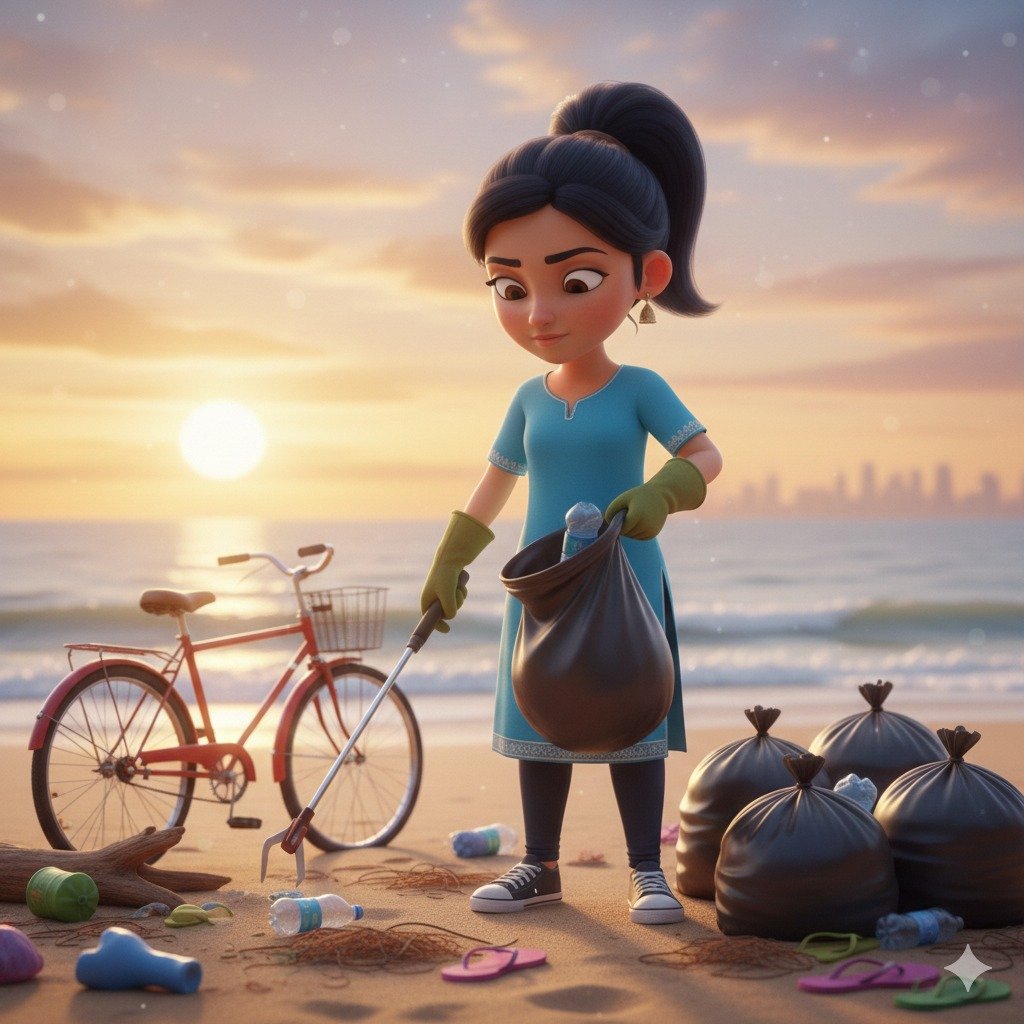
Without telling anyone, Priya woke up early the next morning. She grabbed gloves, bags, and her bike, racing to the beach before sunrise. Silently, she filled bag after bag with plastic bottles, nets, and wrappers, hiding them behind rocks so no one would see.
By noon, when the class arrived, the beach looked magically clean in key spots. Everyone cheered, puzzled. “Who did this?” Ravi wondered. Priya smiled quietly from the back. Their teacher, Mr. Kumar, noticed her dusty shoes and glowing eyes. After the event, the principal announced a mystery hero award, and the whole community celebrated with ice cream and photos.

Mr. Kumar pulled Priya aside. “Priya, true help shines brightest when done in secret. It feels good inside, and the world notices in big ways.” He shared an ancient Tamil verse:
Seyyāmal seitha udhavikku vaiyagamum
vāṉagamum āṯṟala aridhu.
செய்யாமல் செய்த உதவிக்கு வையகமும்
வானகமும் ஆற்றல் அரிது.
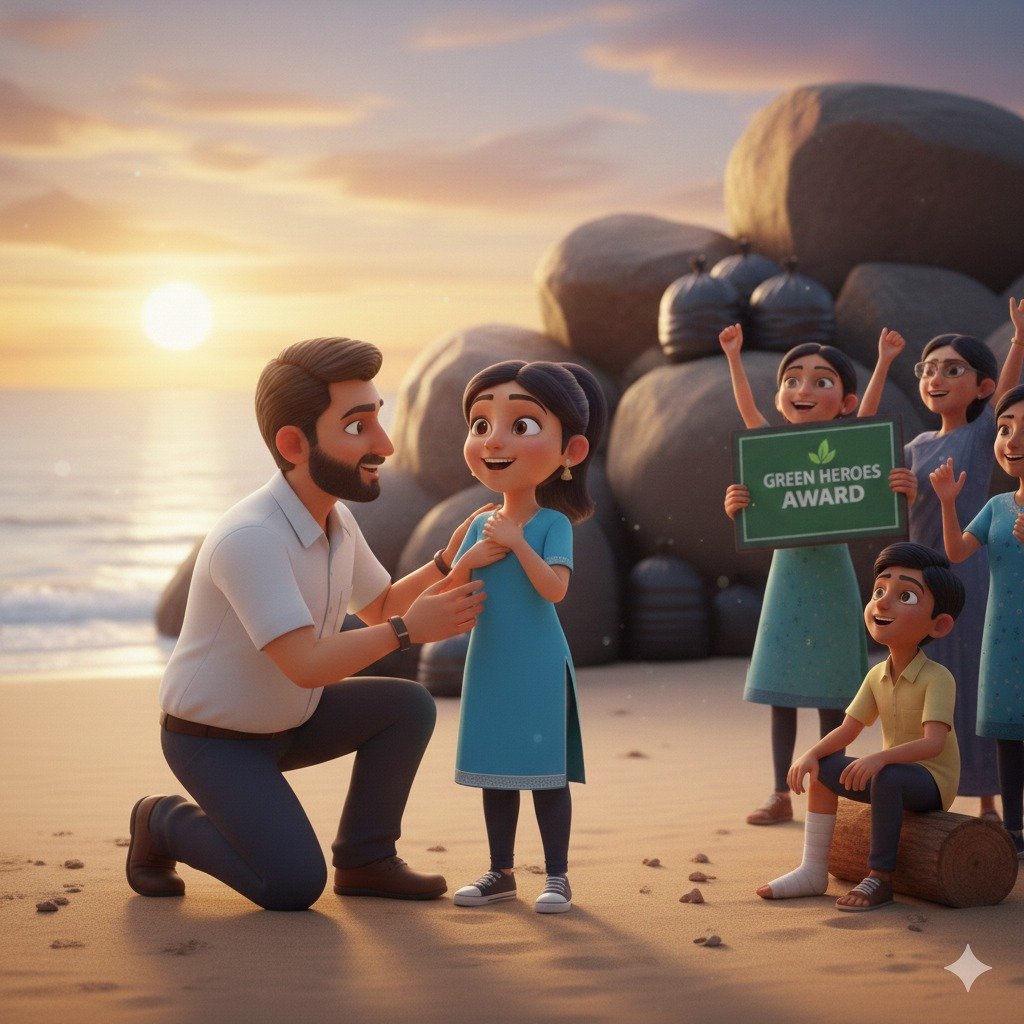
Priya beamed. Her secret act not only saved the beach but earned her classmates’ trust and the teacher’s pride. From then on, she helped quietly, knowing real kindness brings rewards from earth and sky. The class even won a green award, all thanks to her unseen effort.
Moral
Help done without expectation of reward is rare, and even earth and heaven struggle to repay it.
Let’s read the same story in Tamil..
இரகசிய உதவியின் பரிசு
சென்னையின் ஒரு பரபரப்பான பள்ளியில் படித்துக் கொண்டிருந்தாள் பன்னிரெண்டு வயது பிரியா. பிறருக்கு உதவுவது அவளுக்கு மிகவும் பிடிக்கும். ஆனால் பாராட்டைப் பெறுவது மட்டும் அவளுக்கு ஒருபோதும் பிடிக்காது. “நன்றாக செய்தாய்” என்ற ஒரு சொல்லுக்கே முகம் சிவந்து ஒதுங்கிப்போய்விடுவாள்.
ஒருநாள், அவர்களின் வகுப்பு மாணவர்கள் அருகிலுள்ள மாசடைந்த கடற்கரையை சுத்தம் செய்யும் பெரிய முயற்சியைத் திட்டமிட்டனர். அங்கு கிடந்த பிளாஸ்டிக் குப்பைகள், மீன்பிடி வலைத்துண்டுகள், உணவு மூடிகள்—எல்லாவற்றையும் சேர்த்து அகற்ற வேண்டியது அவர்களின் குறிக்கோள்.
பிரியாவின் நெருங்கிய நண்பன் ரவி, பயிற்சிக்குச் சென்றபோது கால் மூட்டில் காயமடைந்தான். “நான் வர முடியாது போல,” என்ற அவன் குரலில் ஏமாற்றம் தெளிந்தது. அதைக் கேட்ட பிரியாவின் மனம் கனிந்தது.
அடுத்த நாள் விடியற்காலையிலேயே யாரிடமும் சொல்லாமல் எழுந்தாள் பிரியா. கையுறைகள், குப்பை மூட்டைகள்—எல்லாவற்றையும் சுமந்து, தனது சைக்கிளில் சூரியன் உதயிக்குமுன் கடற்கரையை நோக்கி பாய்ந்தாள்.
அங்கு சென்று, யாரும் கவனிக்காத மூலைகளில் அமைதியாக வேலை தொடங்கினாள். ஒரு மூட்டை… இரண்டு மூட்டை… பிளாஸ்டிக் பாட்டில்கள், கிழிந்த வலைகள், சுருட்டிப் போட்ட ராப்பர்கள்—எல்லாம் ஒன்றன் பின் ஒன்றாக சேகரித்தாள். சேகரித்த மூட்டைகளை கல்லுக்குப் பின்னால் ஒளித்து வைத்தாள்; யாருக்கும் தெரியக் கூடாது என்பதே அவள் எண்ணம்.
நண்பகல் நேரத்தில் வகுப்பு மாணவர்கள் அனைவரும் வந்தபோது, கடற்கரை சில பகுதிகளில் மாயாஜாலம் நடந்தது போல பளிச்செனத் தெரிந்தது.
“இதை யார் செய்தது?” என்று ஆச்சரியமாகச் சுற்றிப் பார்த்தான் ரவி.
பின்புறம் அமைதியாக நின்றபடியே சிரித்தாள் பிரியா.
அவர்களின் ஆசிரியர் குமார் சார், பிரியாவின் மண்ணேறிய காலணிகளையும், முகத்தில் ஒளிந்த மகிழ்ச்சியையும் கவனித்தார். நிகழ்ச்சி முடிந்தபின், தலைமை ஆசிரியர் “மர்ம நாயகன்” விருதை அறிவித்தார். சமூகமே கூடி கொண்டாடியது. ஐஸ்கிரீம், புகைப்படங்கள்—எங்கும் உற்சாகம்.
அதன் பிறகு குமார் சார், பிரியாவைத் தனியாக அழைத்துச் சொன்னார்:
“பிரியா, ரகசியமாகச் செய்யப்படும் உதவிதான் அதிகம் ஒளிவீசும். அது மனதுக்குள் மகிழ்ச்சி தரும்; உலகமே அதை ஒருநாள் பெரிய அளவில் கவனிக்கும்.”
அவர் மெதுவாக ஒரு பழமையான தமிழ் வரியைச் சொன்னார்:
செய்யாமல் செய்த உதவிக்கு வையகமும்
வானகமும் ஆற்றல் அரிது
அந்தச் சொற்கள் பிரியாவின் உள்ளத்தில் ஒளியாகப் பரவின. அவளின் அமைதியான செயல் கடற்கரையை மட்டுமல்ல, நண்பர்களின் நம்பிக்கையையும் ஆசிரியரின் பெருமையையும் வென்றது.
அதன் பின்னர், பாராட்டுக்காக அல்ல—உள்ளத்தின் திருப்திக்காக உதவ வேண்டும் என்பதை புரிந்துகொண்டாள். உண்மையான நல்லெண்ணம் பூமியிலும் வானிலும் பலன் தரும் என்பதை அவள் உணர்ந்தாள்.
அந்த ஆண்டு, அவர்களின் வகுப்பு “பசுமை விருது” பெற்றது. அனைவரும் கைதட்டினர். ஆனால் அந்த வெற்றியின் பின்னால் இருந்த அமைதியான முயற்சியை நினைத்தபடி, மெதுவாகப் புன்னகைத்துக் கொண்டிருந்தாள் பிரியா.
நீதி
பாராட்டு எதிர்பார்க்காமல் செய்யும் உதவிக்கு, பூமியும் வானமும் பரிசு கொடுக்க முடியாது அரிது.
எழுத்துப்பிரதி
Seyyāmal seitha udhavikku vaiyagamum
Vāṉagamum āṯṟala aridhu.
மூலத் தமிழ்
செய்யாமல் செய்த உதவிக்கு வையகமும்
வானகமும் ஆற்றல் அரிது.
Breaking it down
- செய்யாமல் (Seyyāmal) – செய்யாமை (Not doing), without performing or expecting.
- செய்த (Seitha) – செய்தல் (Done), performed or accomplished.
- உதவி (Udhavi) – உதவுதல் (Help), assistance or aid.
- க்கு (Kku) – க்கு (To/for), dative marker indicating beneficiary.
- வையகம் (Vaiyagam) – பூமி (Earth), the world or terrestrial realm.
- உம் (Um) – உம் (And), conjunctive particle linking words.
- வானகம் (Vāṉagam) – வானம் (Heaven/sky), celestial realm or divine space.
- உம் (Um) – உம் (And), conjunctive particle.
- ஆற்றல் (Āṯṟal) – திறன் (Power/ability), capacity or strength to act.
- அரிது (Aridhu) – அரிது (Rare), scarce or difficult to find.
Trivia
- “வானகம் (Vāṉagam)” derives from Sangam-era Tamil poetry (c. 300 BCE–300 CE), blending “வான்” (sky) with “அகம்” (inner realm); it’s less common in modern spoken Tamil but survives in literary Malayalam as “vānagam” for heavenly spaces.
- Thiruvalluvar’s selfless virtue echoes Stoic Marcus Aurelius (c. 170 CE) in Meditations, praising anonymous good deeds as the highest virtue—both texts from similar eras emphasize inner reward over praise.
This bilingual story from ancient Tamil wisdom makes timeless life lessons accessible to readers worldwide — whether you’re discovering these universal truths for the first time, or sharing the beauty of your Tamil heritage with friends from any culture. Reading both English and Tamil versions side by side helps build language confidence, cultural connection, and a lifelong love for meaningful stories — perfect for classrooms, families, and friends around the globe.
Record your kid telling this story and the Kural, we will host it on our youtube page
<Youtube link>