
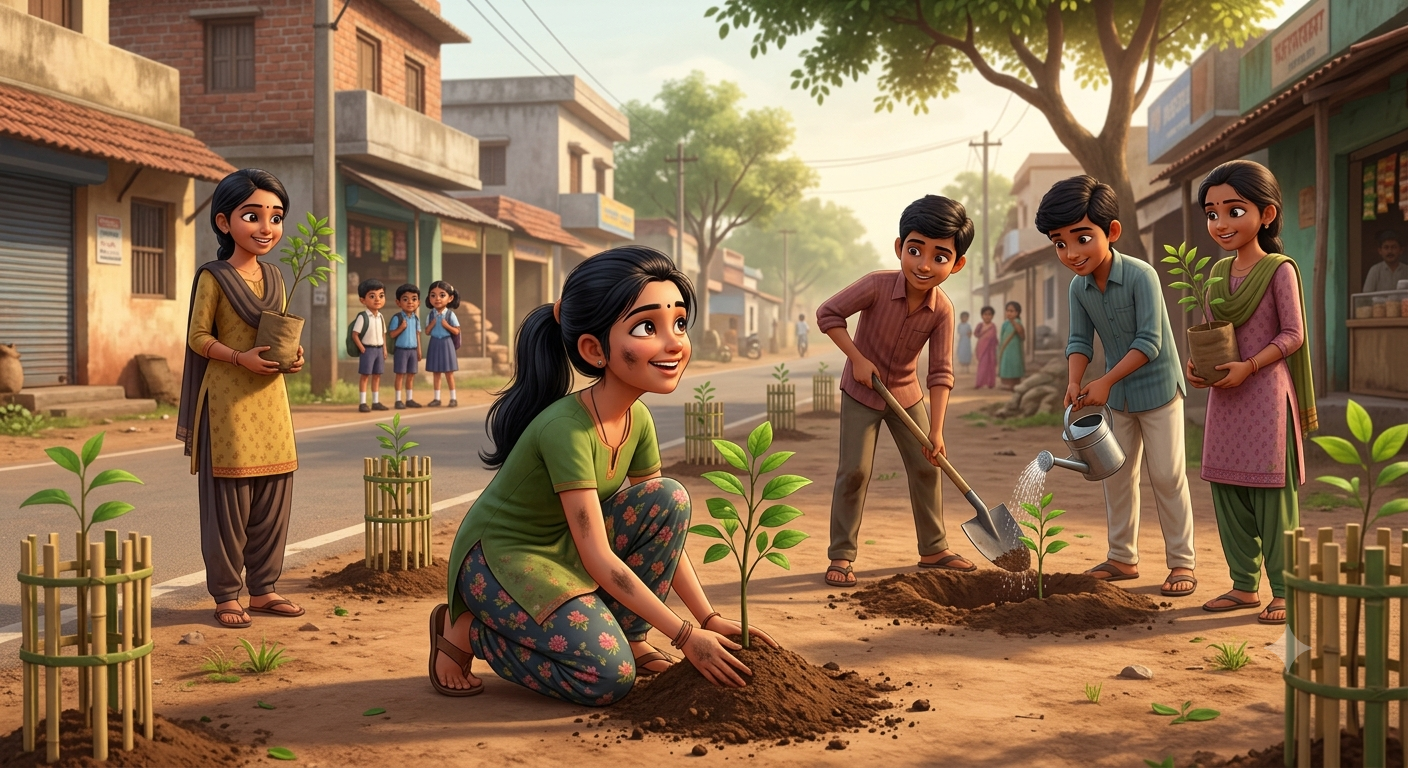
In a small town near Hubballi, sixteen-year-old Diya started a weekend project with just one goal—to plant ten shade trees along a road where schoolchildren walked every day. She gathered a few friends, collected saplings, and spent an entire Saturday planting them. Everyone appreciated the effort, but Diya felt the project had ended too quickly.
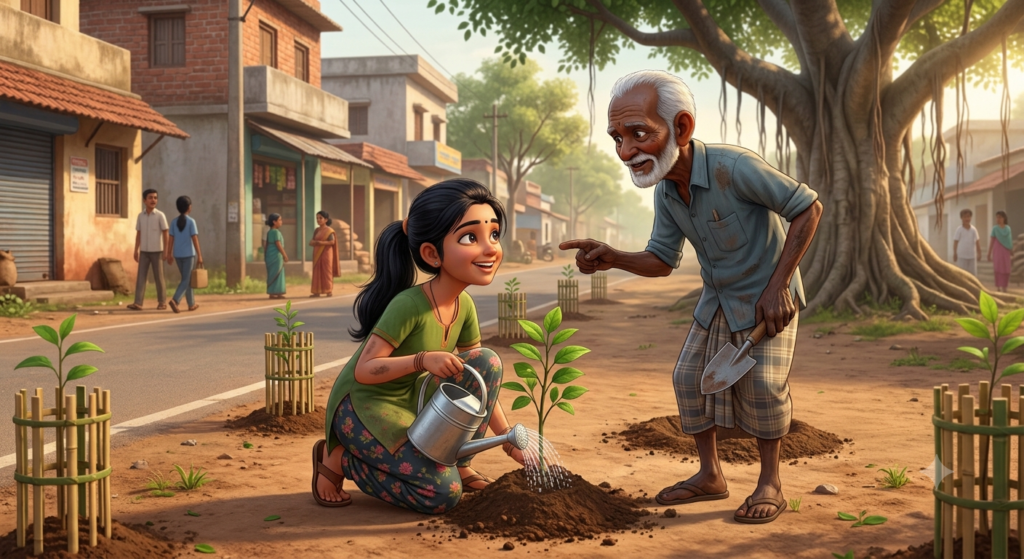
The following week, while watering the saplings, an elderly gardener approached her and said, “Why stop with ten trees? These saplings can help you grow something much bigger.” Curious, Diya asked what he meant.
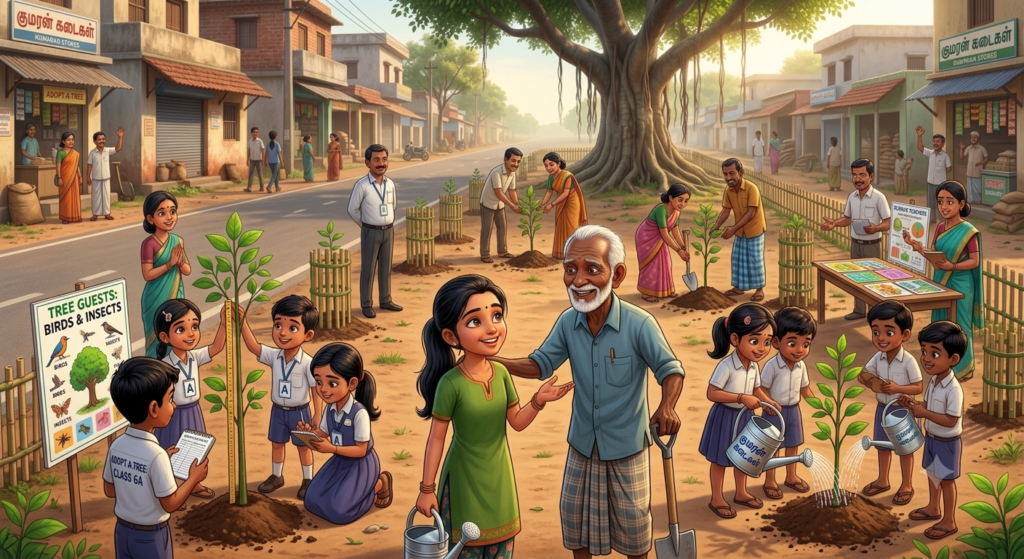
The gardener suggested inviting nearby schools to “adopt” one tree each. Every class would take care of its own tree, record its growth, and learn about the birds and insects that visited it. Soon, science teachers joined the idea. Local shopkeepers donated watering cans. Parents volunteered during weekends. The municipality even provided more land for planting.
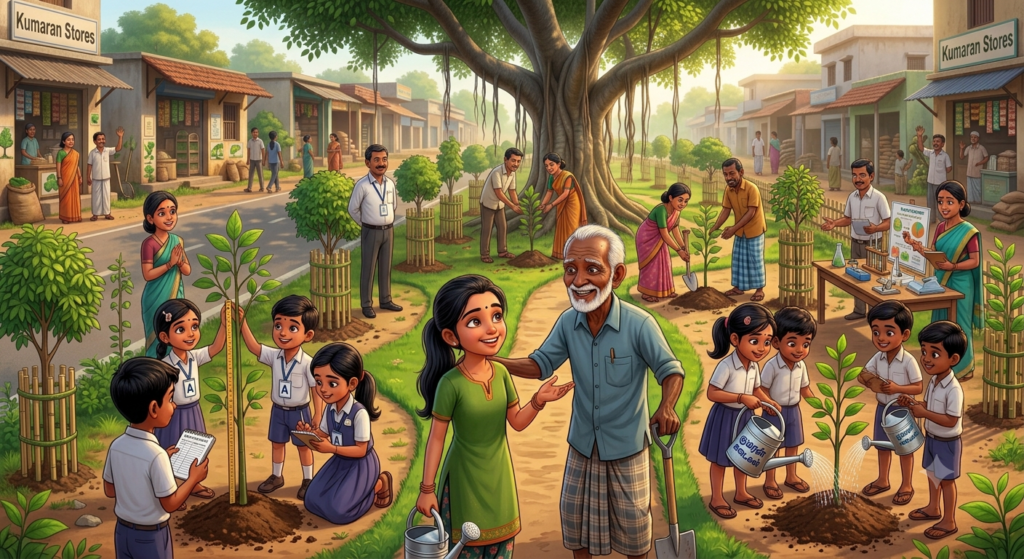
What had begun as ten small saplings slowly became a community movement. Within a year, hundreds of trees had been planted across parks, roadsides, and school campuses. More importantly, children who came only to water plants began learning about nature, teamwork, and responsibility.

When the town celebrated Environment Day, the chief guest praised the students. Diya’s grandfather, who was sitting in the audience, softly recited:
வினையான் வினையாக்கிக் கோடல் நனைகவுள்
யானையால் யானையாத் தற்று.
Vinaiyān vinaiyākkik kōdal nanaikavuḷ
yānaiyāl yānaiyāth thatru.
He explained, “The wise use one successful action to create another, just as trained elephants were once used to capture wild elephants. A single good effort should become the beginning of many more.” Diya smiled. She had planted only ten trees—but those ten trees had grown into something far greater than a forest. They had grown a community.
Moral
A wise person uses one successful action as an opportunity to create many more good actions.
Let’s read the same story in Tamil…
பத்து மரங்களின் பெரிய பயணம்
ஹுப்பள்ளி அருகிலுள்ள ஒரு நகரில், பதினாறு வயது தியா ஒரு சிறிய முயற்சியைத் தொடங்கினாள். பள்ளிக்குச் செல்லும் சாலையில் நிழல் தரும் பத்து மரக்கன்றுகளை நட வேண்டும் என்பதுதான் அவளது எண்ணம். நண்பர்களுடன் சேர்ந்து ஒரு சனிக்கிழமை முழுவதும் உழைத்து மரங்களை நட்டனர். அனைவரும் பாராட்டினார்கள். ஆனால் அதோடு வேலை முடிந்துவிட்டது என்று தியா நினைத்தாள்.
அடுத்த வாரம் மரங்களுக்கு தண்ணீர் ஊற்றிக் கொண்டிருந்தபோது, அங்கு வந்த வயதான தோட்டக்காரர் ஒருவர், “இந்த பத்து மரங்களோடு ஏன் நிறுத்த வேண்டும்? இதிலிருந்தே இன்னும் பெரிய மாற்றத்தை உருவாக்கலாம்,” என்றார். தியா ஆச்சரியத்துடன் அவரைப் பார்த்தாள்.
அவர் ஒரு புதிய யோசனையைச் சொன்னார். அருகிலுள்ள பள்ளிகளில் ஒவ்வொரு வகுப்பிற்கும் ஒரு மரத்தைப் பொறுப்பாக ஒப்படைக்கலாம் என்றார். மாணவர்கள் தங்களது மரத்தின் வளர்ச்சியைப் பதிவு செய்யலாம். அதில் வரும் பறவைகள், பூச்சிகள் பற்றி அறியலாம். அந்த யோசனை விரைவில் ஆசிரியர்களுக்கும் பிடித்தது. கடைக்காரர்கள் தண்ணீர் தொட்டிகளை வழங்கினர். பெற்றோர்கள் வார இறுதியில் வந்து உதவினர். நகராட்சி மேலும் மரக்கன்றுகளை வழங்கியது.
சில மாதங்களில், பத்து மரங்களாகத் தொடங்கிய முயற்சி நூற்றுக்கணக்கான மரங்களாக வளர்ந்தது. அதைவிட பெரிய மாற்றம், குழந்தைகளிடம்தான் ஏற்பட்டது. மரங்களைப் பராமரிக்க வந்தவர்கள், இயற்கையை நேசிக்கவும், ஒன்றிணைந்து செயல்படவும், பொறுப்பை ஏற்கவும் கற்றுக்கொண்டார்கள்.
சுற்றுச்சூழல் தின விழாவில், இந்த முயற்சியை அனைவரும் பாராட்டினர். அப்போது தியாவின் தாத்தா இந்தக் குறளை வாசித்தார்:
வினையான் வினையாக்கிக் கோடல் நனைகவுள்
யானையால் யானையாத் தற்று.
பின்னர் அவர் கூறினார்: “ஒரு நல்ல செயல் முடிந்துவிட்டது என்று நினைக்காமல், அதையே அடிப்படையாகக் கொண்டு இன்னும் பல நல்ல செயல்களை உருவாக்க வேண்டும். அதுவே உண்மையான அறிவு.”
அன்று தியா ஒரு உண்மையை உணர்ந்தாள். ஒரு நல்ல செயல் தனியாக நிற்க வேண்டியதில்லை. அது பலரையும் இணைத்து, இன்னும் பெரிய நன்மைகளை உருவாக்கும் விதையாக மாற வேண்டும்.
நீதி
ஒரு நல்ல செயலை முடிவாக நினைக்காமல், அதிலிருந்து இன்னும் பல நல்ல செயல்களை உருவாக்குபவரே உண்மையான அறிவுடையவர்.
எழுத்துப்பிரதி
Vinaiyān vinaiyākkik kōdal nanaikavuḷ
yānaiyāl yānaiyāth thatru
மூலத் தமிழ்
வினையான் வினையாக்கிக் கோடல் நனைகவுள்
யானையால் யானையாத் தற்று
Breaking it down
- வினையான் (Vinaiyān) – ஒரு செயலால் (By one action).
- வினையாக்கிக் (Vinaiyākkik) – மற்றொரு செயலை உருவாக்கி (Making another action arise).
- கோடல் (Kōdal) – பெறுதல் (To accomplish or gain).
- நனைகவுள் (Nanaikavuḷ) – பழக்கப்பட்ட (Well-trained), referring to a trained elephant.
- யானையால் (Yānaiyāl) – யானையைக் கொண்டு (By means of an elephant).
- யானையாத் (Yānaiyāth) – மற்றொரு யானையை (Another elephant).
- தற்று (Thatru) – போன்றது (Like), similar to.
Trivia
பண்டைய காலங்களில், காட்டுயானைகளைப் பிடிப்பதற்கு ஏற்கனவே பழக்கப்பட்ட யானைகளைப் பயன்படுத்தினர். அதனால்தான் திருவள்ளுவர் இந்த அழகான உவமையைப் பயன்படுத்துகிறார். ஒரு வெற்றிகரமான செயலை, இன்னொரு பெரிய செயலுக்கான கருவியாக மாற்ற வேண்டும் என்பதே இந்தக் குறளின் மையக் கருத்து.
இன்றைய உலகிலும் இதே அணுகுமுறையை “Multiplier Effect” என்று பொருளாதாரத்திலும், “Building on Success” என்று தலைமைத்துவப் பயிற்சிகளிலும் குறிப்பிடுகின்றனர். ஒரு சிறிய வெற்றி, அடுத்த பெரிய மாற்றத்திற்கான தொடக்கமாக அமையலாம்.
This bilingual story from ancient Tamil wisdom makes timeless life lessons accessible to readers worldwide—whether you’re discovering these universal truths for the first time, or sharing the beauty of your Tamil heritage with friends from any culture. Reading both English and Tamil versions side by side helps build language confidence, cultural connection, and a lifelong love for meaningful stories—perfect for classrooms, families, and friends around the globe.
Record your kid telling this story and the Kural, we will host it on our YouTube page.
<Youtube link>