

In Visakhapatnam, Class 10 students were excited about selecting the school’s new “Student Welcome Ambassador.” This student would greet new admissions, help them settle into school life, and represent the school during important events. Many students expected the role to go to someone who spoke confidently or had excellent grades.
Instead of holding interviews, the principal quietly observed the students for an entire week without telling them. She watched how they behaved during lunch breaks, group activities, and even while walking through the corridors.
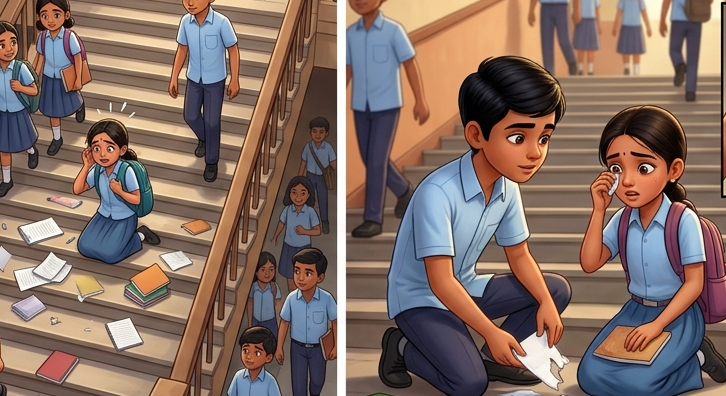
One afternoon, a new student accidentally dropped all her notebooks on the staircase. Some students glanced at her and continued walking. A few smiled but hurried away because they were late for class. Without drawing attention to himself, fifteen-year-old Rohan knelt down, helped gather every notebook, noticed one page had torn, and carefully taped it before handing it back. He then walked the nervous student to her classroom and introduced her to a few friendly classmates before leaving without expecting thanks.

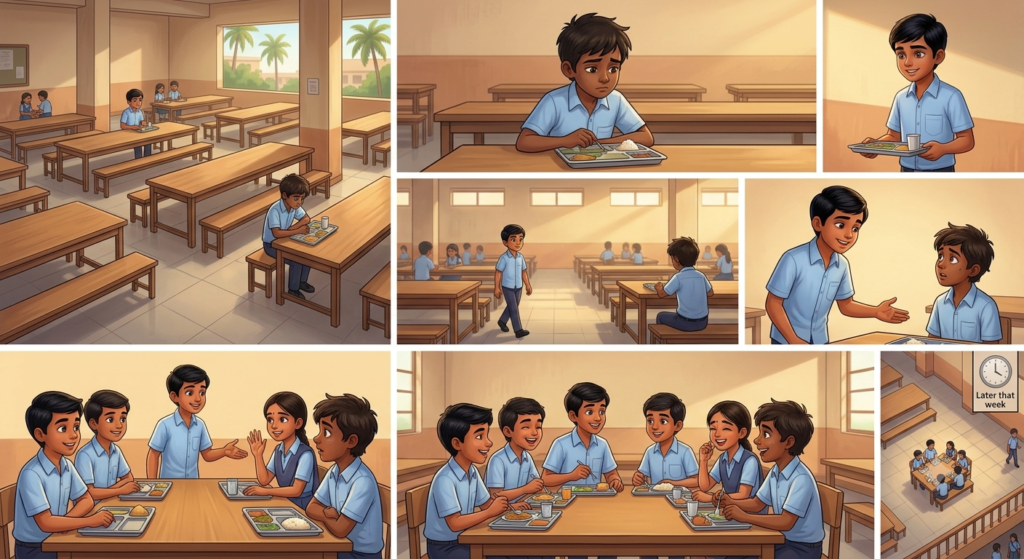
Later that week, another student was sitting alone during lunch. Once again, Rohan quietly invited him to join his friends. No teacher had instructed him to do these things, and he never mentioned them to anyone.
During the Monday assembly, the principal announced that Rohan had been chosen as the new Student Welcome Ambassador. Many students were surprised because he had never campaigned for the role.
The principal then recited:
நுண்ணியம் என்பார் அளக்குங்கோல் காணுங்கால்
கண்ணல்லது இல்லை பிற.
Nuṇṇiyam enbār aḷakkungōl kāṇungāl
kaṇṇalladhu illai piṟa.
She explained, “If you wish to understand a person’s true nature, there is no better measure than careful observation. Words can be prepared, but everyday actions reveal the heart.”
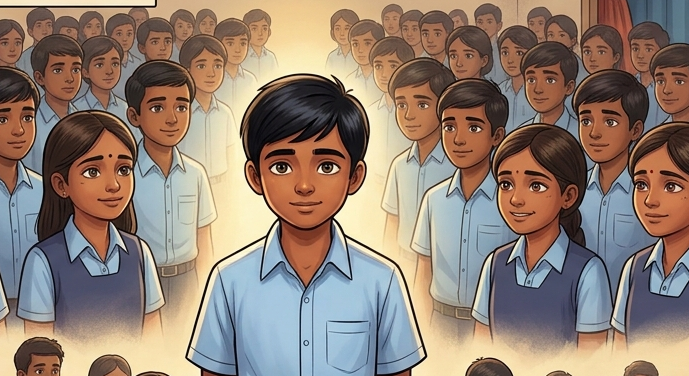
That day, the students realized that character isn’t proven by speeches or certificates. It is revealed through the small choices we make when we think no one is watching.
Moral
A person’s true character is best understood by carefully observing their actions, not merely listening to their words.
Let’s read the same story in Tamil…
அமைதியாக நடந்த தேர்வு
விசாகப்பட்டினத்தில் உள்ள ஒரு பள்ளியில், புதியதாக சேரும் மாணவர்களுக்கு வழிகாட்டும் “மாணவர் வரவேற்புத் தூதர்” ஒருவரைத் தேர்வு செய்ய முடிவு செய்யப்பட்டது. அந்த மாணவர், புதிதாக வரும் குழந்தைகளுக்கு பள்ளியை அறிமுகப்படுத்தி, அவர்களுக்கு நண்பர்களை அறிமுகப்படுத்தி, முக்கிய நிகழ்ச்சிகளில் பள்ளியை பிரதிநிதித்துவப்படுத்த வேண்டும். பலரும், நன்றாகப் பேசும் மாணவர்தான் தேர்வு செய்யப்படுவார் என்று நினைத்தனர்.
ஆனால் முதல்வர் வேறு விதமாக முடிவு செய்தார். எந்த நேர்முகத் தேர்வும் நடத்தவில்லை. ஒரு வாரம் முழுவதும், மாணவர்களுக்குத் தெரியாமல் அவர்களின் இயல்பான நடத்தையை அமைதியாகக் கவனித்தார். மதிய உணவு நேரம், வகுப்பு இடைவேளை, குழு வேலை—எல்லா நேரங்களிலும் அவர்கள் எப்படி நடந்து கொள்கிறார்கள் என்பதையே அவர் பார்த்தார்.
ஒரு நாள், புதிதாக சேர்ந்த மாணவி ஒருவர் படிக்கட்டில் தவறி தனது புத்தகங்களை எல்லாம் கீழே போட்டுவிட்டாள். சிலர் பார்த்துவிட்டு சென்றார்கள். சிலர் சிரித்துக்கொண்டே நடந்தார்கள். ஆனால் பதினைந்து வயது ரோஹன் மட்டும் உடனே குனிந்து அனைத்து புத்தகங்களையும் எடுத்து அடுக்கிக் கொடுத்தான். கிழிந்திருந்த ஒரு பக்கத்தை கவனித்து ஒட்டிவிட்டு, அவளை வகுப்பறை வரை அழைத்துச் சென்று அங்கிருந்த மாணவர்களிடம் அறிமுகப்படுத்தினான். அதைச் செய்துவிட்டு எதுவும் நடக்காதது போல அமைதியாக தனது வகுப்புக்குத் திரும்பிவிட்டான்.
அதே வாரத்தில், மதிய உணவு நேரத்தில் தனியாக அமர்ந்திருந்த இன்னொரு மாணவனையும் ரோஹன் கவனித்தான். யாரும் சொல்லாமல் அவனைத் தனது நண்பர்களுடன் சேர்ந்து அமர அழைத்தான். செய்த உதவிகளைப் பற்றி ஆசிரியர்களிடமோ நண்பர்களிடமோ ஒருபோதும் பெருமையாகச் சொல்லவில்லை.
திங்கட்கிழமை காலை பள்ளி கூட்டத்தில், புதிய மாணவர் வரவேற்புத் தூதராக ரோஹனின் பெயரை முதல்வர் அறிவித்தார். பல மாணவர்கள் ஆச்சரியமடைந்தனர். போட்டியில் கலந்து கொள்ளாத அவன் எப்படி தேர்வு செய்யப்பட்டான் என்று அவர்கள் எண்ணினர்.
அப்போது முதல்வர் இந்தக் குறளை வாசித்தார்:
நுண்ணியம் என்பார் அளக்குங்கோல் காணுங்கால்
கண்ணல்லது இல்லை பிற.
பின்னர் அவர் கூறினார்: “ஒரு மனிதரின் உண்மையான குணத்தை அறிய சிறந்த அளவுகோல் அவரது செயல்களைக் கவனிப்பதுதான். பேசுவது யாராலும் முடியும். ஆனால் யாரும் பார்க்கவில்லை என்று நினைக்கும் நேரத்தில் ஒருவர் செய்வதுதான் அவரது உண்மையான பண்பை வெளிப்படுத்துகிறது.”
அன்று மாணவர்கள் அனைவரும் ஒரு முக்கியமான உண்மையை உணர்ந்தனர். நல்ல மனிதராக இருப்பதைச் சான்றிதழ்களோ பேச்சுத் திறனோ நிரூபிக்காது. அன்றாட வாழ்க்கையில் செய்யும் சிறிய செயல்கள்தான் ஒருவரின் உண்மையான மதிப்பை உலகிற்கு காட்டுகின்றன.
நீதி
ஒருவரின் உண்மையான குணத்தை அறிய, அவர் பேசுவதைவிட அவரது செயல்களைக் கவனிப்பதே சிறந்த வழி.
எழுத்துப்பிரதி
Nuṇṇiyam enbār aḷakkungōl kāṇungāl
kaṇṇalladhu illai piṟa
மூலத் தமிழ்
நுண்ணியம் என்பார் அளக்குங்கோல் காணுங்கால்
கண்ணல்லது இல்லை பிற
Breaking it down
- நுண்ணியம் (Nuṇṇiyam) – நுட்பமான அறிவு (Subtle perception), the ability to understand fine qualities.
- என்பார் (Enbār) – என்று கூறுபவர்கள் (Those who say), learned people.
- அளக்குங்கோல் (Aḷakkungōl) – அளவிடும் கருவி (Measuring rod), a standard for judging.
- காணுங்கால் (Kāṇungāl) – பார்க்கும்போது (When observing), by carefully watching.
- கண் (Kaṇ) – கண் (The eye), observation and perception.
- அல்லது (Alladhu) – தவிர (Other than), except.
- இல்லை (Illai) – இல்லை (There is none).
- பிற (Piṟa) – வேறு (Anything else).
Trivia
இந்தக் குறள் “குறிப்பறிதல்” அதிகாரத்தின் நிறைவுக் குறளாகும். ஒருவரின் மனநிலை, குணம், எண்ணம் போன்றவற்றை அறிய மிகச் சிறந்த கருவி கூர்மையான கவனிப்புத் திறன் என்பதை திருவள்ளுவர் வலியுறுத்துகிறார்.
இன்றைய உளவியலிலும், மனிதர்களின் உடல்மொழி, சிறிய பழக்கங்கள், மற்றும் இயல்பான செயல்களைப் பார்ப்பதன் மூலம் அவர்களின் குணநலன்களைப் புரிந்துகொள்ள முடியும் என்று கூறப்படுகிறது. அதனால்தான் சிறந்த ஆசிரியர்கள், தலைவர்கள், மற்றும் ஆலோசகர்கள் முதலில் கவனிப்பார்கள்; பிறகு முடிவெடுப்பார்கள்.
This bilingual story from ancient Tamil wisdom makes timeless life lessons accessible to readers worldwide — whether you’re discovering these universal truths for the first time, or sharing the beauty of your Tamil heritage with friends from any culture. Reading both English and Tamil versions side by side helps build language confidence, cultural connection, and a lifelong love for meaningful stories — perfect for classrooms, families, and friends around the globe.
Record your kid telling this story and the Kural, we will host it on our YouTube page.
<Youtube link>