
In a lively Madurai home, 14-year-old Vignesh lived with his grandma, a retired teacher, and his mechanic uncle. Vignesh envied rich kids with fancy gadgets but felt poor with just books. At school, during the science quiz adventure—a regional contest with robot challenges—flashy rich teammate Akshay bragged about his bought robot kit, while Vignesh had only ideas. Akshay mocked, “Your brain won’t beat my money machine!” Their robot failed in trials.
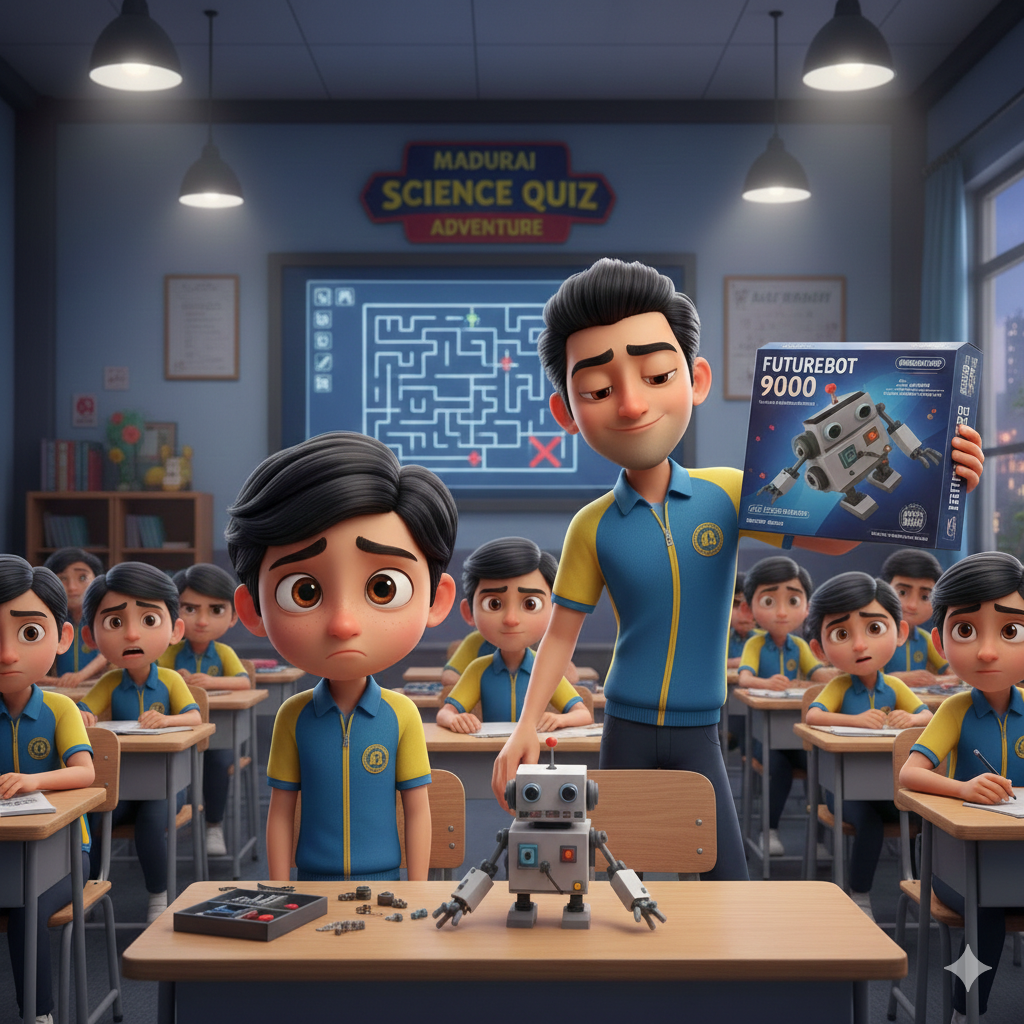
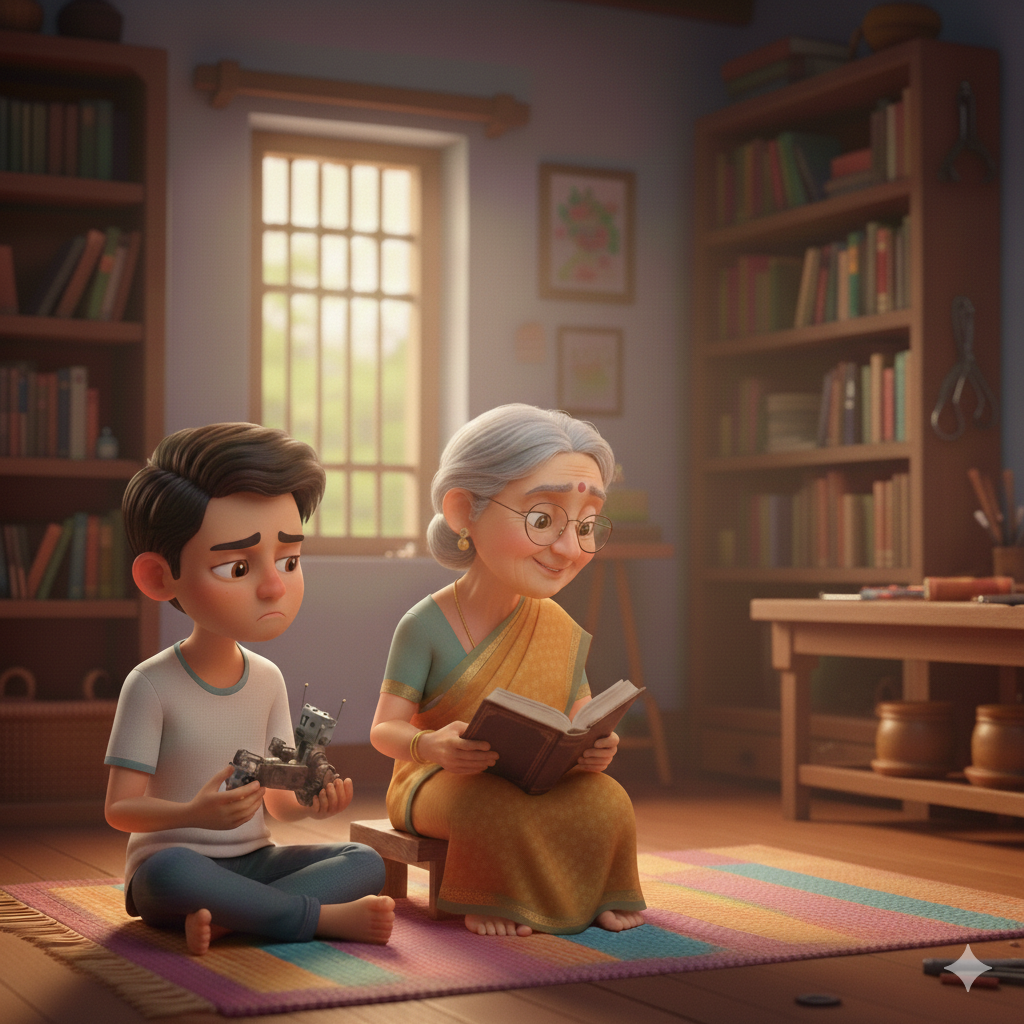
Grandma noticed his sadness. She shared a profound Tamil Kural:
Aṟivudaṟār ellām uḍaiyār aṟivilār
Eṉṉuḍaiyaṉ ēṉum ilar.
அறிவுடையார் எல்லாம் உடையார் அறிவிலார்
என்னுடைய ரேனும் இலர்.
“Vignesh, this means those with knowledge possess everything. Without knowledge, even the wealthy own nothing true,” she said.
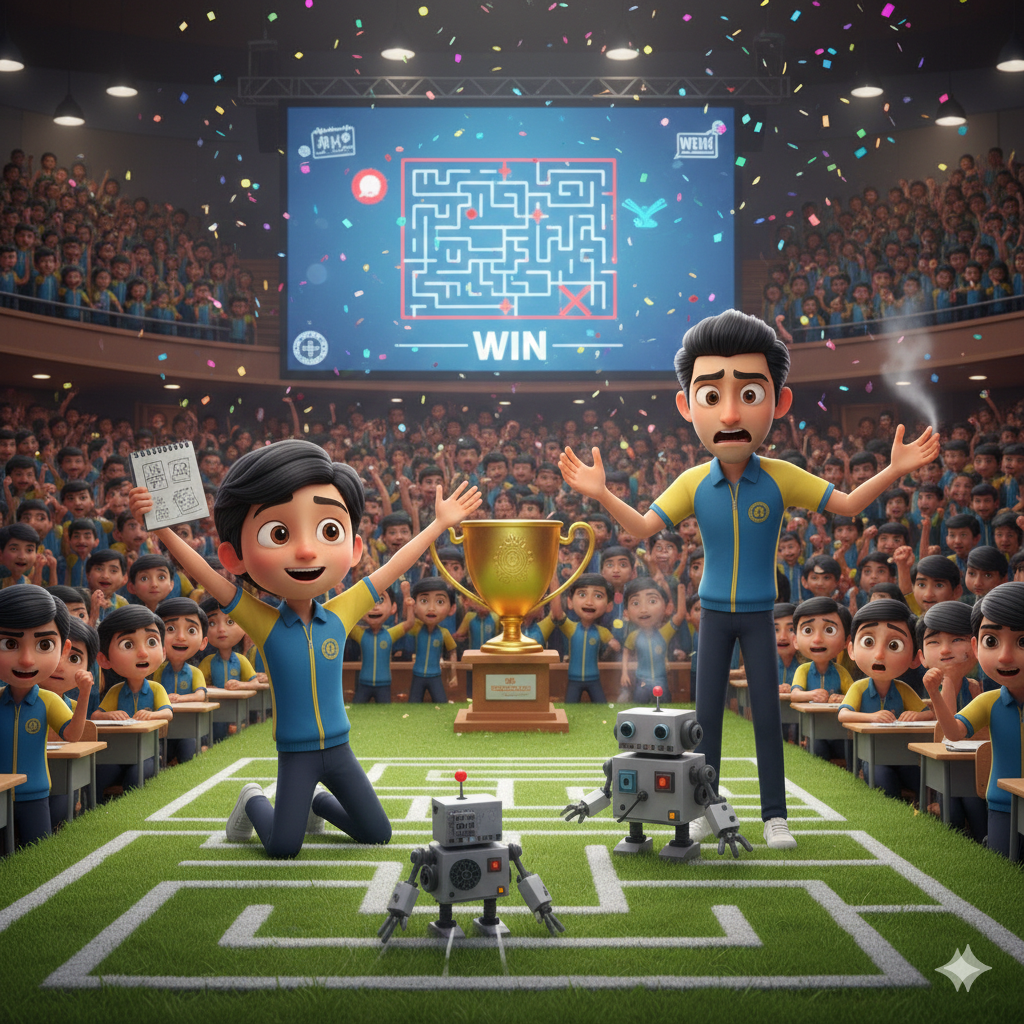
Inspired, Vignesh dove into action. In the finals, Akshay’s costly robot jammed under pressure. Vignesh used smarts: he sketched quick fixes from library books, recycled scraps into gears, and taught the team physics hacks like leverage. “Knowledge turns junk to gold!” No money needed—their simple bot zipped fastest, solving puzzles brilliantly. They won gold, stunning everyone!
Grandma hugged him: “See? Your mind is the richest treasure.” Vignesh beamed, valuing brains over bucks forever.
Moral
Those with knowledge possess all; those without knowledge possess nothing, even if they own wealth.
Let’s read the same story in Tamil..
அறிவே உண்மையான செல்வம்
மதுரையின் உற்சாகம் நிறைந்த ஒரு வீட்டில் 14 வயது விக்னேஷ் தனது பாட்டியும் மெக்கானிக் மாமாவும் சேர்ந்து வாழ்ந்து வந்தான். பாட்டி ஓய்வு பெற்ற ஆசிரியர். விக்னேஷ் புத்தகங்களைப் படிக்க விரும்பினான். ஆனால் பள்ளியில் சில பணக்கார நண்பர்கள் விலையுயர்ந்த கேஜெட்களுடன் வருவதைக் கண்டு, “நான் மட்டும் ஏழையாக இருக்கிறேனோ?” என்று அவன் மனதில் எண்ணி வருந்துவான்.
ஒருநாள் பள்ளியில் “சயின்ஸ் க்விஸ்” போட்டி அறிவிக்கப்பட்டது. ரோபோட் சவால்களுடன் நடைபெறும் ஒரு பெரிய பிராந்திய போட்டி அது. விக்னேஷ் தனது அணியுடன் அந்தப் போட்டியில் கலந்து கொண்டான். அவன் அணியில் இருந்த அக்ஷய் என்ற மாணவன், விலையுயர்ந்த ரோபோட் கிட் வாங்கி வந்திருந்தான்.
“என் ரோபோட் பணத்தால் வாங்கியது. உன் மூளை அதைக் கடக்க முடியாது!” என்று அக்ஷய் பெருமையாகச் சொன்னான்.
ஆனால் பயிற்சி சுற்றில் அவர்களின் ரோபோட் சரியாக இயங்கவில்லை. அது அடிக்கடி நின்று கொண்டே இருந்தது. விக்னேஷ் மனம் உடைந்து வீட்டிற்கு வந்தான்.
அவனுடைய வருத்தத்தை கவனித்த பாட்டி மெதுவாக ஒரு திருக்குறளைச் சொன்னார்:
அறிவுடையார் எல்லாம் உடையார் அறிவிலார்
என்னுடைய ரேனும் இலர்.
பின்னர் பாட்டி சிரித்தபடி கூறினார்:
“விக்னேஷ், அறிவு உள்ளவர்களிடம் எல்லாமே இருக்கும். அறிவு இல்லாமல்
பணம் இருந்தாலும் அது உண்மையான செல்வம் அல்ல.”
அந்த வார்த்தைகள் விக்னேஷுக்கு புதிய உற்சாகம் தந்தது.
இறுதி போட்டி நாளில் பெரிய சவால் வந்தது. அழுத்தமான தருணத்தில்
அக்ஷயின் விலையுயர்ந்த ரோபோட் திடீரென நின்று போனது. எல்லோரும்
பதறினர்.
அப்போது விக்னேஷ் அமைதியாக யோசித்தான். நூலகத்தில் படித்த புத்தகங்களை நினைத்தான். உடனே சில வரைபடங்கள் வரைந்து, பழைய பொருட்களை கொண்டு சிறிய கியர்கள் செய்து சரிசெய்தான்.
“அறிவு இருந்தால் குப்பையும் பொன்னாக மாறும்!” என்று அவன் நண்பர்களை ஊக்கப்படுத்தினான்.
சிறிது நேரத்தில் அவர்கள் ரோபோட் வேகமாக ஓடி, புதிர்களையும் சரியாகத் தீர்த்தது. இறுதியில் அந்த அணி தங்கப் பதக்கம் வென்று அனைவரையும் ஆச்சரியப்படுத்தியது.
பாட்டி விக்னேஷை அணைத்துக் கொண்டு சொன்னார்:
“பார்த்தாயா? உன் அறிவே உன் மிகப் பெரிய செல்வம்.”
விக்னேஷ் மகிழ்ச்சியுடன் சிரித்தான். அந்த நாளிலிருந்து பணத்தை விட அறிவே பெரிய செல்வம் என்று அவன் நம்பத் தொடங்கினான்.
நீதி
அறிவு உள்ளவர்களிடம் எல்லாம் இருக்கும்; அறிவில்லாதவர்களுக்கு செல்வம் இருந்தாலும் அது உண்மையான சொத்து அல்ல.
எழுத்துப்பிரதி
Aṟivudaṟār ellām uḍaiyār aṟivilār
eṉṉuḍaiyaṉ ēṉum ilar.
மூலத் தமிழ்
அறிவுடையார் எல்லாம் உடையார் அறிவிலார்
என்னுடைய ரேனும் இலர்.
Breaking it down
- அறிவுடையார் (Aṟivudaṟār) – அறிவு உடையவர்கள் (Those possessing knowledge), wise ones.
- எல்லாம் (Ellām) – எல்லாவற்றும் (All things), everything in existence.
- உடையார் (Uḍaiyār) – உடையவர்கள் (They possess), owners of true wealth.
- அறிவிலார் (Aṟivilār) – அறிவு இல்லாதவர்கள் (Those without knowledge), ignorant ones.
- என்னுடைய (Eṉṉuḍaiya) – என்னுடையது (Whatever they own), possessions.
- ரேனும் (Rēṉum) – செல்வமும் (Even wealth), even riches.
- இலர் (Ilar) – இல்லை (Do not have), lack true value.
Trivia
- அறிவு (Aṟivu) roots in Proto-Dravidian *aṟi- “know”; central in Sangam literature (c. 300 BCE), still everyday Tamil for “knowledge/wisdom,” and lives in Malayalam as “aṟivu” unchanged.
- Echoes Socrates (c. 400 BCE) in Plato’s Apology: “The unexamined life is not worth living; wisdom is the greatest wealth”—Valluvar’s verse predates but aligns perfectly on intellect over material.
This bilingual story from ancient Tamil wisdom makes timeless life lessons accessible to readers worldwide — whether you’re discovering these universal truths for the first time, or sharing the beauty of your Tamil heritage with friends from any culture. Reading both English and Tamil versions side by side helps build language confidence, cultural connection, and a lifelong love for meaningful stories — perfect for classrooms, families, and friends around the globe.
Record your kid telling this story and the Kural, we
will host it on our youtube page
<Youtube link>