
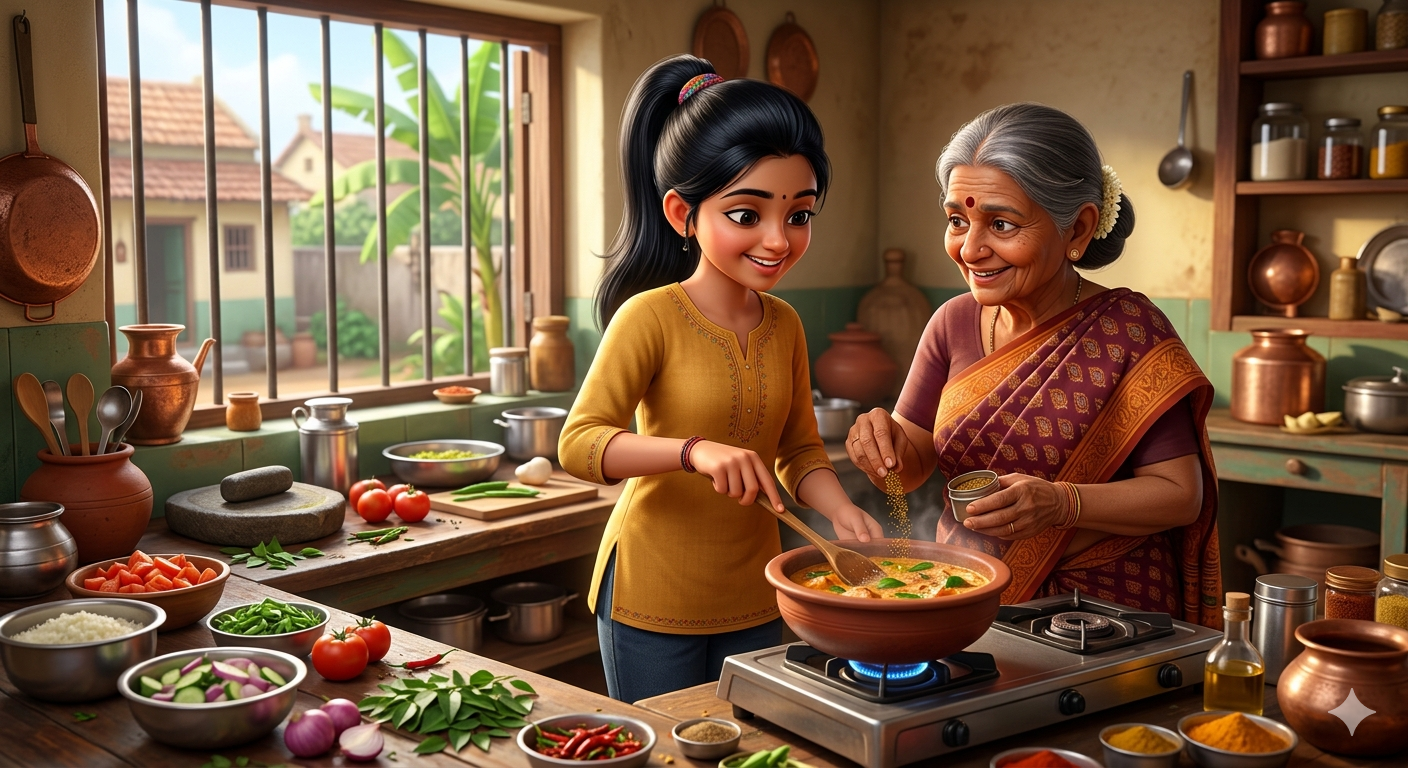
In Madurai, 14-year-old Yaazhini loved cooking more than anything else.
While other kids spent evenings playing mobile games, Yaazhini stood beside her grandmother in the kitchen, learning secret family recipes.

She carefully wrote everything in a small blue notebook.
“Too much flame ruins the jaggery.”
“Add cardamom only at the end.”
“Patience is the real ingredient.”
Her grandmother always smiled and said, “A good recipe is valuable only in the hands of someone who respects it.”
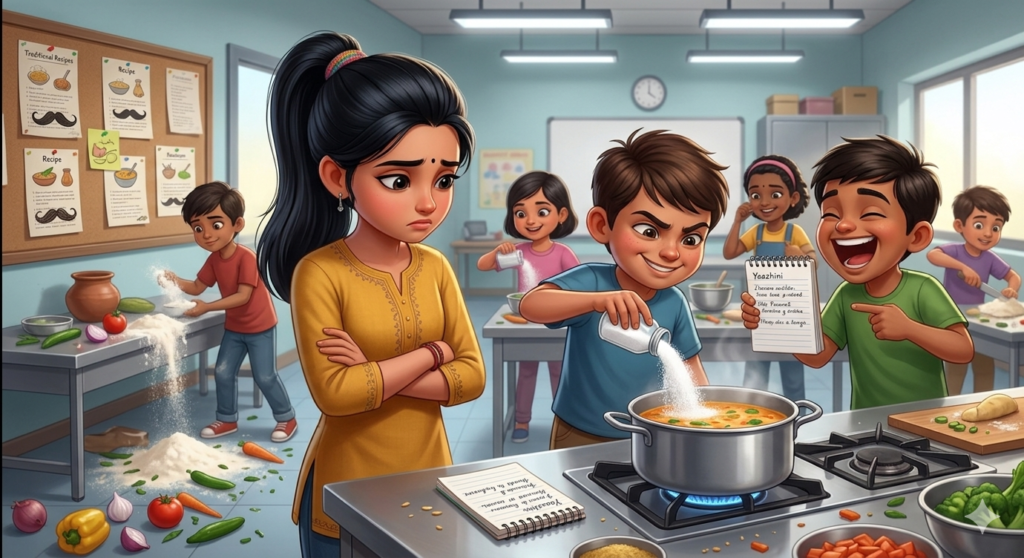
One summer, Yaazhini joined a weekend cooking camp for children.
At first, she was excited. She imagined everyone discussing flavors, spices, and creative dishes together.
But after two days, she felt disappointed. Some children wasted ingredients just for fun. A few laughed at traditional recipes.
One boy poured extra salt into another student’s dish as a prank. Another mocked Yaazhini’s handwritten notebook. “Who writes recipes like an old grandmother?” he laughed.

Yaazhini quietly closed the notebook and kept it inside her bag.
The next day, the camp instructor announced a special challenge: “Tomorrow, each team must prepare one traditional dish.” Suddenly, the same students crowded around Yaazhini. “Hey, can you share your grandmother’s sweet recipe?” “Tell us your spice mix!”
But Yaazhini remembered how carelessly they treated cooking.

That evening, her grandmother noticed her silence and gently recited:
Pullavaiyuḷ pocchāndhum sollaṟka nallavaiyuḷ
naṉguselach sollu vār.
புல்லவையுள் பொச்சாந்தும் சொல்லற்க நல்லவையுள்
நன்குசெலச் சொல்லு வார்.
Then she explained:
“Wise people know where valuable knowledge should be shared. Good ideas lose their worth in careless hands.”

The next day, Yaazhini chose to teach only the students who sincerely wanted to learn. Together, they carefully prepared soft adhirasams using her grandmother’s recipe. The judges loved the dish. But more importantly, Yaazhini learned something deeper.
Not every crowd deserves every word.
Some knowledge blooms only among those who value it.
Moral
Wise people share meaningful knowledge only where it will be respected and understood.
Let’s read the same story in Tamil…
ரகசிய சமையல் புத்தகம்
மதுரையில் பதினான்கு வயது யாழினிக்கு சமையல் என்றால் உயிர்.
மற்ற குழந்தைகள் மொபைல் விளையாட்டில் நேரம் செலவிடும்போது, யாழினி தனது பாட்டியுடன் சமையலறையில் நின்று பழைய குடும்ப சமையல் குறிப்புகளை கற்றுக்கொண்டிருப்பாள்.
அவள் எல்லா குறிப்புகளையும் ஒரு சிறிய நீல நிற நோட்டுப் புத்தகத்தில் எழுதிவைத்திருந்தாள்.
“வெல்லத்தை அதிக தீயில் வைக்கக்கூடாது.”
“ஏலக்காயை கடைசில்தான் போடணும்.”
“அவசரம் இல்லாததுதான் நல்ல சமையலின் ரகசியம்.”
பாட்டி எப்போதும் சிரித்தபடி சொல்வார்:
“மதிப்புள்ள விஷயம் அதை மதிக்கிறவர்களிடம் இருந்தால்தான் அதன் அர்த்தம் தெரியும்.”
ஒரு கோடை விடுமுறையில் யாழினி குழந்தைகளுக்கான சமையல் முகாமில் சேர்ந்தாள்.
ஆரம்பத்தில் அவளுக்கு மிகவும் உற்சாகமாக இருந்தது.
அங்கே எல்லாரும் புதிய உணவுகள், சுவைகள் பற்றி ஆர்வமாக பேசுவார்கள் என்று நினைத்தாள்.
ஆனால் இரண்டு நாட்களிலேயே அவள் ஏமாற்றமடைந்தாள்.
சில குழந்தைகள் வேடிக்கைக்காகவே உணவுப் பொருட்களை வீணடித்தார்கள்.
சிலர் பாரம்பரிய உணவுகளை கேலி செய்தார்கள்.
ஒரு பையன் மற்றொரு மாணவியின் உணவில் கூடுதலாக உப்பை போட்டு சிரித்தான்.
இன்னொருவன் யாழினியின் நோட்டுப் புத்தகத்தை பார்த்து,
“இது என்ன பாட்டி மாதிரி ரெசிபி புத்தகமா?” என்று கேலி செய்தான்.
யாழினி அமைதியாக அந்த புத்தகத்தை பையில் வைத்துக்கொண்டாள்.
அடுத்த நாள் ஆசிரியர் ஒரு போட்டியை அறிவித்தார்.
“ஒவ்வொரு குழுவும் ஒரு பாரம்பரிய உணவை செய்யணும்.”
உடனே அதே குழந்தைகள் யாழினியை சுற்றி வந்தார்கள்.
“உங்க பாட்டி ஸ்வீட் ரெசிபி சொல்லு!”
“அந்த மசாலா எப்படி பண்றது?”
யாழினி அமைதியாக இருந்தாள்.
அன்று மாலை பாட்டி அவளுடைய முகத்தை பார்த்து மெதுவாக ஒரு திருக்குறளைச் சொன்னார்:
புல்லவையுள் பொச்சாந்தும் சொல்லற்க நல்லவையுள்
நன்குசெலச் சொல்லு வார்.
பின்னர் விளக்கினார்:
“நல்ல அறிவும் நல்ல கருத்துகளும் அதை மதிக்கிறவர்களிடம்தான் சொல்லப்பட வேண்டும். மதிக்காதவர்களிடம் சொன்னால் அதன் அர்த்தமே மங்கிவிடும்.”
அடுத்த நாள் யாழினி உண்மையாக கற்றுக்கொள்ள விரும்பிய சில மாணவர்களுக்கே தனது பாட்டியின் அதிரசம் செய்முறையை சொல்லிக்கொடுத்தாள்.
அவர்கள் கவனமாக சேர்ந்து அதிரசம் செய்தார்கள்.
நீதிபதிகள் அந்த உணவை மிகவும் பாராட்டினர்.
ஆனால் அதைவிட பெரிய விஷயம் யாழினிக்கு புரிந்தது.
எல்லா இடங்களிலும் எல்லா வார்த்தைகளையும் சொல்ல வேண்டியதில்லை.
சில அறிவுகள் அதை மதிக்கிற மனங்களில் மட்டுமே மலரும்.
நீதி
மதிப்புள்ள அறிவை அதை புரிந்துகொண்டு மதிக்கும் மனிதர்களிடமே பகிர வேண்டும்.
Breaking it down
- புல்லவையுள் (Pullavaiyuḷ) – அறியாதோர் கூட்டத்தில் (Among foolish gatherings), in the company of ignorant people.
- பொச்சாந்தும் (Pocchāndhum) – மறந்தும் கூட (Even accidentally), even unknowingly.
- சொல்லற்க (Sollaṟka) – சொல்லக்கூடாது (Should not speak), must not say.
- நல்லவையுள் (Nallavaiyuḷ) – நல்லோர் அவையில் (Among the wise), in noble assemblies.
- நன்குசெலச் (Naṉguselach) – நன்றாகப் பதியுமாறு (So that it reaches well), effectively and meaningfully.
- சொல்லு வார் (Sollu Vār) – பேசத் தெரிந்தவர்கள் (Those who speak wisely), skilled speakers.
Trivia
“அவை” என்ற சொல் சங்ககாலத்தில் மக்கள் கூடும் சபை, மன்றம், அறிஞர்கள் கூடும் இடம் என்ற அர்த்தங்களில் பயன்படுத்தப்பட்டது. இன்று கூட “சட்டமன்ற அவை” போன்ற சொற்களில் அதன் பயன்பாடு தொடர்கிறது.
திருவள்ளுவர் இந்தக் குறளில் அறிவை பகிர்வதற்கும் சரியான இடம், சரியான மனிதர்கள் முக்கியம் என்பதை கூறுகிறார். உலக இலக்கியத்திலும் “Do not cast pearls before swine” என்ற பழமொழி இதே கருத்தை ஒத்ததாக கருதப்படுகிறது.
This bilingual story from ancient Tamil wisdom makes timeless life lessons accessible to readers worldwide — whether you’re discovering these universal truths for the first time, or sharing the beauty of your Tamil heritage with friends from any culture. Reading both English and Tamil versions side by side helps build language confidence, cultural connection, and a lifelong love for meaningful stories — perfect for classrooms, families, and friends around the globe.
Record your kid telling this story and the Kural, we will host it on our YouTube page.
<Youtube link>