
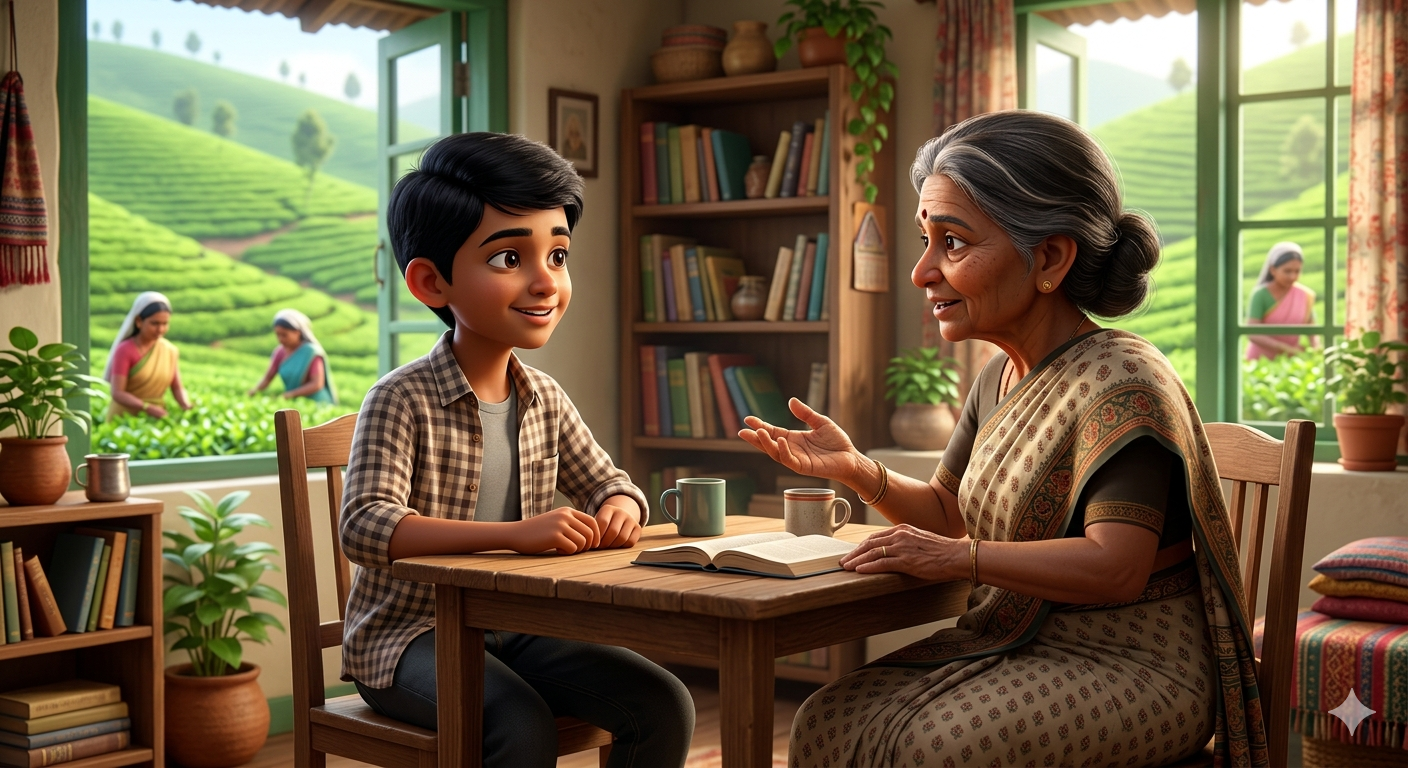
In the sunny hills of Ooty, India, 12-year-old Rohan lived with his family near tea plantations. His grandma, a retired librarian, often said, “Knowledge is your forever shield—nothing can destroy it.”

Rohan loved adventures but feared bullies at school who teased his bookish ways. One weekend, the school organized a thrilling survival camp: obstacle courses, night hikes, and a “fortress defense” game against “invaders.” Rohan packed novels instead of strategy guides, worrying he’d fail.
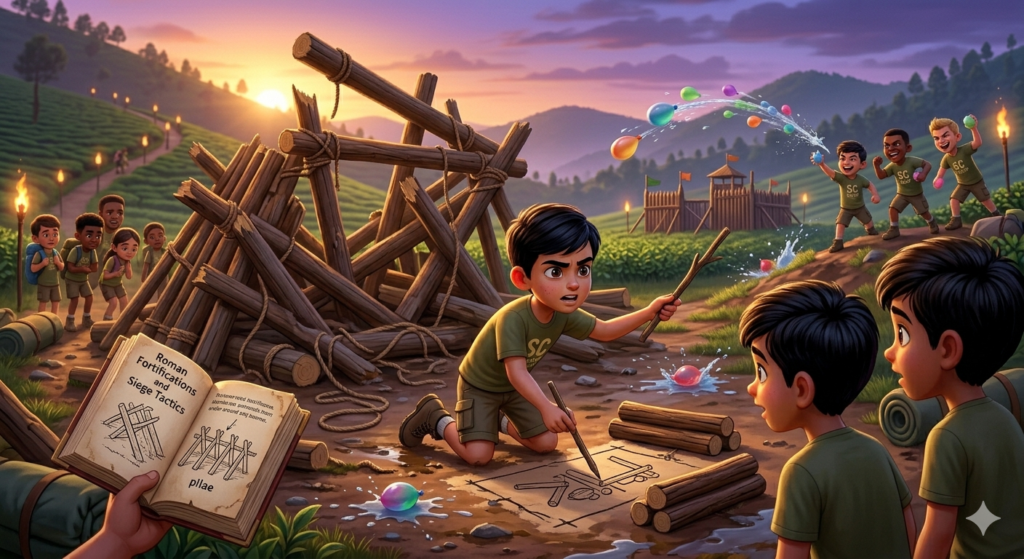
During the fortress challenge, teams built defenses from logs and ropes to fend off water-balloon attacks. Rohan’s team struggled—their wall toppled easily. Bullies from another group laughed, pelting extras. Panicking, Rohan remembered grandma’s words. He grabbed a stick, drew a quick sketch from his history book: Roman tactics with angled barriers. “Stack logs like this—funnels them into traps!” he explained simply.

The team rebuilt stronger, adding moats from ditches. Invaders slipped in mud, balloons missing wildly. Rohan’s clever signals—whistle codes from scout stories—coordinated perfect counters. When night fell, his tale-inspired camouflage hid them flawlessly. No breach! They won the camp championship, shields raised high. Grandma hugged him, reciting a Tamil verse:
Aṟivarraṭaṅ kākkung karuvi seṟuvārkkum
Uḷḷaḻikka lākā araṇ.
அறிவற்றங் காக்குங் கருவி செறுவார்க்கும்
உள்ளழிக்க லாகா அரண்.
She beamed, “This Kural declares: For even the destitute, knowledge is the tool that protects—an impregnable fortress none can destroy within.” Rohan stood tall, knowledge fueling his confidence. Back at school, he calmly outsmarted bullies with facts and wit, turning rivals to friends. Now, his mind’s shield guards every quest.
Moral
Even to the destitute, learning is a protective tool and an impregnable fortress which no one can destroy.
Let’s read the same story in Tamil..
அறிவு தான் உண்மையான பலம்
ஊட்டி மலைப்பகுதியின் அழகான சூழலில் 12 வயது ரோஹன் தனது குடும்பத்துடன் வாழ்ந்து வந்தான். அவன் பாட்டி ஓய்வு பெற்ற நூலகர்.
“அறிவு தான் வாழ்க்கையில் உன்னை காப்பாற்றும் உண்மையான பலம்,” என்று அவள் அடிக்கடி சொல்லுவாள்.
ரோஹனுக்கு சாகசங்கள் மிகவும் பிடிக்கும். ஆனால் பள்ளியில் சில குழந்தைகள் அவனை “புத்தகப் பூச்சி” என்று கேலி செய்வார்கள். அதனால் அவன் மனதில் ஒரு பயம் இருந்தது.
ஒரு நாள் பள்ளியில் சாகச முகாம் நடத்தப்பட்டது. அங்கே தடைகள் தாண்டுதல், இரவு நடைபயணம், மற்றும் “கோட்டை பாதுகாப்பு” போன்ற விளையாட்டுகள் நடந்தன.
ரோஹனும் தனது நண்பர்களுடன் ஒரு குழுவில் சேர்ந்தான்.
“கோட்டை கட்டி அதை எதிரிகளிடமிருந்து காப்பாற்ற வேண்டும்” என்ற போட்டி ஆரம்பமானது. ரோஹனின் குழு மரக்கட்டைகள், கயிறுகள் கொண்டு கோட்டை கட்ட ஆரம்பித்தது. ஆனால் அவர்கள் கட்டியது பலமாக இருக்கவில்லை. மற்ற குழுவினர் தண்ணீர் பந்துகளை வீசி எளிதாக உடைத்துவிட்டனர்.
அவர்களில் சிலர் சிரித்துக்கொண்டே,
“புத்தகப் பூச்சிக்கு இதெல்லாம் தெரியாது!” என்று கேலி செய்தனர்.
ரோஹன் மனதில் வருந்தினான். ஆனால் உடனே அவன் பாட்டியின் வார்த்தைகள் நினைவுக்கு வந்தது.
அவன் ஒரு குச்சியை எடுத்து நிலத்தில் ஒரு வரைபடம் வரைந்தான்.
“நாம் மரக்கட்டைகளை சாய்வாக வைத்து கட்டினால், அவர்கள் நேராக வர முடியாது. இங்கே ஒரு சிறிய குழி போட்டால் அவர்கள் வழுக்கி விழுவார்கள்,” என்று அவன் அமைதியாக விளக்கினான்.
அவன் படித்த வரலாறு கதைகளில் பார்த்த யுக்திகளை நினைவில் கொண்டு பயன்படுத்தினான்.
அனைவரும் அவன் சொன்னபடி கோட்டை மீண்டும் கட்டினர். இப்போது அது மிகவும் வலுவாக இருந்தது.
எதிரிகள் தாக்கும்போது அவர்கள் வழுக்கி விழுந்தனர். தண்ணீர் பந்துகள் வீணாகிப் போனது.
ரோஹன் விசில் சத்தம் மூலம் குழுவினருக்கு சைகை கொடுத்தான். எல்லோரும் ஒரே நேரத்தில் செயல்பட்டு கோட்டையை பாதுகாத்தனர்.
இரவு நேரத்தில் அவர்கள் தங்களை மறைத்து பாதுகாப்பாக இருந்தனர்.
இறுதியில் எந்தக் குழுவும் அவர்களின் கோட்டைக்குள் நுழைய முடியவில்லை. ரோஹனின் குழு வெற்றி பெற்றது.
அனைவரும் அவர்களை பாராட்டினர்.
வீட்டிற்கு வந்தபோது ரோஹனின் பாட்டி ஒரு திருக்குறளைச் சொன்னாள்:
அறிவற்றங் காக்கும் கருவி செறுவார்க்கும்
உள்ளழிக்க லாகா அரண்.
அவள் சிரித்தபடி கூறினாள்:
“அறிவு என்பது யாராலும் உடைக்க முடியாத அரண் மாதிரி. அது எப்போதும் உன்னை காப்பாற்றும்.”
அந்த நாளிலிருந்து ரோஹன் தன்னம்பிக்கையுடன் வாழ ஆரம்பித்தான். முன்பு அவனை கேலி செய்தவர்களும் இப்போது அவனை மதிக்கத் தொடங்கினர்.
ரோஹன் உணர்ந்தான்—
அறிவு தான் வாழ்க்கையில் உண்மையான பலம் என்று.
நீதி
அறிவு என்பது எந்த சவாலையும் கடக்க உதவும் உண்மையான பலம்.
எழுத்துப்பிரதி
Aṟivarraṭaṅ kākkung karuvi seṟuvārkkum
uḷḷaḻikka lākā araṇ.
மூலத் தமிழ்
அறிவற்றங் காக்குங் கருவி செறுவார்க்கும்
உள்ளழிக்க லாகா அரண்.
Breaking it down
- அறிவு (Aṟivu) – அறிவு (aṟivu), knowledge or wisdom.
- அத்து (Ratthu) – அற்ற (aṟṟa), destitute or lacking.
- க்கு (Kku) – க்கு (kku), to or for.
- ங் (Ng) – ங் (ṅ), protective (connective).
- காக்கும் (Kākkum) – காக்கும் (kākkum), that protects.
- கருவி (Karuvi) – கருவி (karuvi), tool or instrument.
- செறு (Seṟu) – செறு (seṟu), destitute or poor.
- வார்க்கும் (Vārkku) – வார்க்கும் (vārkku), to them.
- உள்ள (Uḷḷa) – உள்ள (uḷḷa), within or inside.
- அழிக்க (Aḻikka) – அழித்தல் (aḻiththal), destroy.
- லாகா (Lākā) – லாகாத (lākātha), unable or impregnable.
- அரண் (Araṇ) – அரண் (araṇ), fortress or shield.
Trivia
“கருவி (Karuvi)” traces to Proto-Dravidian karuvi (implement), used in Sangam tools/war (c. 300 BCE); modern Tamil retains it for “tool,” while Kannada “karuvi” means weapon, enduring in Dravidian crafts.
Mirrors Stoic Epictetus (c. 50 CE) in Discourses: “Only the mind is unconquerable”—knowledge as inner fortress, predating but akin to Thiruvalluvar’s empowering shield for the poor.
This bilingual story from ancient Tamil wisdom makes timeless life lessons accessible to readers worldwide — whether you’re discovering these universal truths for the first time, or sharing the beauty of your Tamil heritage with friends from any culture. Reading both English and Tamil versions side by side helps build language confidence, cultural connection, and a lifelong love for meaningful stories — perfect for classrooms, families, and friends around the globe.
Record your kid telling this story and the Kural, we will host it on our youtube page
<Youtube link>