

In a sunny suburb of Sydney, Australia, 11-year-old Sofia lived with her parents. Her mom was a cheerful librarian, and her dad fixed cars at a garage. Sofia loved soccer but struggled on her mixed school team—boys like teammate Luca always picked her last, thinking girls couldn’t kick hard. During practice, Luca tripped her “by accident,” sparking arguments. Sofia felt enmity brewing. “Why can’t we just play nice?” she fumed.
One evening, her dad’s old friend from India, Coach Vikram, visited for a barbecue. Noticing the tension, he shared a Tamil verse:
Pakaimaiyum kēṇmaiyum kaṇṇuraikkum kaṇṇiṉ
vakaimai uṇarvārp pēṟiṉ.
பகைமையும் கேண்மையும் கண்ணுரைக்கும் கண்ணின்
வகைமை உணர்வார்ப் பெறின்.
He explained, “It means: Enmity and friendship are told by the eyes; perceptive people discern their true nature.”
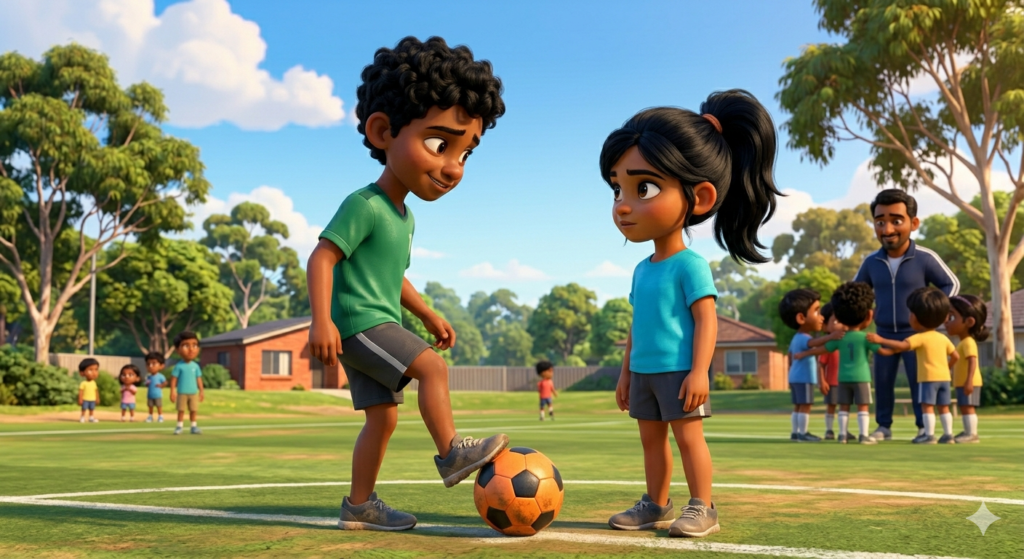
Sofia pondered by the backyard trampoline. Coach Vikram suggested watching closely: “Eyes reveal hearts.” Next practice, she observed Luca—not just glares, but how his eyes lit up when she scored, or softened during team huddles. He passed her the ball secretly once, grinning shyly. “Maybe he’s not mean,” she realized.
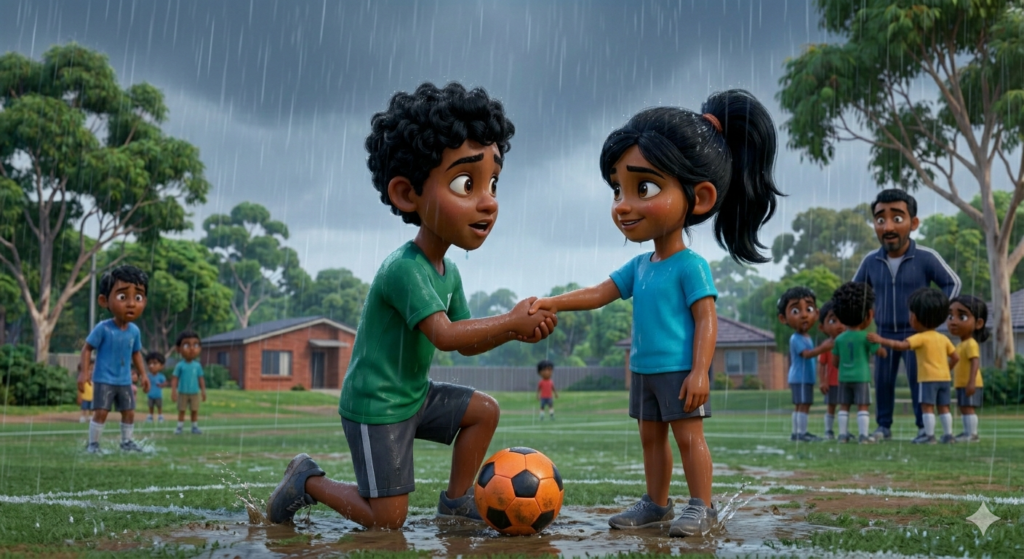
During a big match against rivals, rain made the field slippery. Luca slipped, and Sofia dashed over, pulling him up with a steady hand. Their eyes met—his showed thanks, no anger. She nodded back, eyes sparkling with trust. They linked arms for the restart, confusing the team. Sofia dribbled past defenders, passed to Luca, who scored the winner! Cheers erupted.

After, Luca admitted, “I was shy around you—thought you’d think I’m rough.” Sofia laughed: “Your eyes showed you’re a friend!” Coach Vikram high-fived them: “You saw beyond words—eyes don’t lie. That’s the Kural’s wisdom for true bonds.” The team bonded stronger, unbeatable in spirit. Sofia learned: keen eyes spot friends in foes.
Moral
Enmity and friendship speak through the eyes; the wise perceive their character.
Let’s read the same story in Tamil..
நட்பை கண்ட பார்வை
ஆஸ்திரேலியாவின் சிட்னி நகரில் உள்ள ஒரு அமைதியான பகுதியில் 11 வயது சோஃபியா தனது பெற்றோருடன் வாழ்ந்து வந்தாள். அவளுடைய அம்மா நூலகத்தில் வேலை பார்த்தார். அப்பா கார் மெக்கானிக்.
சோஃபியாவுக்கு கால்பந்து மிகவும் பிடிக்கும். பள்ளி அணியிலும் அவள் விளையாடினாள்.
ஆனால் அந்த அணியில் இருந்த லூகா என்ற சிறுவன் அவளை எப்போதும் சரியாக மதிக்கவில்லை.
“பெண்களால என்ன பெரிய கிக் அடிக்க முடியும்?” என்று நண்பர்களிடம் பேசுவான்.
ஒரு நாள் பயிற்சியின் போது அவன் தவறுதலாக சோஃபியாவை தள்ளிவிட்டான்.
சோஃபியா கோபமாக,
“எப்பவும் என்னைதான் தொந்தரவு பண்ணுற!” என்று சண்டை போட்டாள்.
இருவருக்கும் நட்பு இல்லாமல் பகை வளர ஆரம்பித்தது.
அந்த மாலை இந்தியாவில் இருந்து வந்திருந்த அப்பாவின் நண்பர் விக்ரம் பயிற்சியாளர் அவர்களுடைய வீட்டிற்கு வந்தார்.
சோஃபியாவின் முகத்தில் இருந்த கோபத்தை பார்த்த அவர் ஒரு திருக்குறளைச் சொன்னார்:
பகைமையும் கேண்மையும் கண்ணுரைக்கும் கண்ணின்
வகைமை உணர்வார்ப் பெறின்.
பின்னர் அவர் விளக்கினார்:
“ஒருவரின் கண்கள் அவர்களின் உண்மையான மனதை காட்டும். கவனமாக பார்த்தால் பகையா, நட்பா என்று புரிந்து கொள்ளலாம்.”
அந்த வார்த்தைகள் சோஃபியாவை யோசிக்க வைத்தது.
அடுத்த நாள் பயிற்சிக்கு சென்றபோது அவள் லூகாவை அமைதியாக கவனித்தாள்.
அவன் எப்போதும் கோபமாக இல்லை.
அவள் நல்லா விளையாடும்போது அவன் கண்களில் மகிழ்ச்சி தெரிந்தது.
ஒரு முறை யாருக்கும் தெரியாமல் பந்தை அவளிடம் பாஸ் செய்தான்.
அப்போது சோஃபியா,
“இவன் உண்மையில் கெட்டவன் இல்ல போல…” என்று நினைத்தாள்.
சில நாட்களுக்கு பிறகு முக்கியமான போட்டி வந்தது.
மழை காரணமாக மைதானம் முழுக்க வழுக்கலாக இருந்தது.
விளையாடிக்கொண்டிருந்த லூகா கீழே விழுந்தான்.
அனைவரும் பார்த்துக்கொண்டிருக்க, சோஃபியா உடனே ஓடி சென்று அவனை எழுப்பினாள்.
இருவரின் கண்களும் ஒரு நிமிடம் சந்தித்தது.
அதில் கோபம் இல்லை.
நன்றி… நட்பு… நம்பிக்கை மட்டும் இருந்தது.
விளையாட்டு மீண்டும் தொடங்கியது.
சோஃபியா வேகமாக பந்தை எடுத்துச் சென்று லூகாவுக்கு பாஸ் செய்தாள்.
லூகா அற்புதமாக கோல் அடித்தான்!
முழு மைதானமும் கைத்தட்டலால் முழங்கியது.
போட்டி முடிந்தபின் லூகா மெதுவாக,
“நான் உன்னிடம் எப்படி பேசணும்னு தெரியாமல் தான் அப்படி நடந்துக்கிட்டேன்,” என்றான்.
சோஃபியா சிரித்தபடி,
“உன் கண்களே நீ நல்ல நண்பன் என்று சொல்லிட்டுச்சு!” என்றாள்.
விக்ரம் பயிற்சியாளர் மகிழ்ச்சியுடன்,
“சொற்கள் சொல்லாததை கண்கள் சொல்லிவிடும்,” என்றார்.
அந்த நாளிலிருந்து சோஃபியாவும் லூகாவும் நல்ல நண்பர்களாகி, அணியின் சிறந்த வீரர்களாக மாறினர்.
நீதி
ஒருவரின் உண்மையான மனதை அவர்களின் கண்கள் காட்டிவிடும்.
எழுத்துப்பிரதி
Pakaimaiyum kēṇmaiyum kaṇṇuraikkum kaṇṇiṉ
vakaimai uṇarvārp pēṟiṉ.
மூலத் தமிழ்
பகைமையும் கேண்மையும் கண்ணுரைக்கும் கண்ணின்
வகைமை உணர்வார்ப் பெறின்.
Breaking it down
- பகைமையும் (Pakaimaiyum) – பகைமை ம் (Enmity also), feeling of hostility or foe-like sentiment.
- கேண்மையும் (Kēṇmaiyum) – நட்பு ம் (Friendship also), bond of alliance or amity.
- கண்ணுரைக்கும் (Kaṇṇuraikkum) – கண் உரைக்கும் (Eyes that speak), eyes which communicate or reveal.
- கண்ணின் (Kaṇṇiṉ) – கண் இன் (Of the eye), belonging to or through the eye.
- வகைமை (Vakaimai) – வகை மை (Nature/Character), true quality or disposition.
- உணர்வார்ப் (Uṇarvārpp) – உணர்வோர் ப் (Perceptive people), those who discern or realize.
- பெறின் (Pēṟiṉ) – பெறுவர் இன் (They attain), if/when they gain understanding.
Trivia
“கேண்மை (Kēṇmaiyum)” roots in ancient Tamil for “alliance,” akin to Vedic Sanskrit “sangha” (union); still used in formal Tamil, and echoes in Kannada “kēṇi” for companionship.
Similar to Shakespeare’s “Hamlet” (c. 1600 CE): “The eye is the window to the soul”—Thiruvalluvar (c. 5th century CE) insightfully linked eyes to discerning enmity/friendship centuries earlier!
Boilerplate
This bilingual story from ancient Tamil wisdom makes timeless life lessons accessible to readers worldwide — whether you’re discovering these universal truths for the first time, or sharing the beauty of your Tamil heritage with friends from any culture. Reading both English and Tamil versions side by side helps build language confidence, cultural connection, and a lifelong love for meaningful stories — perfect for classrooms, families, and friends around the globe.
Record your kid telling this story and the Kural, we will host it on our youtube page
<Youtube link>