
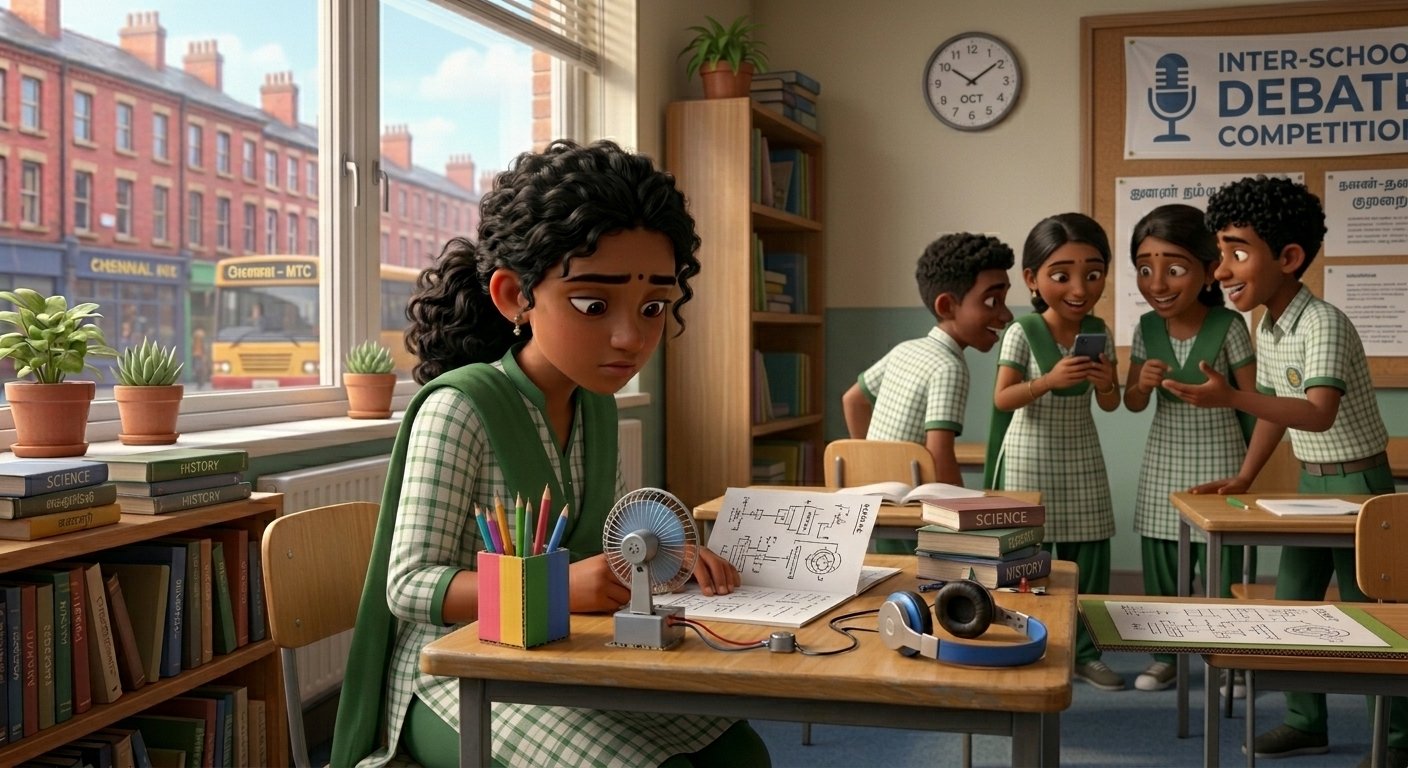
In Chennai, 13-year-old Yazhini loved inventing strange little things.
She made pencil holders from cardboard, tiny fans from old motors, and even a rain alarm using broken headphones.
But there was one problem.
Nobody in her class cared.
Whenever she excitedly explained her ideas, her classmates interrupted her.
“Why would anyone build that?”
“Just buy it online!”
Some students laughed before she could even finish speaking.
Slowly, Yazhini stopped sharing her ideas.

One rainy afternoon, her science teacher announced a “Community Innovation Fair.”
Students had to create something useful for everyday life.
The classroom buzzed with excitement.
But Yazhini quietly stared outside the window.
She didn’t feel like explaining anything anymore.

That evening, while helping her grandmother water plants on the terrace, Yazhini finally spoke.
“What’s the point of having ideas if nobody listens?”
Grandmother smiled gently but said nothing.

Instead, she poured water carefully into one healthy flowerpot.
Then she pointed toward another cracked pot nearby.
Water leaked out immediately through its broken sides.
Only then did Grandmother softly recite:
உணர்வ துடையார்முன் சொல்லல் வளர்வதன்
பாத்தியுள் நீர்சொரிந் தற்று.
Uṇarvadh uḍaiyārmun sollal vaḷarvadhan
pāththiyuḷ nīrsorindhatru.
Yazhini listened quietly.
Grandmother explained:
“Sharing ideas with people who truly understand is like watering fertile soil. Only then can something grow.”
Those words stayed in Yazhini’s heart.

A few days later, instead of presenting her project to noisy classmates first, Yazhini visited the fair preparation room after school.
There, she met an older student named Mithran who loved electronics.
When Yazhini nervously showed her rain alarm idea, Mithran’s eyes widened.
“Wait… this could actually help people dry clothes before rain starts!”
For the first time, someone understood immediately.
Together, they improved the design.
They added sensors.
A louder alarm.
A small flashing light.
During the Innovation Fair, their project became one of the most crowded stalls.
Teachers, parents, and students gathered around excitedly.
One visitor even said,
“This could help farmers too!”
That evening, while packing up her project, Yazhini smiled quietly.
Her ideas had not been useless.
They had simply needed the right minds to grow in.
Moral
Sharing ideas with understanding people helps knowledge grow and flourish.
Let’s read the same story in Tamil…
முளைத்த விதை
சென்னையில் பதிமூன்று வயது யாழினிக்கு புதுசாக ஏதாவது உருவாக்குவது மிகவும் பிடிக்கும்.
கார்ட்போர்டால் பென்சில் ஸ்டாண்ட் செய்வாள்.
பழைய மோட்டாரில் சிறிய விசிறி உருவாக்குவாள்.
உடைந்த ஹெட்போனை பயன்படுத்தி மழை அலாரம் கூட செய்திருந்தாள்.
ஆனால் ஒரு பிரச்சினை இருந்தது.
அவள் வகுப்பில் யாருக்கும் அவள் யோசனைகளில் ஆர்வம் இல்லை.
அவள் உற்சாகமாக பேச ஆரம்பித்தாலே சிலர் நடுவில் தடுத்துவிடுவார்கள்.
“இதெல்லாம் யாருக்கு வேணும்?”
“ஆன்லைன்ல வாங்கிக்கலாம்!”
சிலர் அவள் பேச்சு முடியும் முன்பே சிரித்துவிடுவார்கள்.
மெதுவாக யாழினி தனது யோசனைகளை பகிர்வதை நிறுத்திவிட்டாள்.
ஒரு மழையான மாலை பள்ளியில் “Community Innovation Fair” அறிவிக்கப்பட்டது.
அன்றாட வாழ்க்கைக்கு உதவும் ஒரு புதிய கண்டுபிடிப்பை மாணவர்கள் உருவாக்க வேண்டும்.
முழு வகுப்பும் உற்சாகமாக பேசிக்கொண்டிருந்தது.
ஆனால் யாழினி மட்டும் ஜன்னல் வழியே மழையை பார்த்துக்கொண்டிருந்தாள்.
மீண்டும் யாரிடமும் பேசவே மனம் வரவில்லை.
அன்று மாலை பாட்டியுடன் சேர்ந்து மாடியில் செடிகளுக்கு தண்ணீர் ஊற்றிக்கொண்டிருந்தபோது யாழினி மெதுவாக கேட்டாள்:
“யாரும் கேட்காத யோசனைகளுக்கு என்ன அர்த்தம்?”
பாட்டி உடனே பதில் சொல்லவில்லை.
அவர் ஒரு நல்ல பூந்தொட்டியில் மெதுவாக தண்ணீர் ஊற்றினார்.
பிறகு அருகில் இருந்த உடைந்த தொட்டியை காட்டினார்.
அதில் ஊற்றிய தண்ணீர் உடனே வெளியே கசிய ஆரம்பித்தது.
அப்போதுதான் அவர் மெதுவாக ஒரு திருக்குறளைச் சொன்னார்:
உணர்வ துடையார்முன் சொல்லல் வளர்வதன்
பாத்தியுள் நீர்சொரிந் தற்று.
பின்னர் விளக்கினார்:
“புரிந்துகொள்ளும் மனிதர்களிடம் பேசுறது நல்ல மண்ணில் தண்ணீர் ஊற்றுற மாதிரி. அப்போதுதான் விதை வளர முடியும்.”
அந்த வார்த்தைகள் யாழினியின் மனதில் பதிந்துவிட்டது.
சில நாட்கள் கழித்து யாழினி தனது திட்டத்தை எல்லோரிடமும் சொல்லாமல் பள்ளி ஆய்வறைக்கு சென்றாள்.
அங்கே மின்சாதனங்களில் ஆர்வமுள்ள மித்ரன் என்ற மூத்த மாணவனை சந்தித்தாள்.
தயக்கத்துடன் தனது மழை அலாரத்தை காட்டினாள்.
மித்ரனின் கண்கள் பிரகாசித்தது.
“இது உண்மையிலேயே பயனுள்ள ஐடியா! மழை வருவதற்கு முன்னாடி துணிகளை எடுத்துக்கொள்ள உதவும்!”
முதல் முறையாக யாரோ அவளை உடனே புரிந்துகொண்டார்கள்.
இருவரும் சேர்ந்து அந்த திட்டத்தை மேம்படுத்தினார்கள்.
சென்சார் சேர்த்தார்கள்.
பெரிய அலாரம் வைத்தார்கள்.
ஒளி மின்னும் சிக்னலும் இணைத்தார்கள்.
Innovation Fair நாளில் அவர்களின் ஸ்டாலுக்கு பெரிய கூட்டம் திரண்டது.
ஆசிரியர்கள், பெற்றோர், மாணவர்கள் எல்லோரும் ஆச்சரியமாக பார்த்தார்கள்.
ஒருவர் கூட சொன்னார்:
“இது விவசாயிகளுக்கும் உதவும்!”
அன்று மாலை தனது திட்டத்தை எடுத்துக்கொண்டிருந்த யாழினி அமைதியாக சிரித்தாள்.
அவளுடைய யோசனைகள் பயனற்றவை அல்ல.
அவை வளர சரியான மனங்கள் மட்டும் தேவைப்பட்டன.
நீதி
புரிந்துகொள்ளும் மனிதர்களிடம் பகிரப்படும் அறிவும் யோசனைகளும் தான் வளர்ச்சி பெறும்.
Breaking it down
- உணர்வது (Uṇarvathu) – புரிந்துகொள்வது (Understanding), ability to perceive deeply.
- உடையார் (Uḍaiyār) – கொண்டவர்கள் (Those who possess), people who have wisdom.
- முன் (Mun) – முன்னிலையில் (Before/in front of), in the presence of.
- சொல்லல் (Sollal) – பேசுதல் (Speaking), sharing ideas or knowledge.
- வளர்வதன் (Vaḷarvadhan) – வளர்ச்சிக்கான (For growth), helping something flourish.
- பாத்தியுள் (Pāththiyuḷ) – நல்ல பாத்தியில் (In a proper vessel/soil), suitable place to nurture growth.
- நீர்சொரிந்தற்று (Nīrsorindhatru) – தண்ணீர் ஊற்றுவது போல (Like pouring water), nourishing carefully.
Trivia
“பாத்தி” என்ற சொல் இங்கு செடி வளர்க்கும் பாத்திரம் அல்லது வளமான இடம் என்ற பொருளில் வருகிறது. பழந்தமிழில் அறிவு வளர்வதற்கான சூழலையும் “பாத்தி” என உவமையாகக் கூறியுள்ளனர்.
இந்தக் குறளின் கருத்து இன்று “supportive learning environments” என்ற கல்வி மனையியல் கருத்துடன் மிகவும் தொடர்புடையது. குழந்தைகளின் திறமைகள் சரியான ஊக்கமும் புரிதலும் கிடைக்கும் சூழலில் மட்டுமே முழுமையாக மலரும் என்று நவீன ஆய்வுகள் கூறுகின்றன.
This bilingual story from ancient Tamil wisdom makes timeless life lessons accessible to readers worldwide — whether you’re discovering these universal truths for the first time, or sharing the beauty of your Tamil heritage with friends from any culture. Reading both English and Tamil versions side by side helps build language confidence, cultural connection, and a lifelong love for meaningful stories — perfect for classrooms, families, and friends around the globe.
Record your kid telling this story and the Kural, we will host it on our YouTube page.
<Youtube link>