
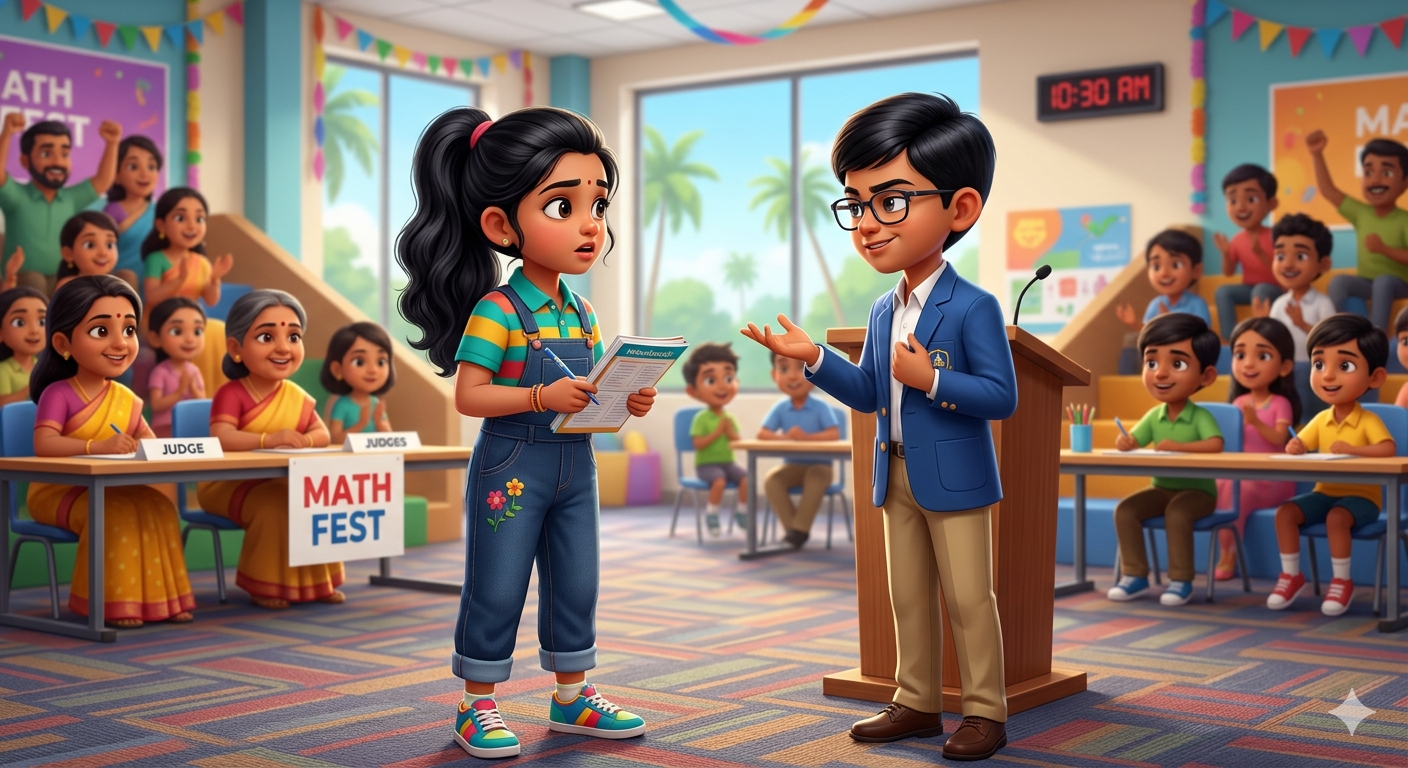
In a lively Coimbatore apartment block, 10-year-old Nithya lived with her engineer dad and tailor mom. She aced math quizzes, her quick brain the talk of class. Her best pal, 10-year-old Akash, matched her skill—they teamed for math olympiads, solving puzzles over mangoes. But at the state math fest, judges paired Nithya with arrogant topper Vikram, who sneered, “You’re no match—stay back.”
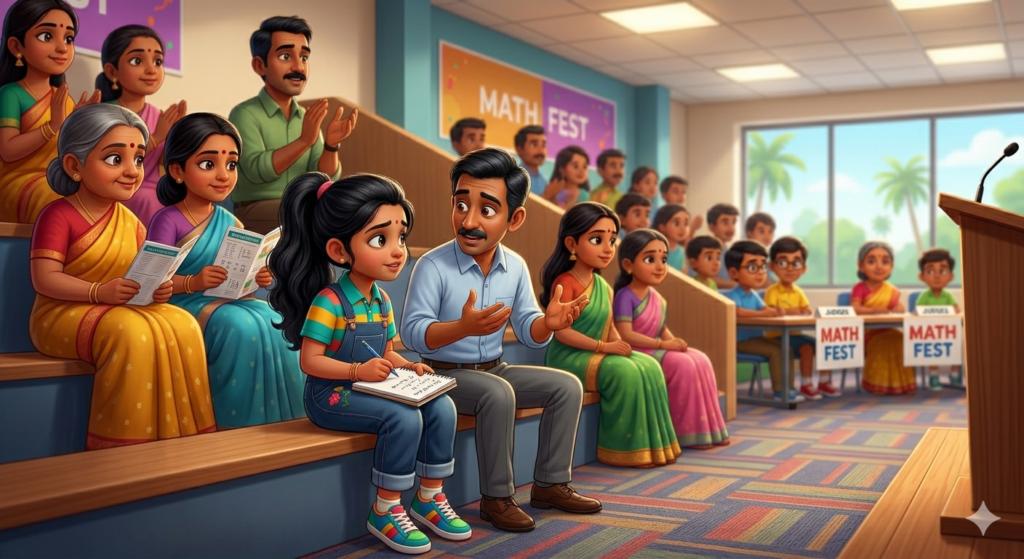
Nithya fumed, her sparkle dimming. Dad, overhearing, recited a Tirukkural:
Aṅkaṇattuḷ ukkka amiḻḏṟṟāl taṅkaṇattār
allāṟmuṉ kōṭṭi koḷal.
அங்கணத்துள் உக்க அமிழ்தற்றால் தங்கணத்தார்
அல்லார்முன் கோட்டி கொளல்.
He explained, “Shine with peers—don’t force into unequal crowds.” Nithya switched teams wisely, reuniting with Akash.
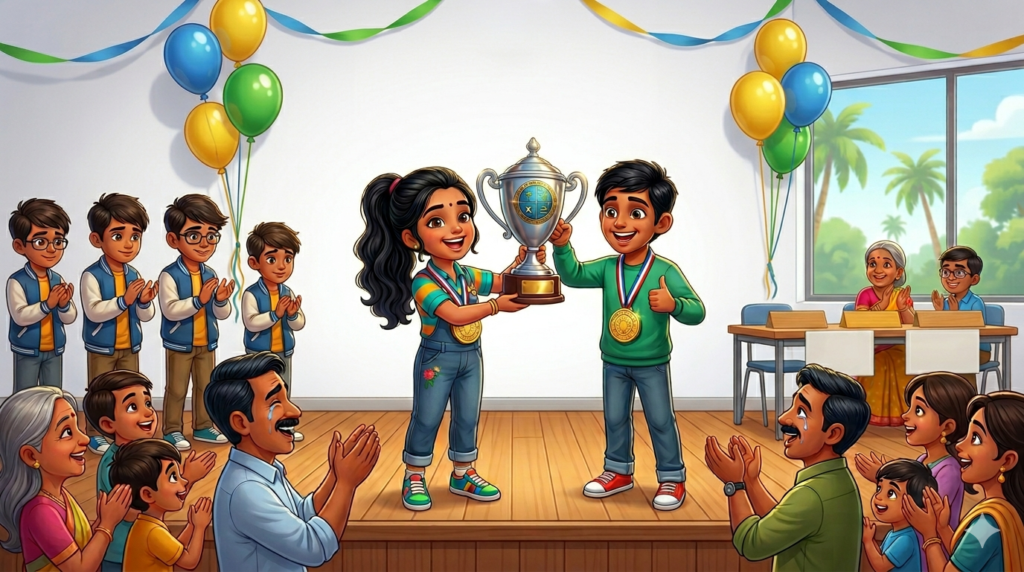
The olympiad adventure exploded! Vikram’s squad stumbled on team problems, his ego clashing. Nithya and Akash synced perfectly: she spotted patterns, he crunched numbers. Tough rounds—geometry maze, algebra relay—saw them edge ahead, laughing through stress. Vikram begged to join mid-fest; Nithya smiled: “Equals only.” Finals frenzy: they nailed the bonus cipher. Gold medals gleamed!

Dad cheered: “You sat with true peers—eyes confirmed, nectar flowed.” Nithya high-fived Akash: “Our row, our win!” They mentored juniors, building a math circle. Nithya learned: forced heights fade; equal bonds let genius thrive eternally.
Moral
Even nectar will not suffice to sit in an assembly unless one’s eyes confirm equals there.
Let’s read the same story in Tamil..
தகுதியான இடத்தில் தான் மதிப்பு
கோயம்புத்தூரில் உள்ள ஒரு குடியிருப்பில் 10 வயது நித்யா தனது குடும்பத்துடன் வாழ்ந்து வந்தாள். அவளுடைய அப்பா பொறியாளர், அம்மா தையல்காரர்.
நித்யா கணிதத்தில் மிகவும் திறமையானவள். பள்ளியில் எல்லா போட்டிகளிலும் அவள் முன்னிலையில் இருப்பாள்.
அவளுடைய நெருங்கிய நண்பன் ஆகாஷ். அவனும் அதே அளவுக்கு புத்திசாலி. இருவரும் சேர்ந்து புதிர்கள் போட்டு விளையாடுவார்கள்.
ஒரு நாள் மாநில அளவிலான கணிதப் போட்டி அறிவிக்கப்பட்டது.
அதில் நித்யாவை விக்ரம் என்ற ஒரு பெருமை கொண்ட மாணவனுடன் சேர்த்தனர்.
“நீ என்னோட லெவல்ல இல்ல… பக்கத்துல நின்று பாரு,” என்று விக்ரம் அவளை அவமதித்தான்.
நித்யா மனம் உடைந்தாள்.
அப்போது அவளுடைய அப்பா ஒரு திருக்குறளைச் சொன்னார்:
அங்கணத்துள் உக்க அமிழ்தற்றால் தங்கணத்தார்
அல்லார்முன் கோட்டி கொளல்.
அவர் விளக்கினார்:
“தகுதியில்லாத இடத்தில் அமர்ந்தாலும், அமுதம் கூட பயன் இல்லை. நம்மை புரிந்து கொள்ளும் இடத்தில்தான் நம்முடைய திறமை மதிப்பு பெறும்.”
இதைக் கேட்ட நித்யா யோசித்தாள்.
“நான் எனக்கு பொருந்தும் அணியில்தான் இருக்க வேண்டும்,” என்று முடிவு செய்தாள்.
அவள் மீண்டும் ஆகாஷுடன் சேர்ந்தாள்.
போட்டி ஆரம்பமானது.
கடினமான கேள்விகள் வந்தன. ஆனால் நித்யா மற்றும் ஆகாஷ் ஒருவரை ஒருவர் நன்றாக புரிந்து கொண்டு வேகமாக பதில் கண்டனர்.
ஒரு சுற்றில் நித்யா வடிவத்தை கண்டுபிடித்தாள்; மற்றொரு சுற்றில் ஆகாஷ் கணக்கை முடித்தான்.
இருவரும் சேர்ந்து சிறப்பாக செயல்பட்டனர்.
மற்றபுறம் விக்ரத்தின் அணி ஒத்துழைப்பு இல்லாமல் தடுமாறியது.
இறுதி சுற்றில், நித்யா மற்றும் ஆகாஷ் கடினமான புதிரையும் சரியாக தீர்த்து வெற்றி பெற்றனர்!
முதல் பரிசு—அவர்களுக்கே!
அப்பா சிரித்துக் கொண்டு,
“சரியான இடத்தைத் தேர்ந்தெடுத்ததால் தான் வெற்றி கிடைத்தது,” என்றார்.
நித்யா மகிழ்ச்சியுடன்,
“நம்மை புரிந்து கொள்வோருடன் இருந்தால் தான் நம்மால் ஜெயிக்க முடியும்!” என்றாள்.
நீதி
தகுதியான இடத்தில்தான் திறமைக்கு உண்மையான மதிப்பு கிடைக்கும்.
எழுத்துப்பிரதி
Aṅkaṇattuḷ ukkka amiḻḏṟṟāl taṅkaṇattār
allāṟmuṉ kōṭṭi koḷal.
மூலத் தமிழ்
அங்கணத்துள் உக்க அமிழ்தற்றால் தங்கணத்தார்
அல்லார்முன் கோட்டி கொளல்.
Breaking it down
- அங்கணத்துள் (Aṅkaṇattuḷ) – அங்கணத்தில் (In the assembly), in the gathering/row.
- உக்க (Ukka) – உட்கார (To sit), to take one’s place.
- அமிழ்தற்றால் (Amiḻḏṟṟāl) – அமிழ்து இருந்தாலும் (Even if nectar), even divine nectar.
- தங்கணத்தார் (Taṅkaṇattār) – தங்கள் கண்கள் (One’s own eyes), self-judgment.
- அல்லார்முன் (Allāṟ muṉ) – அல்லாதவர்க்கு முன் (Before unequals), in front of non-equals.
- கோட்டி (Kōṭṭi) – நிற்க (To stand), forced positioning.
- கொளல் (Koḷal) – பயனில்லை (Not acceptable), won’t do/suffice.
Trivia
“அங்கணம் (Aṅkaṇam)” denotes elite assemblies in Sangam halls (c. 300 BCE), from aṅkam (arena); lingers in modern Tamil “aṅkaṇaṁ” (forum), and Malayalam “aṅgaṇam” (gathering space).
Parallels Aristotle’s Politics (c. 350 BCE): equals deliberate together—unequals disrupt harmony, like Kural’s eye-confirmed row.
This bilingual story from ancient Tamil wisdom makes timeless life lessons accessible to readers worldwide — whether you’re discovering these universal truths for the first time, or sharing the beauty of your Tamil heritage with friends from any culture. Reading both English and Tamil versions side by side helps build language confidence, cultural connection, and a lifelong love for meaningful stories — perfect for classrooms, families, and friends around the globe.
Record your kid telling this story and the Kural, we will host it on our youtube page
<Youtube link>