
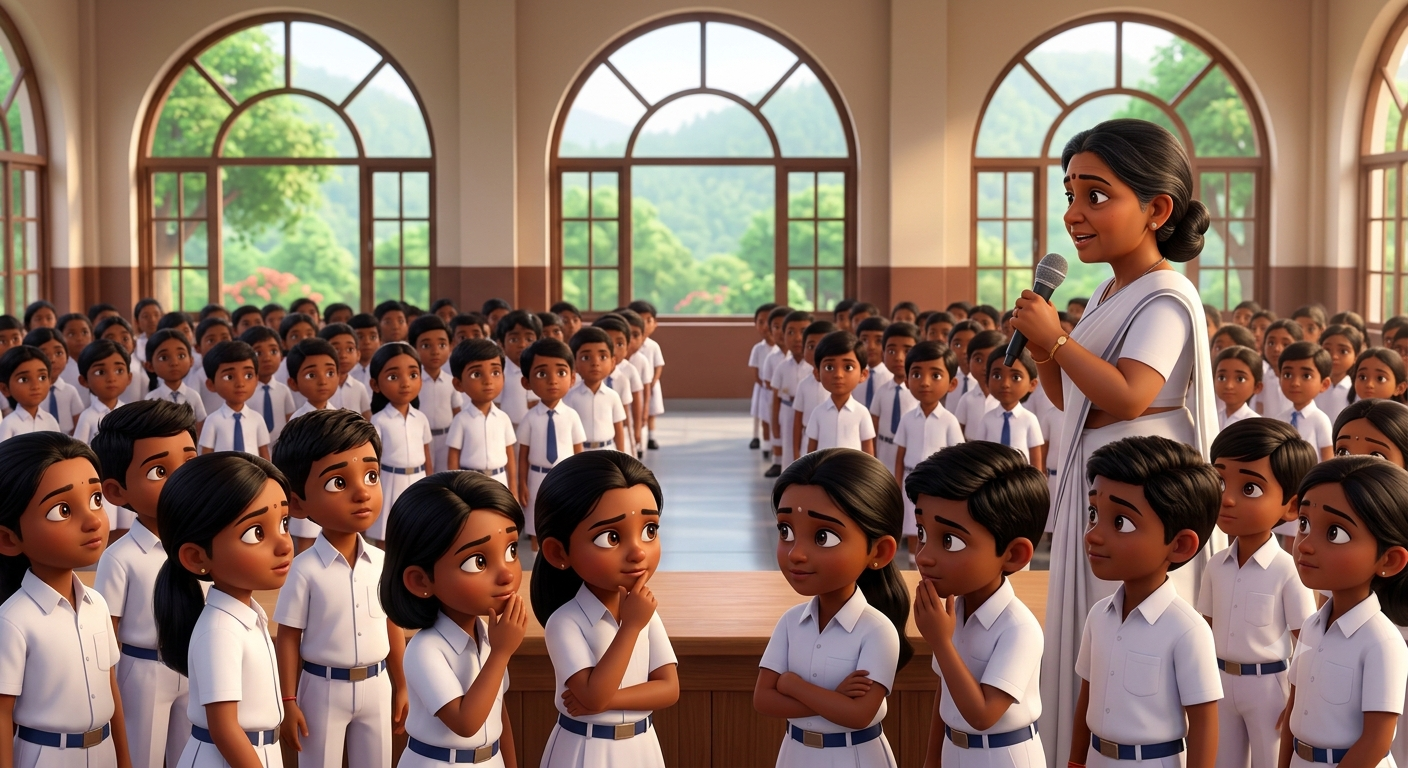
Every Monday, students at a school in Dehradun wore crisp white uniforms. During one assembly, the principal announced a new “Honesty Challenge.” There would be no teachers supervising the library, the sports room, or the stationery counter for an entire week. Everyone wondered how many students would break the rules when no one was watching.
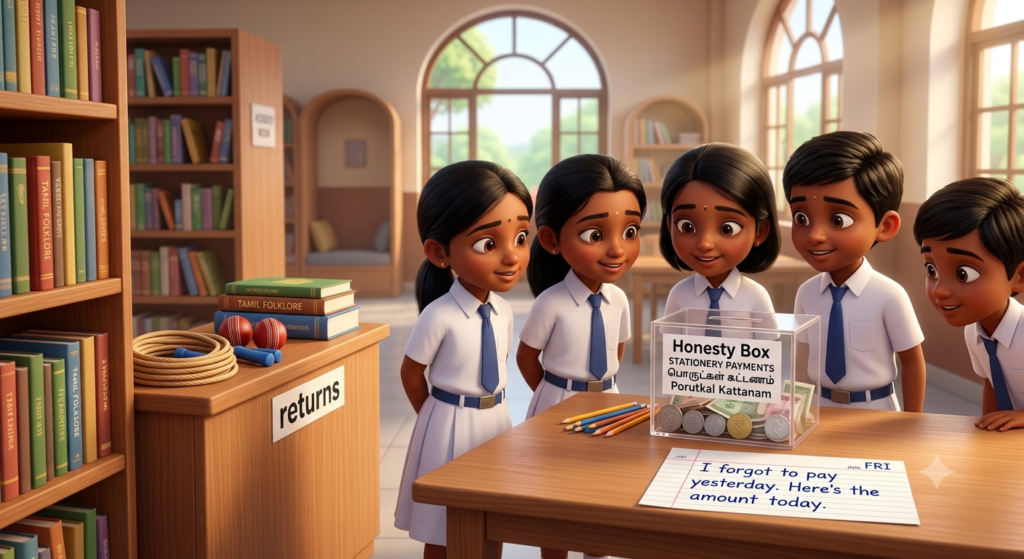
By Friday, something surprising had happened. Not a single item was missing from the library. The sports equipment had been returned neatly, and a small box near the stationery shelf contained money left by students who had taken pencils or notebooks. One student had even left a note saying, “I forgot to pay yesterday. Here’s the amount today.”
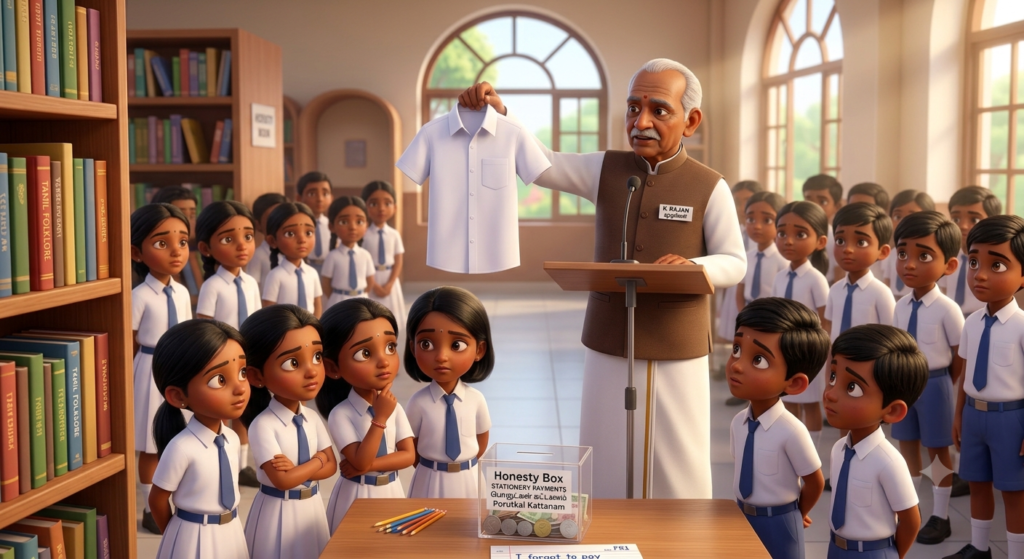
During the closing assembly, many expected the principal to praise the school for its discipline. Instead, he held up a perfectly clean white shirt and asked, “If this shirt gets a stain, everyone notices it. But what about the stains that no one can see?”
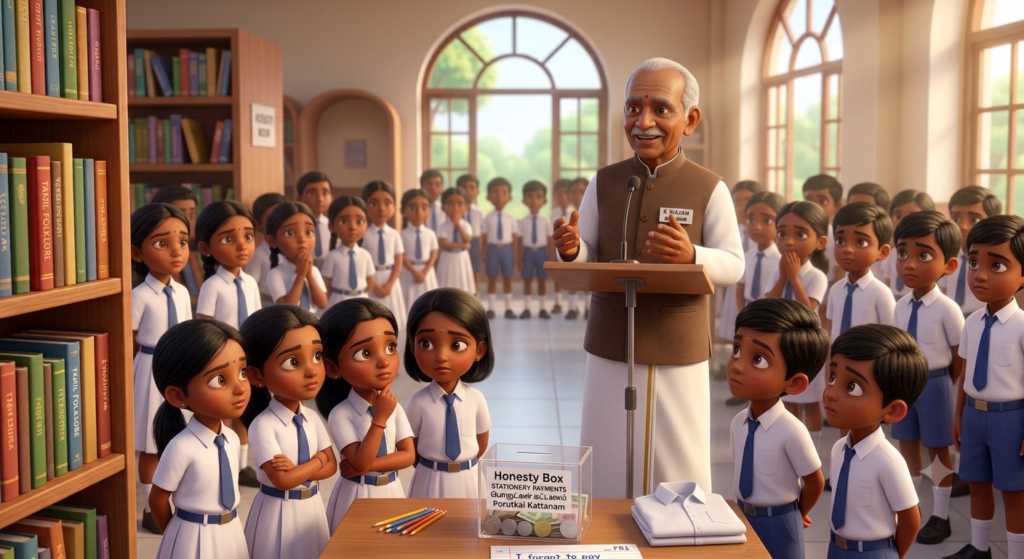
The hall fell silent. He smiled and continued, “The greatest cleanliness is not on our clothes or in our classrooms. It is inside our minds. When the mind is free from dishonesty, jealousy, selfishness, and hatred, every good action naturally follows. Without that, even the biggest acts of charity become empty.”
He then recited:
மனத்துக்கண் மாசிலன் ஆதல் அனைத்தறன்
ஆகுல நீர பிற.
Maṉaththukkaṇ māsilan āthal aṉaitthaṟaṉ
ākula nīr piṟa.
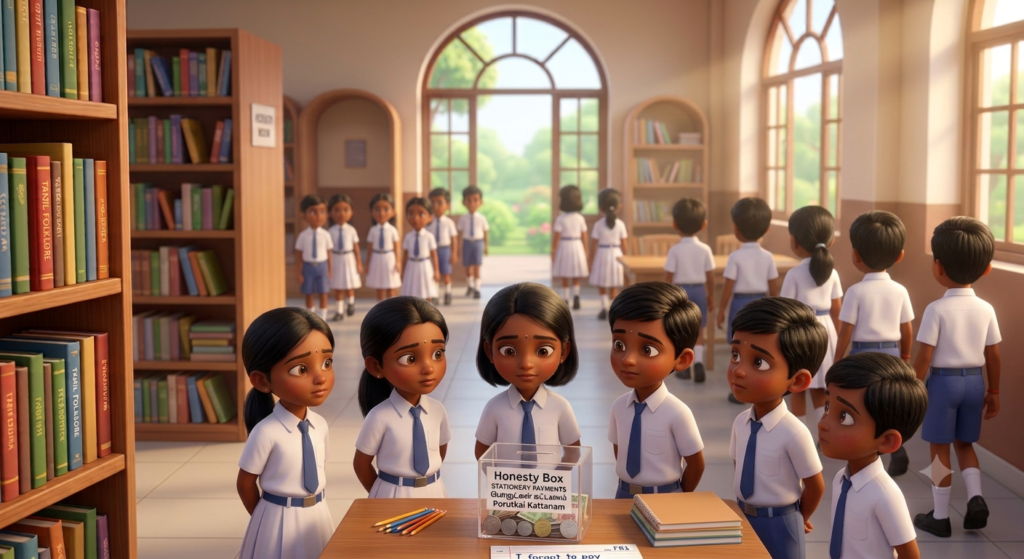
The students walked back to their classrooms quietly. They realised that the true test of character begins when nobody is watching, because the purest heart is the foundation of every virtue.
Moral
True goodness begins with a pure mind. When the heart is free from inner impurities, every other virtue naturally follows.
Let’s read the same story in Tamil…
வெள்ளைச் சட்டை
டேராடூனில் இருந்த ஒரு பள்ளியில் ஒவ்வொரு திங்கட்கிழமையும் மாணவர்கள் வெள்ளை நிறச் சீருடை அணிவது வழக்கம். ஒரு நாள் காலை கூட்டத்தில் முதல்வர் ஒரு வித்தியாசமான அறிவிப்பை வெளியிட்டார். “இந்த வாரம் நூலகம், விளையாட்டு அறை, எழுதுபொருள் அறை—எங்கும் ஆசிரியர்கள் கண்காணிக்க மாட்டார்கள். நீங்கள் எப்படி நடந்து கொள்கிறீர்கள் என்பதை உங்களுடைய மனசாட்சியே தீர்மானிக்கும்,” என்றார். மாணவர்கள் அனைவரும் ஆச்சரியத்துடன் ஒருவரை ஒருவர் பார்த்தனர்.
ஒரு வாரம் முடிந்தபோது பள்ளி நிர்வாகம் வியந்துபோனது. நூலகத்தில் ஒரு புத்தகம்கூட காணாமல் போகவில்லை. விளையாட்டு உபகரணங்கள் அனைத்தும் இருந்த இடத்திலேயே திருப்பி வைக்கப்பட்டிருந்தன. எழுதுபொருள் எடுத்தவர்கள் அதற்கான பணத்தை அருகில் இருந்த பெட்டியில் போட்டிருந்தனர். ஒரு மாணவன், “நேற்று பணம் கொடுக்க மறந்துவிட்டேன். இன்று கொடுக்கிறேன்,” என்று ஒரு சிறிய குறிப்பும் எழுதி வைத்திருந்தான்.
வெள்ளிக்கிழமை மாலை முதல்வர் ஒரு சுத்தமான வெள்ளைச் சட்டையை அனைவரிடமும் காட்டினார். “இந்தச் சட்டையில் ஒரு சிறிய கறை பட்டால்கூட எல்லோருக்கும் தெரியும். ஆனால் மனதில் படும் கறைகளை யார் பார்க்கிறார்கள்?” என்று கேட்டார். அரங்கம் முழுவதும் அமைதி நிலவியது.
பின்னர் அவர் மெதுவாகச் சொன்னார்: “உடலில் சுத்தம் இருந்தால் அது வெளியில் தெரியும். ஆனால் மனதில் சுத்தம் இருந்தால்தான் வாழ்க்கையில் அறம் வெளிப்படும். பொறாமை, பொய், பேராசை, வெறுப்பு ஆகிய கறைகள் மனதில் இல்லாமல் இருப்பதுதான் எல்லா அறங்களுக்கும் அடிப்படை.”
அவர் திருக்குறளை வாசித்தார்:
மனத்துக்கண் மாசிலன் ஆதல் அனைத்தறன்
ஆகுல நீர பிற.
அன்று மாணவர்கள் ஒரு புதிய உண்மையைப் புரிந்துகொண்டனர். மனிதனின் உண்மையான சுத்தம் அவன் அணியும் ஆடையில் இல்லை; அவன் சிந்திக்கும் மனதில்தான் இருக்கிறது.
நீதி
மனம் தூய்மையாக இருந்தால், எல்லா நல்ல செயல்களும் இயல்பாக மலரும். அறத்தின் தொடக்கம் மனத்தின் தூய்மையில்தான் உள்ளது.
எழுத்துப்பிரதி
Maṉaththukkaṇ māsilan āthal aṉaitthaṟaṉ
ākula nīr piṟa.
மூலத் தமிழ்
மனத்துக்கண் மாசிலன் ஆதல் அனைத்தறன்
ஆகுல நீர பிற.
Breaking it down
- மனத்துக்கண் (Maṉaththukkaṇ) – மனதில் (In the mind)
- மாசிலன் (Māsilan) – கறையில்லாதவன், தூய்மையானவன் (Free from impurity)
- ஆதல் (Āthal) – இருப்பது (To be)
- அனைத்தறன் (Aṉaitthaṟaṉ) – எல்லா அறங்களும் (All virtues)
- ஆகுல (Ākula) – ஆகும், அடிப்படையாகும் (Is the essence of)
- நீர (Nīr) – நிச்சயமாக (Indeed)
- பிற (Piṟa) – மற்றவை (All other acts)
Trivia
இந்தக் குறள் அறன் வலியுறுத்தல் அதிகாரத்தில் இடம்பெறுகிறது. திருவள்ளுவர் கூறுவது, அறம் என்பது வெளியில் செய்யும் நல்ல செயல்களால் மட்டும் அளவிடப்படுவதில்லை. மனதில் பொறாமை, வஞ்சகம், கோபம், பேராசை போன்ற கறைகள் இல்லாமல் இருப்பதே எல்லா அறங்களிலும் உயர்ந்த அறம்.
இன்றைய உளவியல் மற்றும் நெறிமுறை ஆய்வுகளும் இதையே வலியுறுத்துகின்றன. வெளிப்புற நடத்தை நீண்ட காலம் நிலைக்க வேண்டுமெனில், அதன் வேராக உள்ள மனநிலையே முதலில் தூய்மையாக இருக்க வேண்டும்.
This bilingual story from ancient Tamil wisdom makes timeless life lessons accessible to readers worldwide—whether you’re discovering these universal truths for the first time, or sharing the beauty of your Tamil heritage with friends from any culture. Reading both English and Tamil versions side by side helps build language confidence, cultural connection, and a lifelong love for meaningful stories—perfect for classrooms, families, and friends around the globe.
Record your kid telling this story and the Kural, and we will host it on our YouTube page.
<YouTube link>