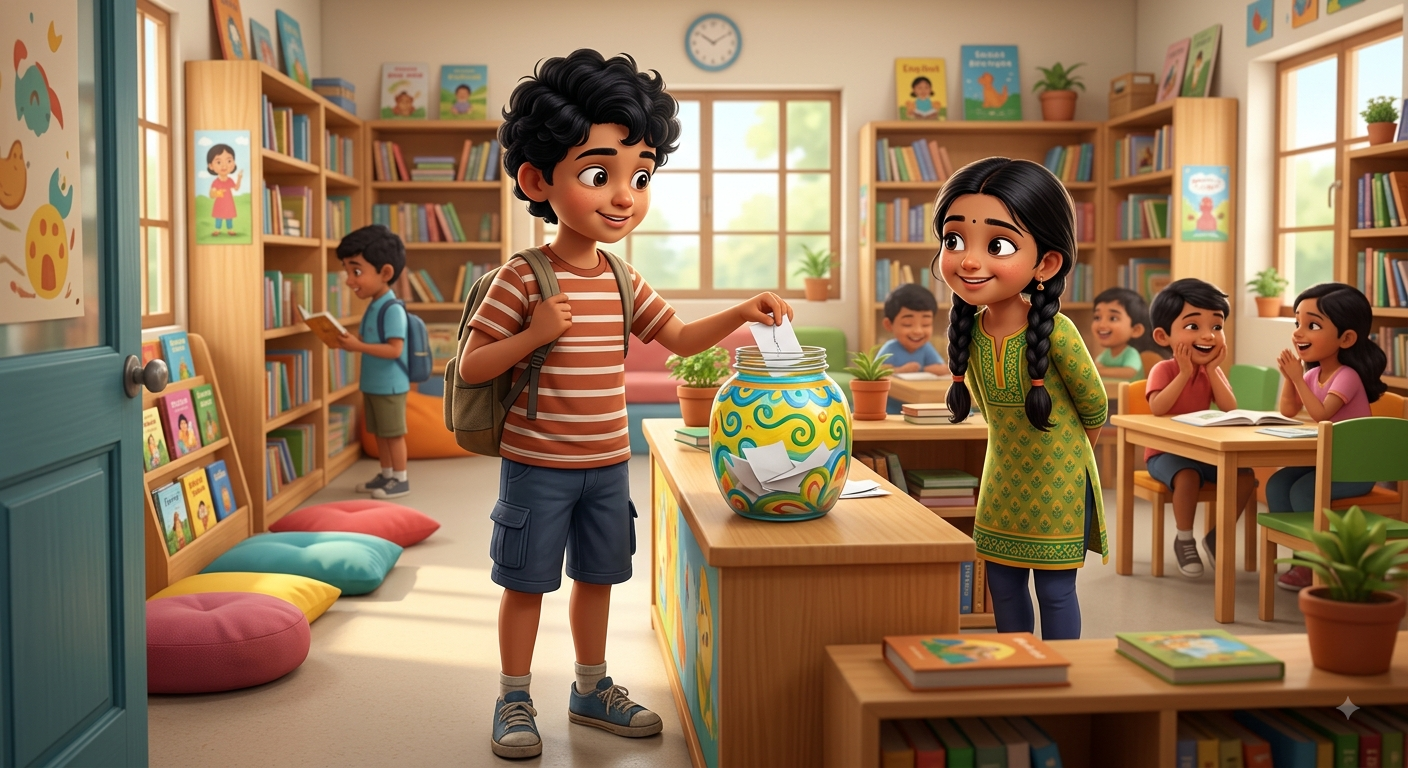
Every Friday, a children’s library in Pune placed a colourful jar near the entrance with a sign that read, “Ask any question!” Children dropped in slips of paper with questions about space, animals, inventions, and history. Twelve-year-old Dev visited the library every week, eager to discover something new. His friend Kiran often laughed and said, “Why ask so many questions? You already have enough books at home.”
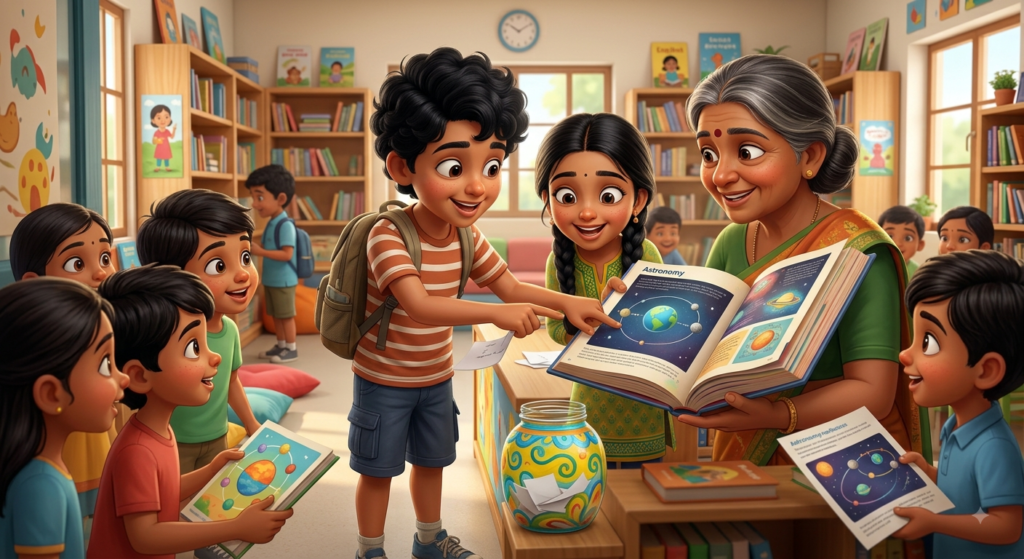
One afternoon, the librarian picked a question from the jar: “Why does the moon sometimes appear during the day?” None of the children knew the answer. Dev searched through an astronomy book, another child found a picture, and together they discovered the explanation. Soon everyone gathered around, listening with wide eyes and asking even more questions. Kiran, who had only come to pass the time, found himself joining the discussion with excitement.
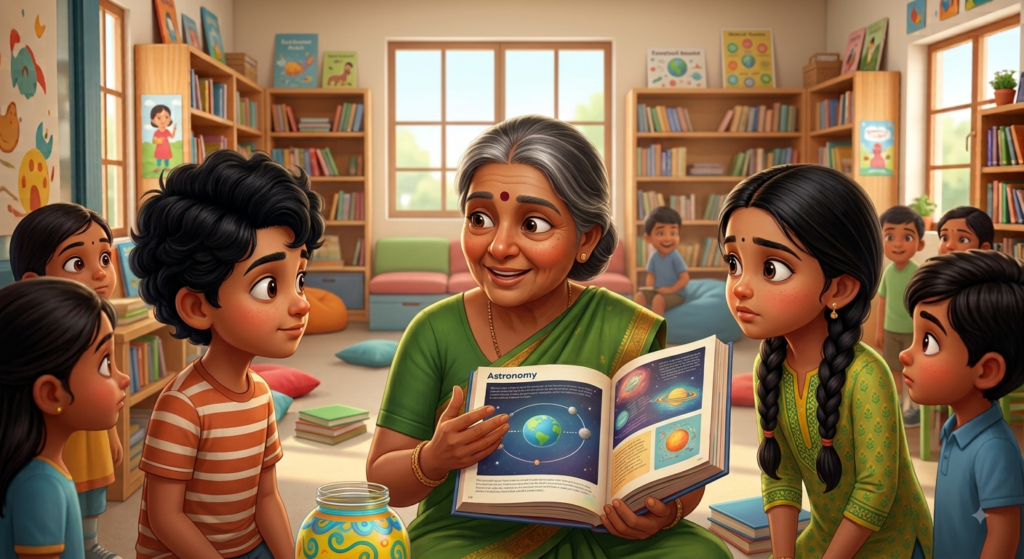
The librarian watched the children and smiled. She then remembered a Thirukkural and said,
கண்ணுடையர் என்பவர் கற்றோர் முகத்திரண்டு
புண்ணுடையர் கல்லா தவர்.
Kaṇṇuḍaiyar eṉbavar kaṟṟōr mukatthiraṇḍu
puṇṇuḍaiyar kallā thavar.
She explained, “Thiruvalluvar says that those who learn are the ones who truly have eyes, because education helps us see and understand the world.” Kiran listened carefully.
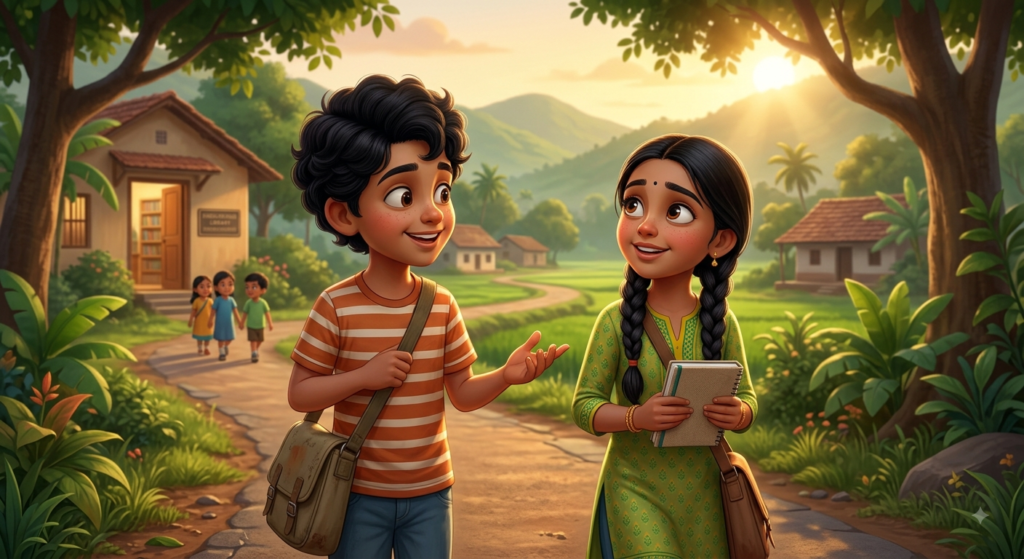
As they walked home, Kiran smiled and said, “I came here thinking I knew enough. Today I realised there’s so much more to see.” Dev laughed and replied, “That’s the best part about learning—the more you know, the more the world opens up.” From that day on, Kiran never missed a Friday at the library, because he had discovered that learning gives us more than answers—it teaches us how to truly see the world.
Moral
Education opens our eyes to the wonders around us. Without learning, we may look at the world but fail to truly understand it.
Let’s read the same story in Tamil…
கேள்விகள் நிறைந்த ஜாடி
புனேயில் உள்ள குழந்தைகள் நூலகத்தில் ஒவ்வொரு வெள்ளிக்கிழமையும் நுழைவாயிலருகே ஒரு வண்ணமயமான ஜாடி வைக்கப்படும். அதன் மேல், “உங்களுக்குத் தோன்றும் எந்தக் கேள்வியையும் எழுதிப் போடுங்கள்!” என்று எழுதப்பட்டிருந்தது. குழந்தைகள் விண்வெளி, விலங்குகள், கண்டுபிடிப்புகள், வரலாறு என பல கேள்விகளைச் சிறு சீட்டுகளில் எழுதி அந்த ஜாடியில் போட்டார்கள். பன்னிரண்டு வயது தேவ் ஒவ்வொரு வாரமும் புதிய விஷயங்களைக் கற்றுக்கொள்ளும் ஆர்வத்துடன் அங்கு வந்தான். அவனுடைய நண்பன் கிரண் மட்டும், “இவ்வளவு கேள்விகள் எதற்கு? புத்தகங்கள் வீட்டிலேயே இருக்கின்றன!” என்று சிரித்தான்.
ஒருநாள் நூலகர் ஜாடியிலிருந்து ஒரு சீட்டை எடுத்தார். அதில், “நிலவு சில நேரங்களில் பகலிலும் ஏன் தெரிகிறது?” என்று எழுதப்பட்டிருந்தது. யாருக்கும் உடனே பதில் தெரியவில்லை. தேவ் ஒரு வானியல் புத்தகத்தை எடுத்தான். இன்னொரு சிறுமி படங்களைப் பார்த்தாள். அனைவரும் சேர்ந்து தேடியபோது பதில் கிடைத்தது. அந்த ஒரு கேள்வி பல புதிய கேள்விகளை உருவாக்கியது. கிரணும் ஆர்வமாக அருகில் வந்து கேட்டுக் கொண்டிருந்தான்.
குழந்தைகள் அனைவரும் ஆர்வமாகத் தேடிக்கொண்டிருப்பதைப் பார்த்த நூலகர் சிரித்தார். பிறகு, “திருவள்ளுவர் சொல்வது போல…” என்று கூறினார்.
கண்ணுடையர் என்பவர் கற்றோர் முகத்திரண்டு
புண்ணுடையர் கல்லா தவர்.
“கற்றவர்கள்தான் உண்மையான பார்வை உடையவர்கள் என்று திருவள்ளுவர் கூறுகிறார். கல்வி நம் கண்களுக்கு மட்டுமல்ல, உலகத்தைப் புரிந்துகொள்ளும் நம் மனதுக்கும் பார்வையைத் தருகிறது,” என்று நூலகர் விளக்கினார்.
வீட்டிற்கு நடந்து செல்லும்போது கிரண், “இன்று நான் ஒரு பதிலை மட்டும் கற்றுக்கொள்ளவில்லை. உலகத்தைப் புதிதாகப் பார்க்கக் கற்றுக்கொண்டேன்,” என்றான். அதற்கு தேவ் சிரித்தபடி, “அதுதான் கல்வியின் மந்திரம். அது கண்களை மட்டும் அல்ல, மனதையும் திறக்கிறது,” என்றான். அந்த நாளுக்குப் பிறகு, ஒவ்வொரு வெள்ளிக்கிழமையும் கிரண் முதலில் சென்ற இடம் அந்தக் கேள்விகள் நிறைந்த ஜாடிதான்.
நீதி
கல்வி நமக்கு பதில்களை மட்டும் தருவதில்லை; உலகத்தை உண்மையாகப் பார்க்கும் பார்வையையும் தருகிறது.
எழுத்துப்பிரதி
Kaṇṇuḍaiyar eṉbavar kaṟṟōr mukatthiraṇḍu
puṇṇuḍaiyar kallā thavar.
மூலத் தமிழ்
கண்ணுடையர் என்பவர் கற்றோர் முகத்திரண்டு
புண்ணுடையர் கல்லா தவர்.
Breaking it down
- கண்ணுடையர் – உண்மையான பார்வை உடையவர் (Those with true vision)
- என்பவர் – என்று அழைக்கப்படுபவர் (Are called)
- கற்றோர் – கல்வி கற்றவர்கள் (The learned)
- முகத்திரண்டு – முகத்தில் இருக்கும் இரண்டு (The two on the face)
- புண்ணுடையர் – பயனற்ற கண்கள் உடையவர் (Those whose eyes are of no real use)
- கல்லாதவர் – கல்வி கற்காதவர்கள் (Those who have not learned)
Trivia
இந்தக் குறள் கல்வி அதிகாரத்தில் இடம்பெறுகிறது. திருவள்ளுவர், உண்மையான கண்கள் என்பது பார்ப்பதற்கான உறுப்புகள் மட்டுமல்ல; கல்வியால் உலகத்தைப் புரிந்துகொள்ளும் அறிவும் பார்வையும் ஆகும் என்று கூறுகிறார். கற்றல் நமக்கு தகவல்களை மட்டும் தருவதில்லை; சிந்திக்கும் திறனையும் ஆர்வத்தையும் வளர்க்கிறது.
This bilingual story from ancient Tamil wisdom makes timeless life lessons accessible to readers worldwide—whether you’re discovering these universal truths for the first time, or sharing the beauty of your Tamil heritage with friends from any culture. Reading both English and Tamil versions side by side helps build language confidence, cultural connection, and a lifelong love for meaningful stories—perfect for classrooms, families, and friends around the globe.
Record your kid telling this story and the Kural, and we will host it on our YouTube page.
<YouTube link>