

In a dynamic coastal town in Kerala, 9-year-old Meenakshi lived with her fisherman dad and schoolteacher mom. She loved beachcombing, collecting shells for her science fair volcano model. Her clever cousin, 9-year-old Ravi, helped gather materials during family visits. But at the regional science fair, disaster loomed: Ravi spotted Meenakshi’s prized iridescent shell vanishing from her display—stolen by a rival kid, sneaky Rahul.
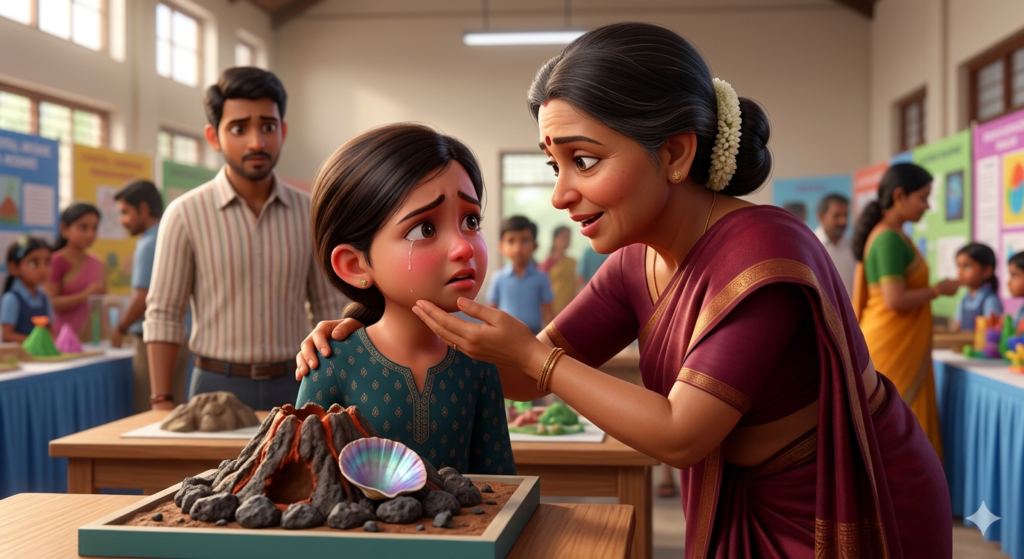
Meenakshi panicked, searching everywhere, but no proof. Her drama teacher, Aunty Leela, noticed her distraught face and whispered a Tirukkural:
Kuṟippiṟ kuṟippuṇarā vāyiṉ uṟuppiṉuḷ
eṉṉa payattavō kaṇ.
குறிப்பிற் குறிப்புணரா வாயின் உறுப்பினுள்
என்ன பயத்தவோ கண்.
She explained, “Eyes see everything silently; use that sharp sight wisely, without accusing rashly.” Meenakshi nodded, calming down.

The adventure sparked! At the fair, Meenakshi’s eyes scanned quietly—like a detective. She saw Rahul fidgeting, his bag bulging oddly. Pretending to adjust her volcano, she “accidentally” knocked his table. A shell tumbled out—hers! Judges and kids gasped. Rahul confessed, shamed. But Meenakshi forgave: “Eyes spotted truth; let’s learn together.” Ravi added eruption effects with baking soda magic.

Her volcano wowed—bubbling perfectly under lights! She clinched first prize. Aunty Leela hugged her: “Your observant eyes, used right, won without words.” Meenakshi shared shells with all, starting a fair club. Ravi beamed proudly. From then on, her sharp gaze solved mysteries, proving silent watching beats loud blame—eyes truly see what words miss.
Moral
Among the senses, what is the use of an eye that does not even hint at what it perceives?
Let’s read the same story in Tamil..
கவனமே சக்தி
கேரளாவின் ஒரு அழகான கடற்கரை கிராமத்தில் 9 வயது மீனாட்சி தனது குடும்பத்துடன் வாழ்ந்து வந்தாள். அவளுடைய அப்பா மீனவர், அம்மா ஆசிரியர்.
மீனாட்சிக்கு கடற்கரையில் சிப்பிகள் சேகரிப்பது மிகவும் பிடிக்கும். அவற்றை வைத்து அறிவியல் கண்காட்சிக்காக ஒரு எரிமலை மாதிரி செய்ய திட்டமிட்டாள். அவளுடன் அவள் சகோதரன் ரவி கூட உதவி செய்தான்.
கண்காட்சி நாள் வந்தது. மீனாட்சியின் மாடல் எல்லோரையும் கவர்ந்தது. அதில் இருந்த ஒரு அழகான வண்ணச் சிப்பு அவளுக்கு மிகவும் முக்கியமானது.
சில நேரத்தில் அந்த சிப்பு காணாமல் போய்விட்டது!
மீனாட்சி பதறி தேடினாள். எங்கும் கிடைக்கவில்லை.
அதை பார்த்த லீலா ஆன்ட்டி அவளை அழைத்து ஒரு திருக்குறளைச் சொன்னார்:
குறிப்பிற் குறிப்புணரா வாயின் உறுப்பினுள்
என்ன பயத்தவோ கண்
அவர் சொன்னார்:
“நன்றாக கவனித்தால் உண்மை தெரியும். அவசரமாக யாரையும் குற்றம் சொல்ல வேண்டாம்.”
மீனாட்சி அமைதியாக யோசித்தாள். பிறகு சுற்றி கவனமாக பார்த்தாள்.
அப்போது ராகுல் என்ற மாணவன் பதட்டமாக இருப்பதை கவனித்தாள். அவன் பையை பார்த்தாள்—அதில் ஏதோ மறைத்து வைத்தது போல இருந்தது.
மீனாட்சி அமைதியாக அவன் மேசையை லேசாக தட்டினாள்.
அவன் பையிலிருந்து—அவள் சிப்பு கீழே விழுந்தது!
அனைவரும் அதிர்ச்சி அடைந்தனர்.
ராகுல் தன் தவறை ஒப்புக்கொண்டான்.
ஆனால் மீனாட்சி கோபப்படவில்லை.
“இனிமேல் இப்படிச் செய்யாதே,” என்று அமைதியாக சொன்னாள்.
பின்னர் ரவியுடன் சேர்ந்து எரிமலையை மீண்டும் தயார் செய்தாள். பேக்கிங் சோடா வைத்து எரிமலை வெடிப்பு போல காட்டினர்.
அவர்களின் மாடல் மிகச் சிறப்பாக இருந்தது!
முதல் பரிசு—மீனாட்சிக்கே!
லீலா ஆன்ட்டி சிரித்துக்கொண்டு,
“கவனமே உன் சக்தி,” என்றார்.
அந்த நாளிலிருந்து மீனாட்சி எதையும் அவசரமாக பேசாமல், முதலில் கவனித்து பிறகு செயல்படத் தொடங்கினாள்.
நீதி
அமைதியாக கவனித்தால் உண்மை வெளிப்படும்.
எழுத்துப்பிரதி
Kuṟippiṟ kuṟippuṇarā vāyiṉ uṟuppiṉuḷ
eṉṉa payattavō kaṇ.
மூலத் தமிழ்
குறிப்பிற் குறிப்புணரா வாயின் உறுப்பினுள்
என்ன பயத்தவோ கண்.
Breaking it down
- குறிப்பிற் (Kuṟippiṟ) – குறிப்பில் (In the hint), within subtle signs.
- குறிப்புணரா (Kuṟippu ṇarā) – குறிப்பு அறியாத (Not perceiving hint), fails to notice clue.
- வாயின் (Vāyiṉ) – வாயைப் போல் (Like the mouth), compared to speech organ.
- உறுப்பினுள் (Uṟuppiṉuḷ) – உறுப்புகளுள் (Among senses/organs), amongst body parts.
- என்ன (Eṉṉa) – என்ன (What), of what value.
- பயத்தவோ (Payatta vō) – பயன்தவோ (Is the use), benefit or utility.
- கண் (Kaṇ) – கண் (Eye), the organ of sight.
Trivia
“குறிப்பு (Kuṟippu)” from ancient Tamil kuṟi (sign/point), used in Sangam spy poems (c. 200 BCE) for subtle signals; still vital in modern Tamil detective stories and “kuṟippu” (clue) in Malayalam thrillers.
Resonates with Sherlock Holmes’ canon (1887 onward, Conan Doyle), where “observation without inference is worthless”—Kural predates by millennia, emphasizing perceptive eyes.
This bilingual story from ancient Tamil wisdom makes timeless life lessons accessible to readers worldwide — whether you’re discovering these universal truths for the first time, or sharing the beauty of your Tamil heritage with friends from any culture. Reading both English and Tamil versions side by side helps build language confidence, cultural connection, and a lifelong love for meaningful stories — perfect for classrooms, families, and friends around the globe.
Record your kid telling this story and Kural, we will add a link your youtube video
<Youtube link>