
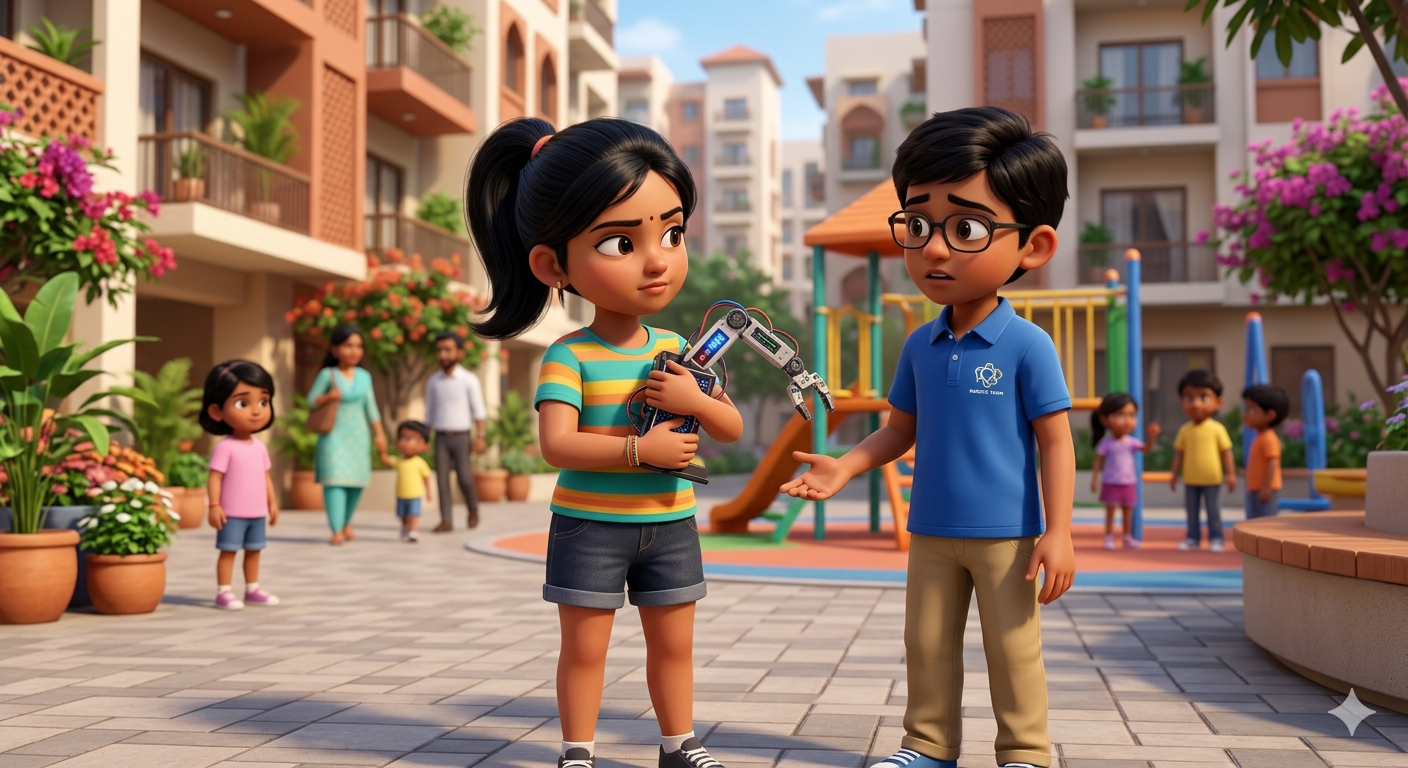
In a lively apartment complex in Dubai, 10-year-old Vignesh lived with his software developer dad and banker mom. He was on the school robotics team, building bots for the big UAE Tech Fest. Vignesh’s teammate, 10-year-old Divya, shared his excitement—they coded late nights, testing gadgets in the complex playground. But during crunch time, Vignesh discovered Divya had secretly used his unique robot arm design in her solo project, claiming it as hers for extra prizes.
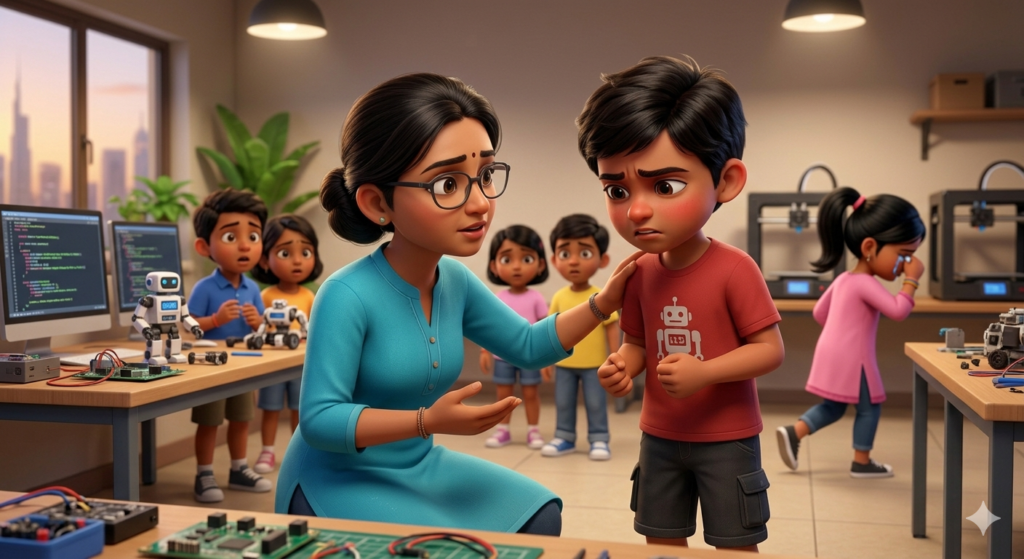
Vignesh felt crushed—his late-night sketches stolen. At practice, he snapped, yelling at Divya in front of everyone. She burst into tears, running off. Their coach, Ms. Patel, a kind engineer from India, pulled Vignesh aside. She shared a Tirukkural:
Aḍuttatu kāṭṭum paḷiṅkupōl neñcaṉ
kaḍuttatu kāṭṭum mukam.
அடுத்தது காட்டும் பளிங்குபோல் நெஞ்சம்
கடுத்தது காட்டும் முகம்.
She explained, “Your inner anger shows on your face—no hiding it. True feelings reflect clearly.” Vignesh realized his hurt face mirrored his wounded heart.
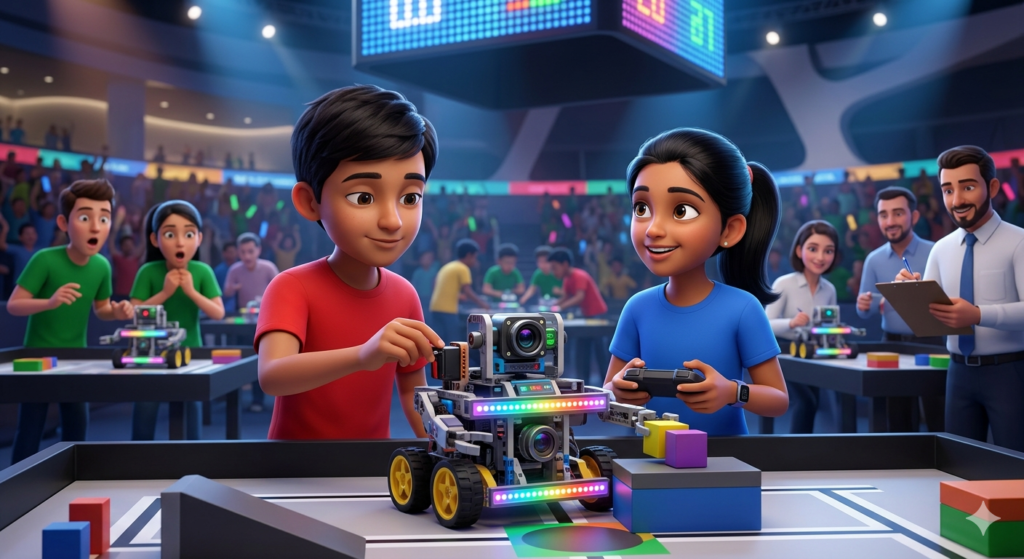
The adventure ignited at the Tech Fest! Vignesh forgave Divya, who apologized sincerely, admitting her mistake born from competition fear. Together, they upgraded their team bot with both ideas, adding lights and sensors. In the competition, rivals mocked their “mismatched” design. But Vignesh stayed calm, his face peaceful—heart clear. Divya shone too, confident now. Their bot aced challenges: maze navigation, object lift, and speed race! Judges praised the teamwork glow on their faces.
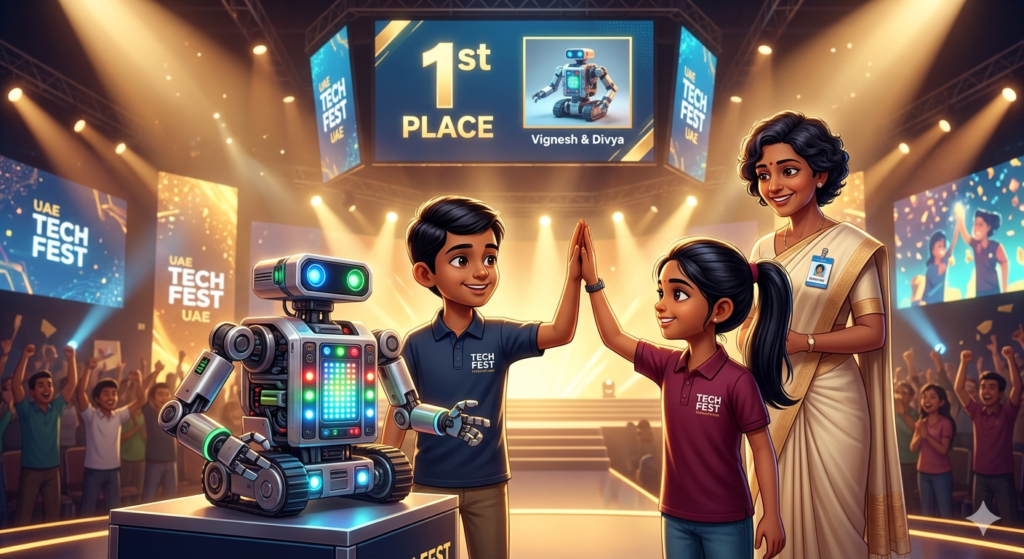
They won first place! Ms. Patel beamed: “See? Hearts pure as mirrors showed strength—your calm faces won trust and victory.” Vignesh and Divya high-fived, vowing honest collaboration. Vignesh even helped Divya enter her project ethically next time. Their friendship deepened, faces always bright, proving inner truth lights the way to success.
Moral
The face will show what the heart has suffered; the heart will show like a shining mirror.
Let’s read the same story in Tamil..
முகம் தான் மனதின் கண்ணாடி
துபாயின் ஒரு சுறுசுறுப்பான குடியிருப்பு பகுதியில் 10 வயது விக்னேஷ் தனது குடும்பத்துடன் வாழ்ந்து வந்தான். அவனுடைய அப்பா சாப்ட்வேர் இன்ஜினியர், அம்மா வங்கி அதிகாரி.
விக்னேஷ்க்கு ரோபோட்டிக்ஸ் மிகவும் பிடிக்கும். பள்ளி டெக் போட்டிக்காக அவன் ஒரு ரோபோ உருவாக்கிக் கொண்டிருந்தான். அவனுடன் சேர்ந்து வேலை செய்தாள் அவன் நண்பி திவ்யா. இருவரும் மாலையில் விளையாட்டு மைதானத்தில் கூடிக் கொண்டு, ரோபோவை சோதனை செய்து மகிழ்ந்தனர்.
ஒரு நாள், விக்னேஷ் தன் ரோபோவுக்காக வடிவமைத்திருந்த கை வடிவமைப்பு திவ்யாவின் தனிப்பட்ட திட்டத்தில் இருப்பதை பார்த்தான். அதையும் அவள் தன்னுடைய யோசனை போல காட்டியிருந்தாள்.
விக்னேஷ்க்கு மிகவும் கோபம் வந்தது.
“நீ என் யோசனையை எடுத்துட்டே!” என்று அனைவருக்கும் முன்னால் அவன் கத்தினான்.
திவ்யா வெட்கப்பட்டு அழுதபடி அங்கிருந்து ஓடிவிட்டாள்.
அதை பார்த்த பயிற்சியாளர் படேல் மேடம், விக்னேஷை அமைதியாக அழைத்துச் சென்று ஒரு திருக்குறளைச் சொன்னார்:
அடுத்தது காட்டும் பளிங்குபோல் நெஞ்சம்
கடுத்தது காட்டும் முகம்.
அவர் சொன்னார்:
“மனதில் என்ன இருக்கிறதோ அது முகத்தில் தெரியும். கோபம் இருந்தால் முகமும் அதையே காட்டும்.”
விக்னேஷ் சற்று யோசித்தான்.
“என் கோபம் தான் எல்லாருக்கும் தெரியுது…” என்று உணர்ந்தான்.
அடுத்த நாள், விக்னேஷ் திவ்யாவிடம் சென்று,
“நான் கோபத்தில் தவறாக பேசிட்டேன்… மன்னிச்சு,” என்றான்.
திவ்யாவும்,
“நான் தான் தவறு செய்தேன்… போட்டி பயத்தால அப்படி நடந்தது,” என்று உண்மையாக ஒப்புக்கொண்டாள்.
இருவரும் மீண்டும் சேர்ந்து ரோபோவை மேம்படுத்தினர். புதிய லைட்ஸ், சென்சார்கள் சேர்த்து இன்னும் சிறந்த ரோபோ உருவாக்கினார்கள்.
போட்டி நாள் வந்தது.
மற்ற அணிகள் கிண்டல் செய்தாலும், விக்னேஷ் அமைதியாக இருந்தான். திவ்யாவும் தன்னம்பிக்கையுடன் இருந்தாள்.
ரோபோ சோதனைகள் ஆரம்பமானது—
மழுங்கிய பாதையில் செல்லுதல், பொருட்களை எடுத்தல், வேகப்போட்டி…
அவர்களின் ரோபோ எல்லாவற்றிலும் சிறப்பாக செயல்பட்டது!
முதல் பரிசு—அவர்களுக்கே!
படேல் மேடம் சிரித்துக்கொண்டு,
“மனம் நல்லதா இருந்தது… அதுதான் முகத்திலும் தெரிந்தது. அதுவே உங்களுக்கு வெற்றி தந்தது,” என்றார்.
விக்னேஷும் திவ்யாவும் மகிழ்ச்சியுடன் கைதட்டினர்.
அந்த நாளிலிருந்து, அவர்கள் நேர்மையுடனும் நம்பிக்கையுடனும் சேர்ந்து வேலை செய்யத் தொடங்கினர்.
நீதி
மனதில் உள்ள உண்மை முகத்தில் தெரியும்; நல்ல மனம் வெற்றியை தரும்.
எழுத்துப்பிரதி
Aḍuttatu kāṭṭum paḷiṅkupōl neñcaṉ
kaḍuttatu kāṭṭum mukam.
மூலத் தமிழ்
அடுத்தது காட்டும் பளிங்குபோல் நெஞ்சம்
கடுத்தது காட்டும் முகம்.
Breaking it down
- அடுத்தது (Aḍuttatu) – அடுக்கியது (What was endured), inner suffering or pain.
- காட்டும் (Kāṭṭum) – காட்டும் (Will show), reveals outwardly.
- பளிங்குபோல் (Paḷiṅku pōl) – பளிங்கு போல் (Like a mirror), shiny reflective surface.
- நெஞ்சம் (Neñcaṉ) – நெஞ்சம் (Heart), the mind or emotions.
- கடுத்தது (Kaḍuttatu) – வெட்டியது (What was cut/slashed), external harm or wound.
- காட்டும் (Kāṭṭum) – காட்டும் (Will show), displays visibly.
- முகம் (Mukam) – முகம் (Face), facial expression.
Trivia
“பளிங்கு (Paḷiṅku)” refers to polished bronze mirrors in Sangam era (c. 300 BCE), from paḷ (shine); evolved to modern “paḷiṅgu” for glass mirrors, still used poetically; persists in Kannada “paḷinga” for reflective surfaces.
Parallels Plato’s Republic (c. 375 BCE) metaphor of soul as mirror reflecting virtue—Kural (c. 5th CE) uniquely ties heart to mirror and face to scars.
This bilingual story from ancient Tamil wisdom makes timeless life lessons accessible to readers worldwide — whether you’re discovering these universal truths for the first time, or sharing the beauty of your Tamil heritage with friends from any culture. Reading both English and Tamil versions side by side helps build language confidence, cultural connection, and a lifelong love for meaningful stories — perfect for classrooms, families, and friends around the globe.
Record your kid telling this story and Kural, we will add a link your youtube video
<Youtube link>