
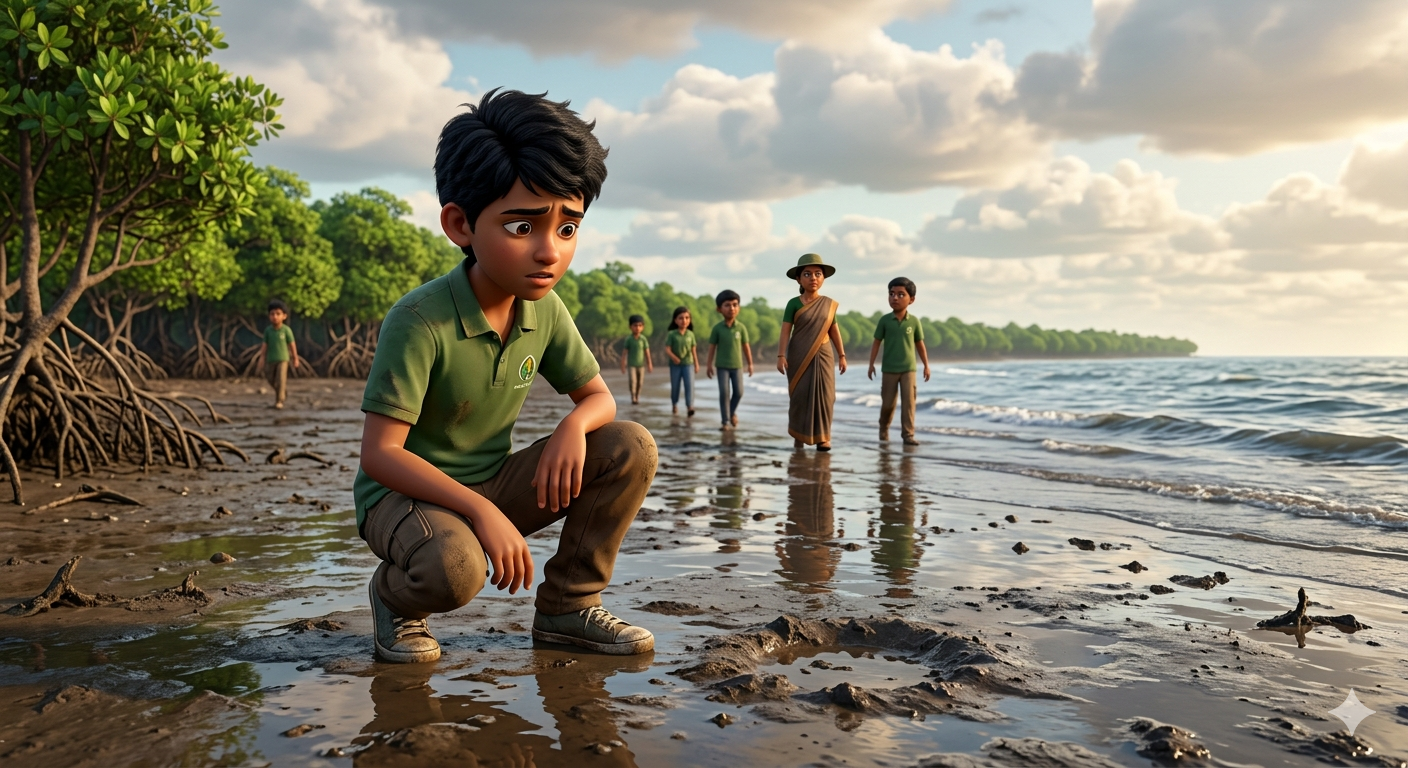
Near the coastal town of Cuddalore, fifteen-year-old Nethran was a member of his school’s nature club. During a field trip, he noticed that many mangrove trees along the shoreline had disappeared. The empty muddy patches worried him because those trees protected nearby villages from strong waves and storms. While most people quickly forgot about it, Nethran felt that something had to be done.
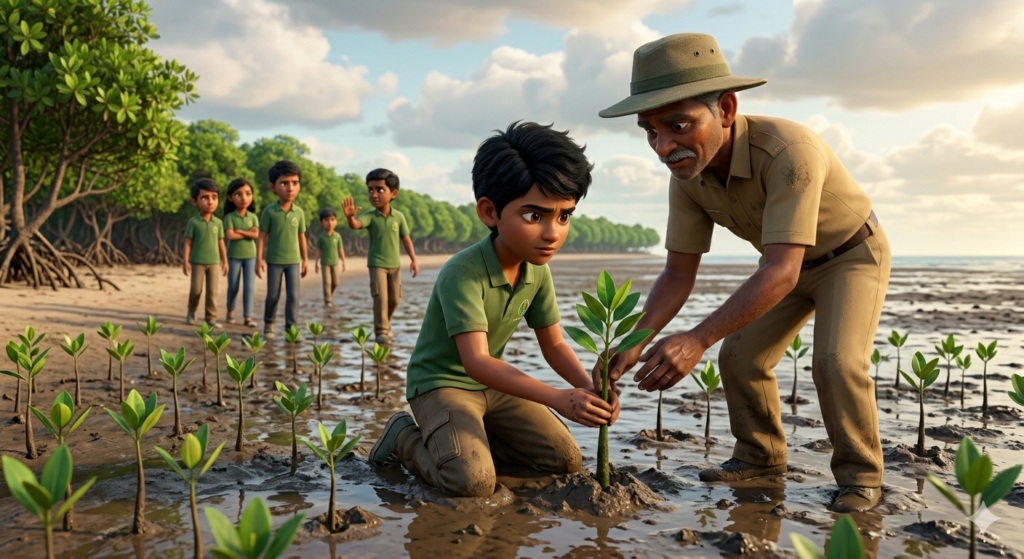
After speaking with forest officers, he learned that restoring mangroves would not be easy. Saplings had to be planted in muddy ground, and many would not survive the first few months. Some friends said the work was too difficult and would take years to show results. Even so, Nethran believed that helping nature was worth the effort.
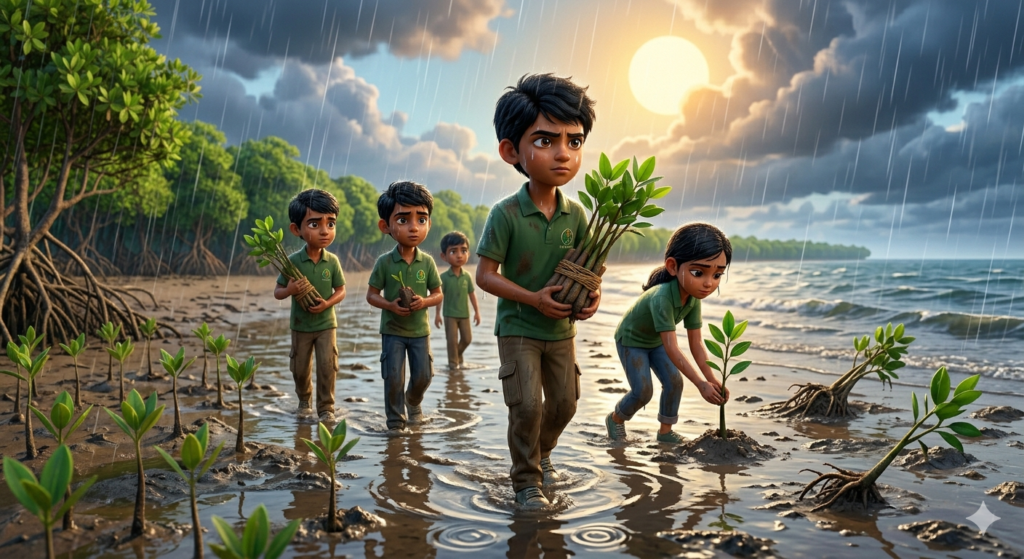
Every weekend, he and a few classmates carried young saplings through the mud and planted them carefully. Sometimes heavy rain washed away their work. Other times, the hot sun left them exhausted. There were moments when they wondered if all their hard work would make any difference, but they continued because they knew the trees could protect future generations.

Slowly, the coastline began to change. Fresh green mangroves appeared where there had once been empty land. Birds returned to build nests, and fish gathered in the calm waters near the roots. Local residents who had once doubted the project now started praising the students for their dedication.
A few years later, a powerful cyclone struck the region. While some nearby coastal areas suffered damage, the restored mangrove belt helped reduce the impact of the waves on the village shoreline. During a community celebration, an elderly forest ranger thanked the students and recited:
துன்பம் உறவரினும் செய்க துணிவாற்றி
இன்பம் பயக்கும் வினை.
Thunbam uravarinum seiga thuṇivāṟṟi
inbam payakkum vinai.
He explained, “A worthwhile task may bring hardship in the beginning, but if it creates lasting happiness and benefit, it is always worth doing.” Looking at the thriving mangrove forest, Nethran realized that every drop of sweat had been worthwhile.
Moral
Even if a good action is difficult at first, we should do it courageously when it brings lasting happiness and benefit.
Let’s read the same story in Tamil…
சதுப்புநிலக் காடுகளின் காவலன்
கடலூர் அருகிலுள்ள கடற்கரைப் பகுதியில் வாழ்ந்த பதினைந்து வயது நேத்ரன் தனது பள்ளியின் இயற்கை மன்றத்தில் உறுப்பினராக இருந்தான். ஒரு நாள் இயற்கைச் சுற்றுலாவிற்குச் சென்றபோது, கடற்கரையோர சதுப்புநிலக் காடுகளின் பல பகுதிகள் அழிந்து இருப்பதை கவனித்தான். முன்பு பசுமையாக இருந்த இடங்களில் வெறும் சேறும் நீரும் மட்டுமே காணப்பட்டது. அந்த மரங்கள்தான் புயல் மற்றும் கடலலைகளின் தாக்கத்திலிருந்து கிராமங்களை காப்பாற்றுகின்றன என்பதை அவன் அறிந்திருந்தான்.
இதுபற்றி வனத்துறை அதிகாரிகளிடம் பேசியபோது, சதுப்புநிலக் காடுகளை மீண்டும் வளர்ப்பது மிகவும் கடினமான வேலை என்று தெரிந்தது. சேற்றில் இறங்கி கன்றுகளை நட்டாக வேண்டும். பல கன்றுகள் வளராமல் போகவும் வாய்ப்பிருந்தது. “இவ்வளவு கஷ்டப்பட்டு என்ன பயன்?” என்று சில நண்பர்கள் கேட்டனர். ஆனால் நேத்ரன் மட்டும் மனம் தளரவில்லை.
ஒவ்வொரு வார இறுதியிலும் சில மாணவர்களுடன் சேர்ந்து கன்றுகளை நட்டான். சில நாட்களில் மழை அவர்கள் செய்த வேலையை சேதப்படுத்தியது. சில நாட்களில் கடுமையான வெயில் உடலை சோர்வடையச் செய்தது. இருந்தாலும் அவர்கள் முயற்சியை கைவிடவில்லை. இன்று கஷ்டமாக இருந்தாலும் நாளை பலருக்கும் நன்மை தரும் என்று நம்பினர்.
மாதங்கள் கடந்தன. பின்னர் ஆண்டுகளும் ஓடின. வெறிச்சோடியிருந்த பகுதிகளில் புதிய மரங்கள் வளர ஆரம்பித்தன. பறவைகள் திரும்பி வந்தன. மீன்கள் அதிகரித்தன. முன்பு சந்தேகப்பட்ட மக்களே இப்போது மாணவர்களின் முயற்சியை பாராட்டினர்.
சில ஆண்டுகளுக்குப் பிறகு ஒரு கடுமையான புயல் அந்தப் பகுதியை தாக்கியது. அருகிலுள்ள சில இடங்களில் கடற்கரை சேதமடைந்தாலும், புதிதாக வளர்ந்த சதுப்புநிலக் காடுகள் அலைகளின் வேகத்தை குறைத்து கிராமத்தைப் பாதுகாக்க உதவின. அப்போது ஒரு வயதான வனத்துறை அதிகாரி மகிழ்ச்சியுடன் இந்தக் குறளைச் சொன்னார்:
துன்பம் உறவரினும் செய்க துணிவாற்றி
இன்பம் பயக்கும் வினை.
“ஆரம்பத்தில் கஷ்டமாக இருந்தாலும், நீண்ட கால நன்மை தரும் செயலை தைரியமாகச் செய்ய வேண்டும்,” என்றார். பசுமையாக வளர்ந்திருந்த மரங்களைப் பார்த்த நேத்ரன், தனது உழைப்பின் உண்மையான பலனை அப்போது உணர்ந்தான்.
நீதி
ஆரம்பத்தில் கஷ்டமாக இருந்தாலும், எதிர்காலத்தில் பலருக்கும் நன்மை தரும் செயலை தைரியத்துடன் தொடர வேண்டும்.
எழுத்துப்பிரதி
Thunbam uravarinum seiga thuṇivāṟṟi
inbam payakkum vinai
மூலத் தமிழ்
துன்பம் உறவரினும் செய்க துணிவாற்றி
இன்பம் பயக்கும் வினை
Breaking it down
- துன்பம் (Thunbam) – கஷ்டம் (Difficulty), hardship or suffering.
- உறவரினும் (Uravarinum) – வந்தாலும் (Even if it comes), despite facing difficulties.
- செய்க (Seiga) – செய் (Do it), perform the action.
- துணிவாற்றி (Thuṇivāṟṟi) – தைரியத்துடன் (With courage), acting with determination.
- இன்பம் (Inbam) – மகிழ்ச்சி (Happiness), joy or benefit.
- பயக்கும் (Payakkum) – விளைவிக்கும் (Produces), brings about.
- வினை (Vinai) – செயல் (Action), a meaningful deed or undertaking.
Trivia
“வினை” என்ற சொல் சங்க இலக்கியங்களில் ‘செயல்’ மட்டுமல்ல, ‘கடமை’ மற்றும் ‘பொறுப்பு’ என்ற பொருள்களிலும் பயன்படுத்தப்பட்டது. எனவே இந்தக் குறள் எந்த வேலையையும் அல்ல, பயன் தரும் பொறுப்பான செயல்களைப் பற்றி பேசுகிறது.
சீனாவில் ஒரு பழமொழி உண்டு: “ஒரு மரத்தை நட்ட சிறந்த நேரம் இருபது ஆண்டுகளுக்கு முன்பு; அடுத்த சிறந்த நேரம் இன்று.” எதிர்கால நன்மைக்காக இன்றைய கஷ்டத்தை ஏற்க வேண்டும் என்ற கருத்து திருவள்ளுவரின் இந்தக் குறளுடன் அழகாக ஒத்துப்போகிறது.
This bilingual story from ancient Tamil wisdom makes timeless life lessons accessible to readers worldwide — whether you’re discovering these universal truths for the first time, or sharing the beauty of your Tamil heritage with friends from any culture. Reading both English and Tamil versions side by side helps build language confidence, cultural connection, and a lifelong love for meaningful stories — perfect for classrooms, families, and friends around the globe.
Record your kid telling this story and the Kural, we will host it on our YouTube page.
<Youtube link>