
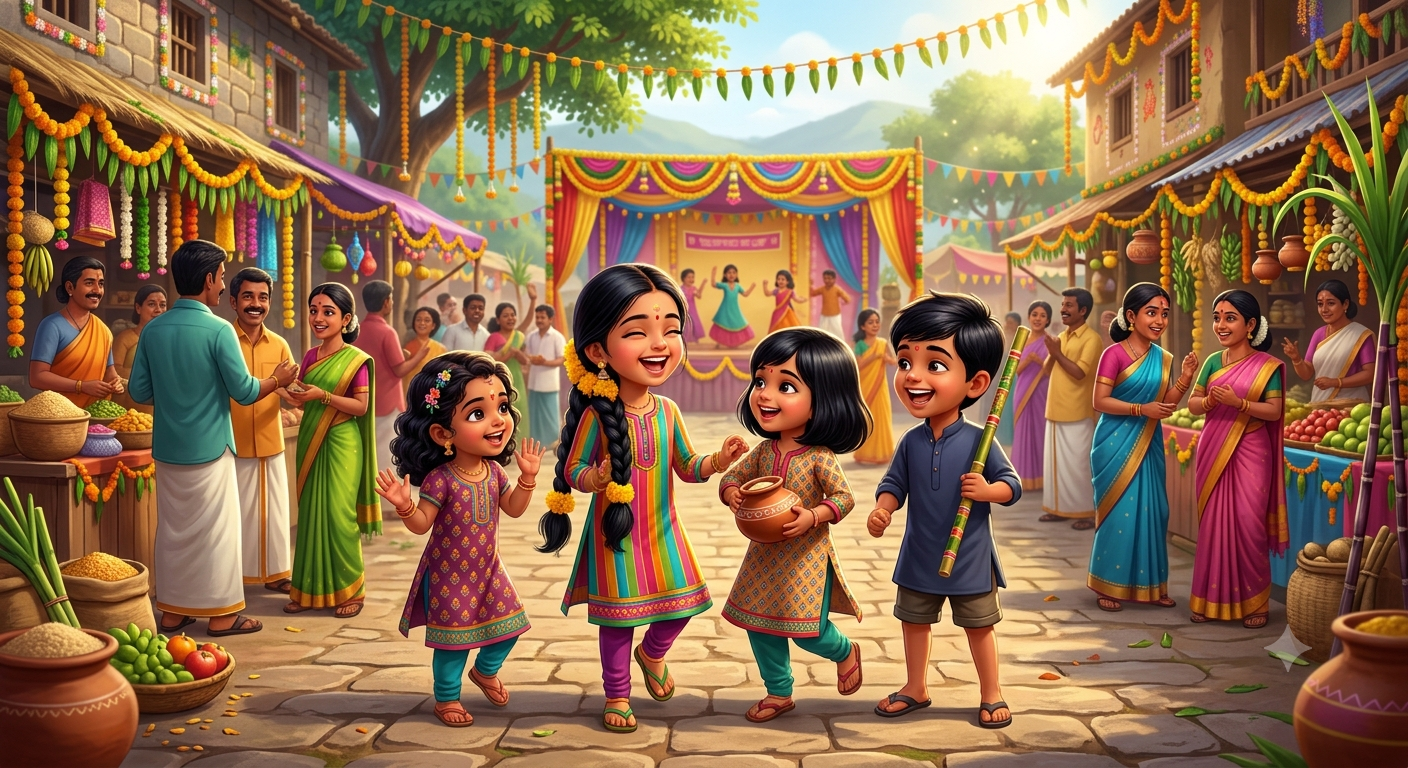
Every year, the people of a village near Nashik eagerly waited for the Harvest Festival. Shopkeepers decorated their stores, restaurants planned special menus, and the local school prepared colourful cultural programmes. To the children, it seemed like the festival appeared magically every year.
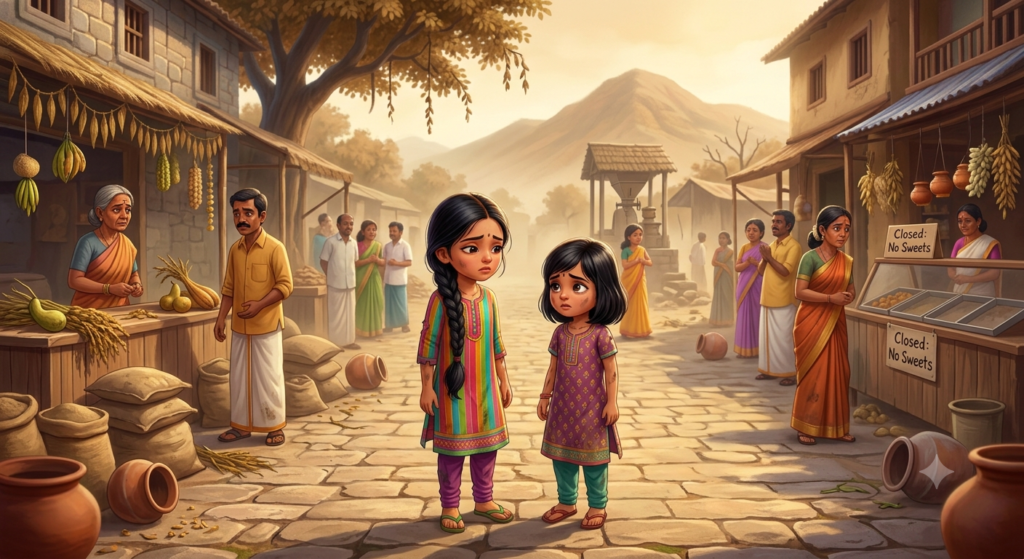
One summer, the rains arrived much later than expected. The fields remained dry, and the farmers waited anxiously for the first showers. Days turned into weeks, and soon the village market became unusually quiet. Fresh vegetables became scarce, the flour mill slowed down, and even the sweet shop announced that some traditional festival sweets could not be prepared.
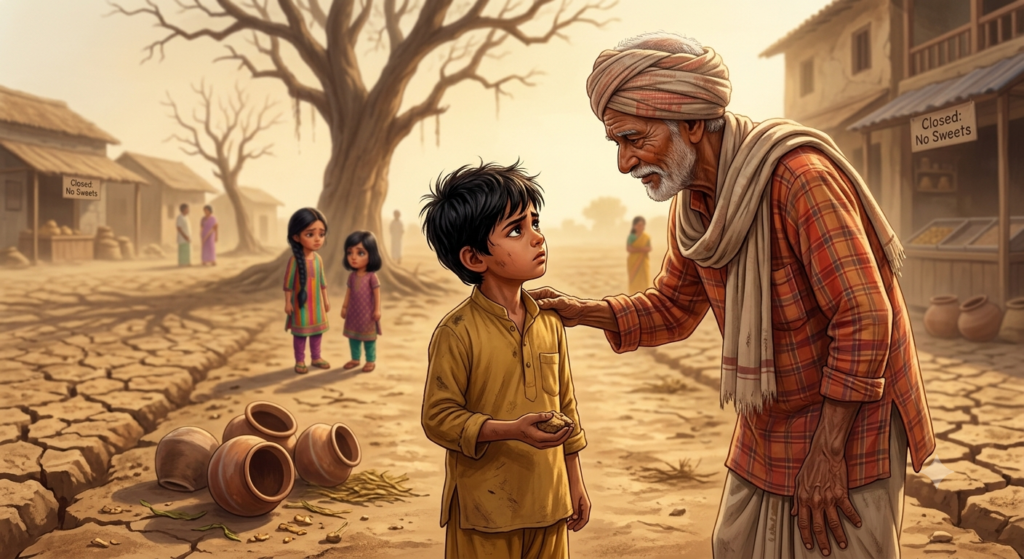
Curious, ten-year-old Aarav asked his grandfather, “Why has everything in the village changed just because the fields are empty?”
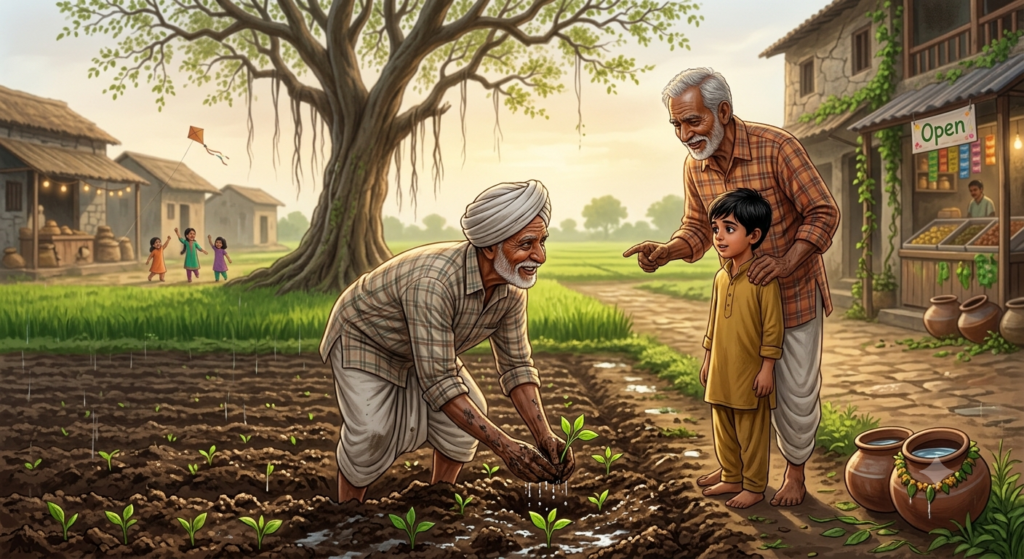
His grandfather took him to the edge of a farm where an elderly farmer was preparing the soil after the first rain. Smiling, he said, “Look carefully. Every shop you saw in the village, every meal on our table, and every celebration we enjoy begins right here. When the farmer’s hands stop, the whole village slows down.”
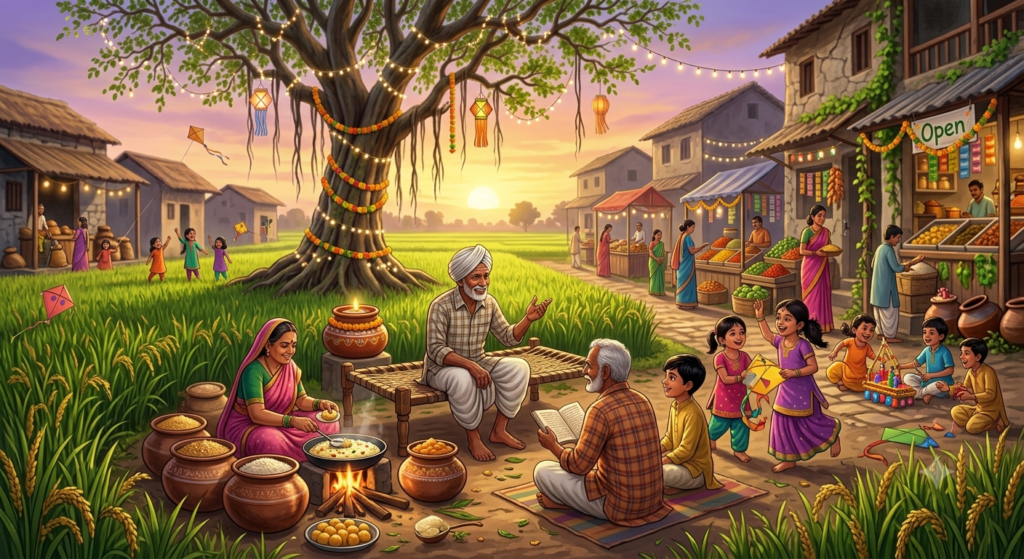
Months later, the rains returned, the fields turned green, and the harvest was plentiful. The market was once again full of life. The festival lights returned, children laughed in the streets, and every home celebrated with gratitude. Aarav finally understood that while many people contribute to a village’s prosperity, it all begins with the farmer.
That evening, his grandfather recited:
பலகுடை நீழலும் தங்குடைக்கீழ்க் காண்பர்
அலகுடை நீழ லவர்.
Palakuḍai nīḻalum taṅkuḍaikkīḻ kāṇbar
alakuḍai nīḻa lavar.
He explained, “The strength of a nation does not begin in palaces or offices. It begins in the fields. Farmers sustain everyone—including those who lead kingdoms.”
Moral
Farmers are the foundation of every prosperous society. When they thrive, everyone prospers.
Let’s read the same story in Tamil…
கிராமம் காத்திருந்த நாள்
நாசிக்கிற்கு அருகிலிருந்த ஒரு கிராமத்தில் ஒவ்வொரு ஆண்டும் அறுவடைத் திருவிழா மிகவும் விமரிசையாகக் கொண்டாடப்படும். கடைக்காரர்கள் புதிய பொருட்களை வாங்கி வைப்பார்கள். இனிப்புக் கடைகள் சிறப்பு பலகாரங்கள் செய்வார்கள். பள்ளி மாணவர்கள் கலைநிகழ்ச்சிக்குத் தயாராவார்கள். இதையெல்லாம் பார்த்த பத்து வயது ஆரவ், இந்த மகிழ்ச்சி எல்லாம் தானாகவே வந்துவிடுகிறது என்று நினைத்தான்.
ஆனால் ஒரு ஆண்டு மழை தாமதமானது. வயல்கள் வறண்டு கிடந்தன. விவசாயிகள் வானத்தைப் பார்த்துக்கொண்டே நாட்களைக் கழித்தனர். சில வாரங்களில் சந்தையில் காய்கறிகள் குறைந்தன. மாவு ஆலை மெதுவாக இயங்கியது. இனிப்புக் கடையில்கூட சில பலகாரங்களைச் செய்ய முடியவில்லை. ஒரே கிராமமே அமைதியாக மாறியதைப் பார்த்து ஆரவுக்கு ஆச்சரியமாக இருந்தது.
“வயலில் பயிர் இல்லாததற்கும், கடைகள் அமைதியாக இருப்பதற்கும் என்ன சம்பந்தம்?” என்று தாத்தாவிடம் கேட்டான். தாத்தா அவனை ஒரு வயலுக்குக் கூட்டிச் சென்றார். முதல் மழைக்குப் பிறகு நிலத்தை உழுதுகொண்டிருந்த வயதான விவசாயியைக் காட்டி, “இந்தக் கைகள் வேலை செய்யும்போதுதான் கிராமம் சுவாசிக்கிறது. இந்த மண்ணிலிருந்துதான் நம் உணவும், வியாபாரமும், திருவிழாவும், மகிழ்ச்சியும் பிறக்கின்றன,” என்றார்.
சில மாதங்களுக்குப் பிறகு வயல்கள் பசுமையாக மாறின. அறுவடை தொடங்கியது. மீண்டும் சந்தைகள் கூட்டம் நிறைந்தன. இனிப்புக் கடைகளில் வாசனை பரவியது. வீடுகள் அனைத்தும் கொண்டாட்டத்தில் மூழ்கின. அன்றுதான் ஆரவ் உணர்ந்தான்—கிராமத்தின் இதயம் சந்தையில் இல்லை; வயலில்தான் இருந்தது.
அன்று மாலை தாத்தா இந்தக் குறளை வாசித்தார்:
பலகுடை நீழலும் தங்குடைக்கீழ்க் காண்பர்
அலகுடை நீழ லவர்.
பின்னர் அவர் கூறினார்: “விவசாயி வளமாக இருந்தால் ஒரு குடும்பம் மட்டுமல்ல, ஒரு நாடே வளமாகும். அரசர்களின் ஆட்சியும் இறுதியில் விவசாயியின் உழைப்பையே நம்பியுள்ளது.”
நீதி
விவசாயியின் உழைப்பே உலகின் அடித்தளம். அவர் வளமாக இருந்தால் அனைவரும் வளமாக வாழ்வார்கள்.
எழுத்துப்பிரதி
Palakuḍai nīḻalum taṅkuḍaikkīḻ kāṇbar
alakuḍai nīḻa lavar.
மூலத் தமிழ்
பலகுடை நீழலும் தங்குடைக்கீழ்க் காண்பர்
அலகுடை நீழ லவர்.
Breaking it down
- பலகுடை – பல அரசர்களின் குடை, பல நாடுகள்
- நீழலும் – நிழலும், ஆட்சியும்
- தங்குடைக்கீழ்க் – தமது குடையின் கீழ்
- காண்பர் – காண்பார்கள், கொண்டு வருவார்கள்
- அலகுடை – நெல் வளம் உடைய, செழிப்பை உருவாக்கும்
- நீழ லவர் – உழவர்கள், வளம் தருபவர்கள்
Trivia
இந்தக் குறள் உழவு அதிகாரத்தில் இடம்பெறுகிறது. திருவள்ளுவர், ஒரு நாட்டின் உண்மையான வலிமை படையிலும் அரண்மனையிலும் இல்லை; விவசாயியின் உழைப்பில்தான் உள்ளது என்று வலியுறுத்துகிறார். உணவு உற்பத்தி இல்லாமல் எந்த சமூகமும், அரசும், பொருளாதாரமும் நிலைக்க முடியாது.
This bilingual story from ancient Tamil wisdom makes timeless life lessons accessible to readers worldwide—whether you’re discovering these universal truths for the first time, or sharing the beauty of your Tamil heritage with friends from any culture. Reading both English and Tamil versions side by side helps build language confidence, cultural connection, and a lifelong love for meaningful stories—perfect for classrooms, families, and friends around the globe.
Record your kid telling this story and the Kural, and we will host it on our YouTube page. <YouTube link>