
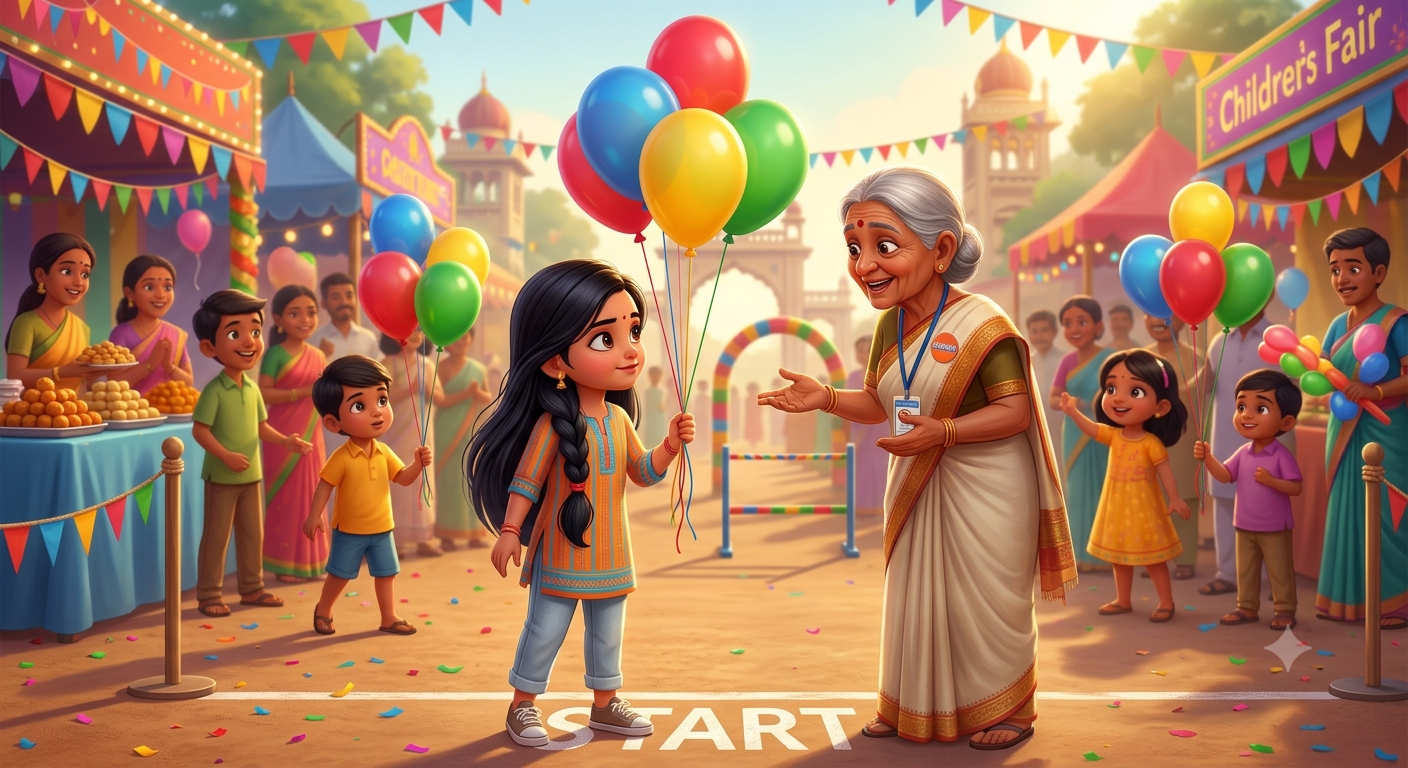
The annual Children’s Fair in Mysuru had a colourful balloon game. Every child received four balloons to carry through a fun obstacle course. Before the game began, the organiser smiled and said, “Each balloon hasStory (English)
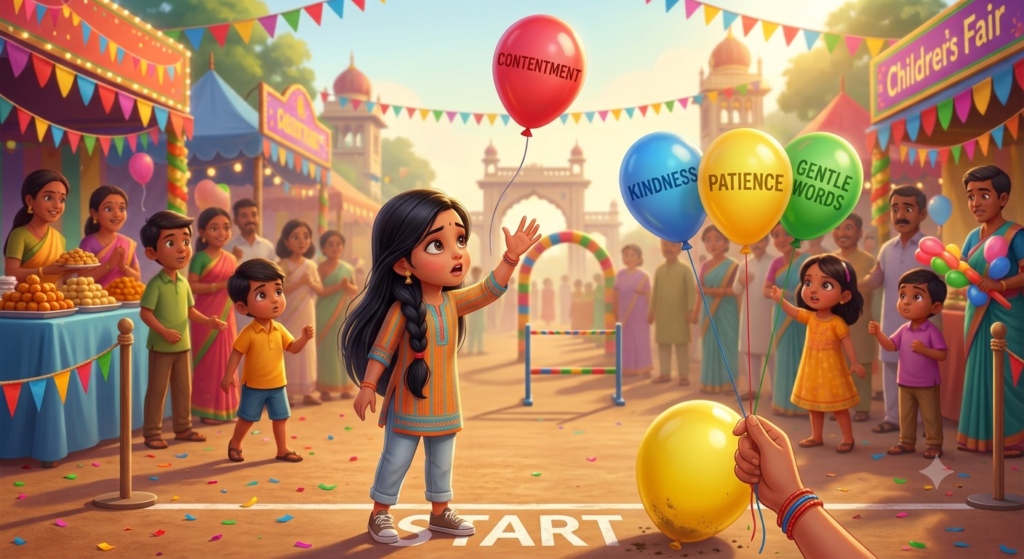
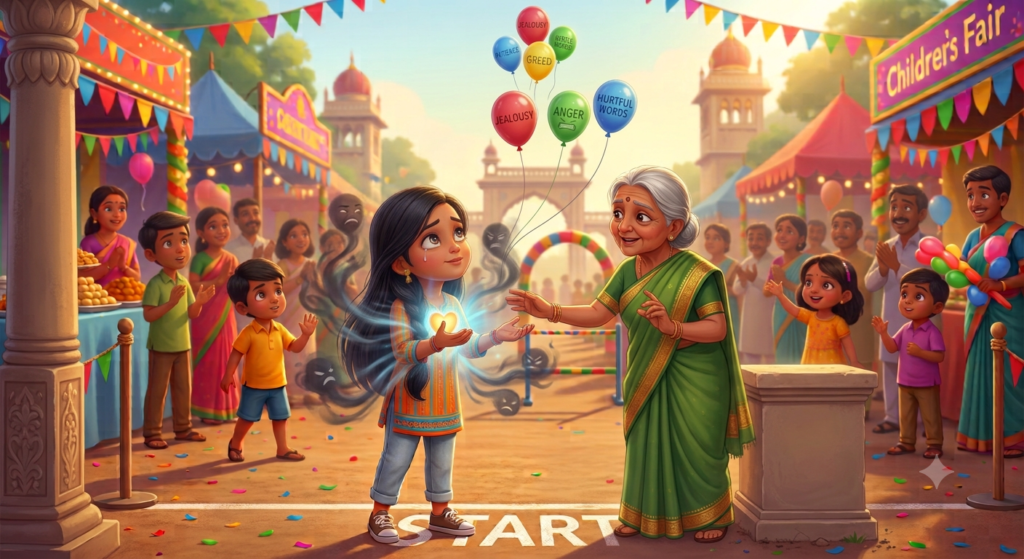
At a children’s festival in Mysore, a unique balloon race was organised. Each child was given four balloons. Before the race began, the organiser smiled and said, “Your challenge is simple—keep all four balloons with you until the finish.”
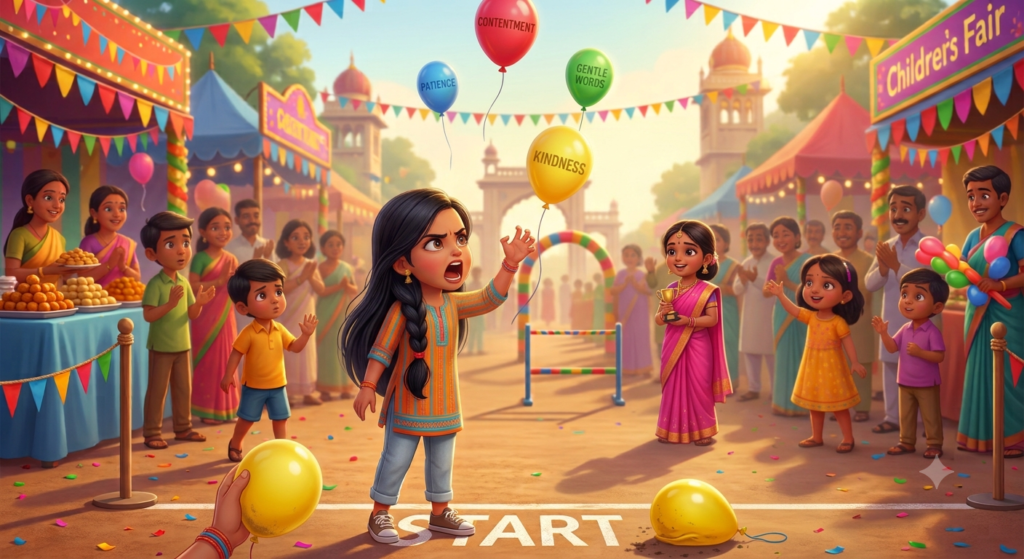
Curious, twelve-year-old Meera looked closely. The balloons were labelled Kindness, Contentment, Patience, and Gentle Words. As the game began, another child ran ahead with more balloons than everyone else. Meera wished she had more too, and in frustration she grabbed one from the ground. Immediately, the balloon labelled Contentment slipped from her hand and floated away.
A few minutes later, another player accidentally bumped into her. Angry, Meera shouted at him. At once, the Patience balloon escaped into the sky. Feeling upset, she muttered unkind words about the other players, and her Gentle Words balloon followed. Near the finish line, she noticed another girl receiving loud applause. Jealousy filled her heart for a moment, and the last balloon—Kindness—quietly drifted away too.
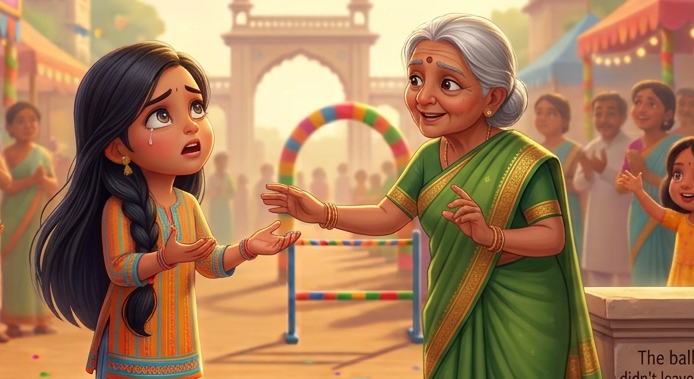
Meera crossed the finish line holding nothing. The organiser gently smiled and said, “The balloons didn’t leave because the wind was strong. They left because of what filled your heart.” Looking at the colourful balloons disappearing into the sky, Meera finally understood why she had lost them.
The organiser then reminded her of a Thirukkural:
அழுக்காறு அவாவெகுளி இன்னாச்சொல் நான்கும்
இழுக்கா இயன்றது அறம்.
Aḻukkāṟu avā vekuḷi innāccol nāṅgum
iḻukkā iyaṉṟathu aṟam.
Meera listened carefully. She realised that the four balloons were not really the things she had lost. They represented four qualities she needed to protect within herself—keeping jealousy, greed, anger, and hurtful words away from her heart.
Moral
A good life begins when we keep jealousy, greed, anger, and hurtful words away from our hearts.
Let’s read the same story in Tamil…
நான்கு பலூன்கள்
மைசூரில் நடைபெற்ற குழந்தைகள் திருவிழாவில் ஒரு வித்தியாசமான பலூன் போட்டி நடத்தப்பட்டது. ஒவ்வொரு குழந்தைக்கும் நான்கு பலூன்கள் கொடுக்கப்பட்டன. போட்டி தொடங்குவதற்கு முன், ஏற்பாட்டாளர் சிரித்தபடி, “இந்த நான்கு பலூன்களையும் கடைசி வரை பாதுகாத்து வந்தால் போதும்,” என்றார்.
பன்னிரண்டு வயது மீரா தனது பலூன்களைப் பார்த்தாள். அவற்றில் அன்பு, மனநிறைவு, பொறுமை, இனிய சொல் என்று எழுதப்பட்டிருந்தது. போட்டி தொடங்கிய சில நிமிடங்களில், மற்றொரு சிறுமியிடம் அதிக பலூன்கள் இருப்பதைப் பார்த்த மீராவுக்கு ஆசை வந்தது. “எனக்கும் இன்னும் இருந்தால் நன்றாக இருக்கும்,” என்று நினைத்தவுடன், மனநிறைவு என்று எழுதப்பட்ட பலூன் கையிலிருந்து நழுவி வானில் பறந்தது.
சிறிது தூரத்தில் ஓடிக்கொண்டிருந்தபோது, ஒரு சிறுவன் தெரியாமல் அவள் மீது மோதினான். கோபத்தில் மீரா அவனைச் சத்தமாகத் திட்டினாள். உடனே பொறுமை என்ற பலூனும் பறந்தது. பின்னர் மற்ற குழந்தைகளைப் பற்றி கடுமையாகப் பேசினாள். அதனால் இனிய சொல் என்ற பலூனும் கையை விட்டு நழுவியது. இறுதியாக, ஒரு சிறுமி அனைவரிடமும் பாராட்டு பெறுவதைப் பார்த்து பொறாமை கொண்ட அந்த நொடியில், அன்பு என்ற கடைசி பலூனும் வானில் மறைந்தது.
வெற்றிக்கோட்டை அடைந்தபோது மீராவின் கையில் ஒரு பலூன்கூட இல்லை. ஏற்பாட்டாளர் மெதுவாகச் சிரித்தபடி, “காற்று பலூன்களைப் பறக்கவிடவில்லை. உன் மனதில் வந்த குணங்கள்தான் அவற்றை இழக்கச் செய்தன,” என்றார். மேலே பறந்து சென்ற பலூன்களைப் பார்த்த மீரா, அவற்றின் பின்னால் இருந்த உண்மையான அர்த்தத்தைப் புரிந்துகொள்ளத் தொடங்கினாள்.
அப்போது ஏற்பாட்டாளர் ஒரு திருக்குறளை நினைவுபடுத்தினார்:
அழுக்காறு அவாவெகுளி இன்னாச்சொல்
நான்கும் இழுக்கா இயன்றது அறம்.
அந்தக் குறளைக் கேட்ட மீரா அமைதியாக யோசித்தாள். பொறாமை, பேராசை, கோபம், பிறரைப் புண்படுத்தும் சொற்கள் ஆகிய நான்கும் மனதில் இடம் பெறாமல் பார்த்துக்கொள்வதே உண்மையான நல்லொழுக்கம் என்பதை அவள் அன்றுதான் புரிந்துகொண்டாள்.
நீதி
பொறாமை, பேராசை, கோபம், கடுஞ்சொல் ஆகியவற்றை மனதில் இடமளிக்காமல் வாழ்வதே உண்மையான அறம்.
எழுத்துப்பிரதி
Aḻukkāṟu avā vekuḷi innāccol nāṅgum
iḻukkā iyaṉṟathu aṟam.
மூலத் தமிழ்
அழுக்காறு அவாவெகுளி இன்னாச்சொல்
நான்கும் இழுக்கா இயன்றது அறம்.
Breaking it down
- அழுக்காறு – பொறாமை (Jealousy)
- அவா – பேராசை (Greed)
- வெகுளி – கோபம் (Anger)
- இன்னாச்சொல் – மனதைப் புண்படுத்தும் சொல் (Hurtful speech)
- நான்கும் – இந்த நான்கும் (These four)
- இழுக்கா இயன்றது – விலக்கி வாழ்வது (Keeping away)
- அறம் – நல்லொழுக்கம் (Virtue)
Trivia
இந்தக் குறள் அறன் வலியுறுத்தல் அதிகாரத்தில் இடம்பெறுகிறது. திருவள்ளுவர், அறம் என்பது பெரிய செயல்களைச் செய்வதில் மட்டும் இல்லை என்று கூறுகிறார். நம் மனதில் பொறாமை, பேராசை, கோபம், பிறரைப் புண்படுத்தும் சொற்கள் ஆகிய நான்கையும் இடமளிக்காமல் வாழ்வதே உண்மையான அறமாகும்.
This bilingual story from ancient Tamil wisdom makes timeless life lessons accessible to readers worldwide—whether you’re discovering these universal truths for the first time, or sharing the beauty of your Tamil heritage with friends from any culture. Reading both English and Tamil versions side by side helps build language confidence, cultural connection, and a lifelong love for meaningful stories—perfect for classrooms, families, and friends around the globe.
Record your kid telling this story and the Kural, and we will host it on our YouTube page.
<YouTube link>