
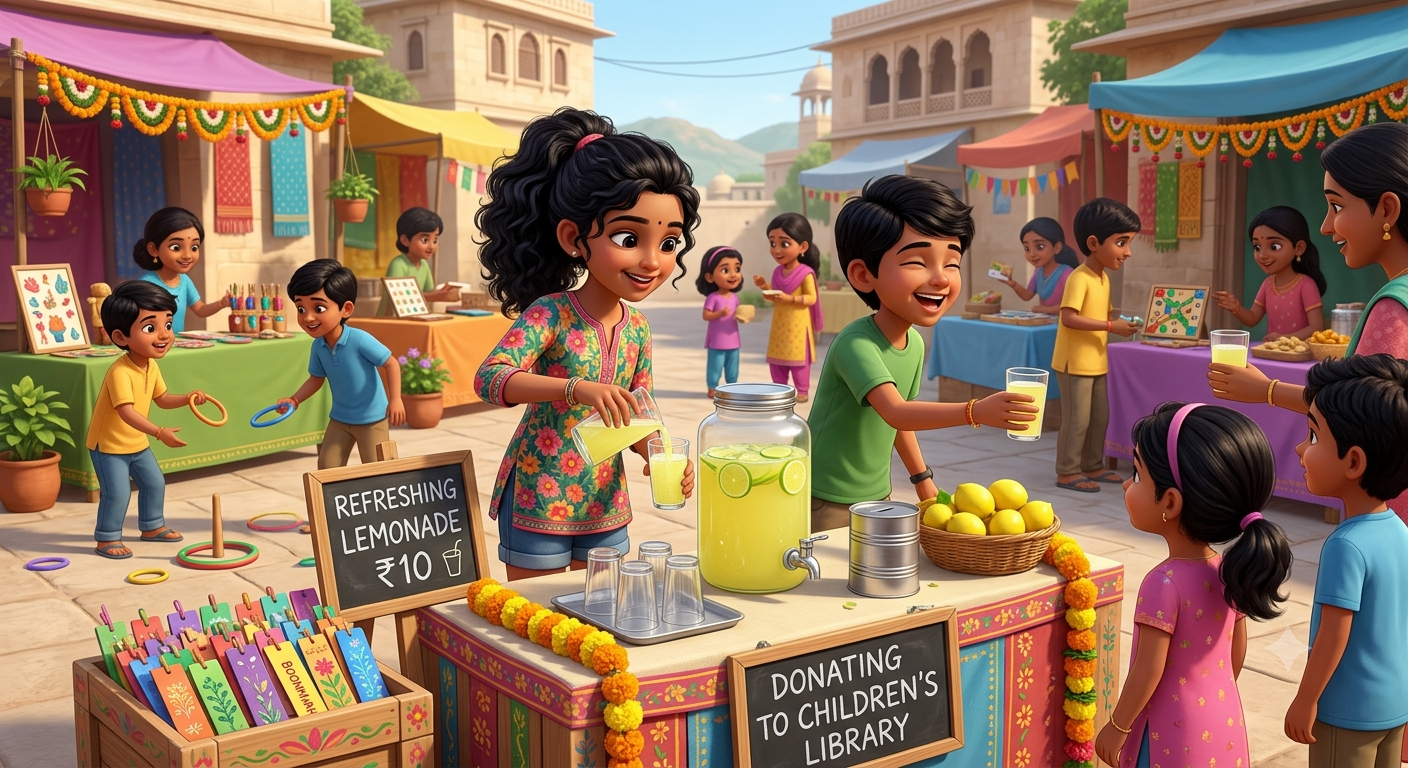
During the summer holidays in Udaipur, the children of a neighbourhood organised a small charity fair. There were game stalls, handmade bookmarks, and a lemonade stand managed by twelve-year-old Riya and her cousin Aarav. Every glass cost ₹10, and all the money would be donated to buy books for a nearby children’s library.
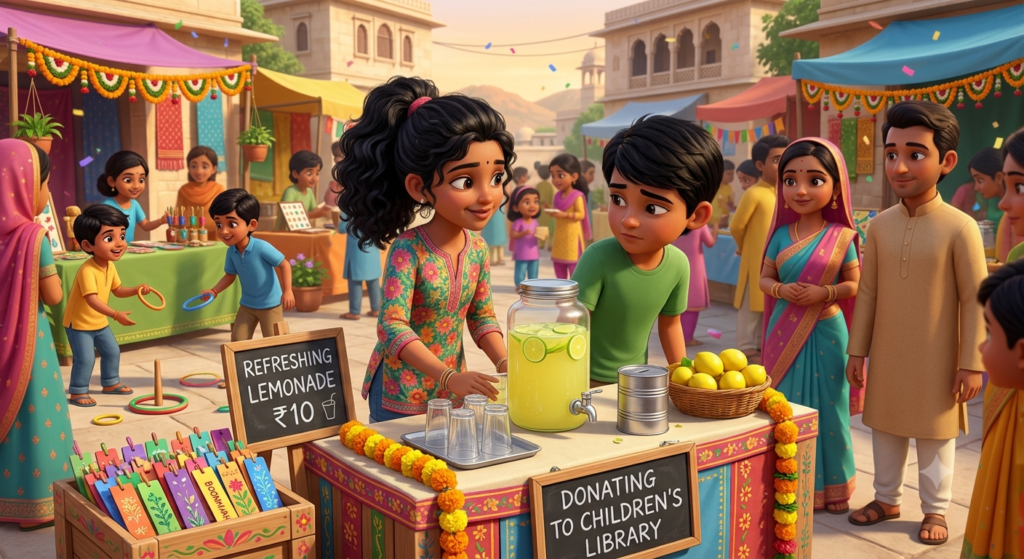
As the fair became crowded, Aarav noticed that people were buying lemonade without checking the change. “If we give one or two rupees less, no one will even notice,” he whispered. “We’ll collect more money for the library.” Riya thought for a moment, then smiled and shook her head. “Imagine if we were the customers. We’d expect the correct change, even if it’s just one rupee.”

When the fair ended, the lemonade stall had earned enough to buy dozens of new books for the library. As they placed the books on the shelves a week later, Riya realised that honesty had earned them something even greater than money—it had earned the trust of everyone who visited their little stall.

Aarav looked at the shelves filled with the new books and smiled. “I think the way we treated everyone today really mattered,” he said. Riya nodded and remembered a Thirukkural she had learned. She said,
வாணிகம் செய்வார்க்கு வாணிகம் பேணிப்
பிறவும் தமபோல் செயின்.
Vāṇigam seyvārkku vāṇigam pēṇip
piṟavum thamapōl seyin.
She explained, “It means that people in business should protect fairness in their dealings and treat others’ interests just as they would treat their own.” Looking at the books they had helped buy, Riya realised that honest dealings had earned them something even greater than money—it had earned the trust of everyone who visited their little stall.
Moral
Treat others the way you would want to be treated. Honest dealings build trust, and trust is the greatest wealth anyone can earn.
Let’s read the same story in Tamil…
எலுமிச்சைச் சாறு கடை
உதய்ப்பூரில் கோடை விடுமுறையின்போது, ஒரு குடியிருப்பில் குழந்தைகள் இணைந்து சிறிய நிதி திரட்டும் திருவிழாவை நடத்தினர். விளையாட்டு அரங்குகள், கைவினைப் பொருட்கள், புத்தகக் குறியீடுகள் என பல கடைகள் இருந்தன. பன்னிரண்டு வயது ரியாவும் அவளது உறவினர் ஆரவும் சேர்ந்து எலுமிச்சைச் சாறு கடையை நடத்தினர். ஒரு குவளை சாறு ₹10. கிடைக்கும் தொகை முழுவதும் அருகிலுள்ள குழந்தைகள் நூலகத்திற்கு புத்தகங்கள் வாங்க பயன்படுத்தப்படவிருந்தது.
மக்கள் அதிகமாக வந்தபோது, “ஒரு ரூபாய், இரண்டு ரூபாய் குறைவாகச் சில்லறை கொடுத்தால் யாருக்கும் தெரியாது. நூலகத்திற்கே அதிகப் பணம் கிடைக்கும்,” என்று ஆரவ் மெதுவாகச் சொன்னான். ரியா ஒரு நொடி யோசித்தாள். பிறகு சிரித்தபடி, “நாம்தான் வாங்க வந்திருந்தால்? நமக்கும் சரியான சில்லறைதானே வேண்டும்? மற்றவர்களையும் நம்மைப் போலத்தான் நினைக்க வேண்டும்,” என்றாள்.
அதன்பிறகு அவர்கள் ஒவ்வொரு நாணயத்தையும் கவனமாக எண்ணி, அனைவருக்கும் சரியான மீதிப் பணத்தைக் கொடுத்தனர். மாலை நேரத்தில் வயதான தம்பதியினர் ஒருவர் மீண்டும் கடைக்கு வந்தனர். “நீங்கள் தவறுதலாக எங்களுக்கு ஒரு ரூபாய் அதிகமாகக் கொடுத்துவிட்டீர்கள். உங்கள் நேர்மையைப் பார்த்தபிறகு இதைத் திருப்பிக் கொடுக்காமல் இருக்க முடியவில்லை,” என்று கூறி அந்த நாணயத்தைத் திருப்பிக் கொடுத்தனர்.
ஒரு வாரம் கழித்து, அந்த நிதியால் வாங்கப்பட்ட புதிய புத்தகங்கள் நூலக அலமாரியில் வைக்கப்பட்டன. அவற்றைப் பார்த்த ரியா மகிழ்ச்சியுடன் சிரித்தாள். அந்த நாளில் அவள் உணர்ந்தாள்—நேர்மையாக நடத்தப்படும் வாணிகம் பணத்தை மட்டுமல்ல, மக்களின் நம்பிக்கையையும் சம்பாதிக்கிறது.
அதைப் பார்த்த ஆரவ், “நாம் இன்று எல்லோரிடமும் நேர்மையாக நடந்துகொண்டது உண்மையிலேயே முக்கியமான விஷயம்தானே?” என்று கேட்டான். ரியா சிரித்தபடி, தான் கற்றிருந்த ஒரு திருக்குறளை நினைவுகூர்ந்தாள். “திருவள்ளுவர் சொல்வது போல…” என்றாள்.
வாணிகம் செய்வார்க்கு வாணிகம் பேணிப்
பிறவும் தமபோல் செயின்.
“வாணிகம் செய்பவர்கள் தங்கள் நலனைப் போலவே பிறருடைய நலனையும் கருதி நேர்மையாக நடக்க வேண்டும் என்பதுதான் இதன் பொருள்,” என்று ரியா விளக்கினாள். புதிய புத்தகங்களால் நிரம்பியிருந்த அலமாரியைப் பார்த்தபோது, நேர்மை தங்களுக்கு பணத்தைவிடப் பெரிய ஒன்றைத் தந்திருக்கிறது என்பதை அவள் உணர்ந்தாள்—அது மக்களின் நம்பிக்கை.
நீதி
நாம் எதிர்பார்க்கும் நேர்மையையும் நியாயத்தையும் பிறருக்கும் வழங்குவதே சிறந்த வாணிகம்.
எழுத்துப்பிரதி
Vāṇigam seyvārkku vāṇigam pēṇip
piṟavum thamapōl seyin.
மூலத் தமிழ்
வாணிகம் செய்வார்க்கு வாணிகம் பேணிப்
பிறவும் தமபோல் செயின்.
Breaking it down
- வாணிகம் செய்வார்க்கு – வியாபாரம் செய்பவர்களுக்கு (For those engaged in trade)
- வாணிகம் பேணிப் – வாணிக நெறியைப் பாதுகாத்து (By maintaining fairness in business)
- பிறவும் – பிறருடைய பொருளையும் (Others’ goods or interests)
- தமபோல் – தம்முடையதைப் போல (As their own)
- செயின் – நடத்தினால் (If they do so)
Trivia
இந்தக் குறள் நடுவுநிலைமை அதிகாரத்தில் இடம்பெறுகிறது. வியாபாரம் செய்பவர்கள் தங்கள் நலனைப் போலவே வாடிக்கையாளர்களின் நலனையும் கவனித்தால், அதுவே சிறந்த வாணிகம் என்று திருவள்ளுவர் கூறுகிறார். இன்று “Customer Trust” மற்றும் “Business Ethics” என்று பேசப்படும் கருத்தை, இரண்டாயிரம் ஆண்டுகளுக்கு முன்பே இந்தக் குறள் எடுத்துரைக்கிறது.
This bilingual story from ancient Tamil wisdom makes timeless life lessons accessible to readers worldwide—whether you’re discovering these universal truths for the first time, or sharing the beauty of your Tamil heritage with friends from any culture. Reading both English and Tamil versions side by side helps build language confidence, cultural connection, and a lifelong love for meaningful stories—perfect for classrooms, families, and friends around the globe.
Record your kid telling this story and the Kural, and we will host it on our YouTube page.
<YouTube link>