
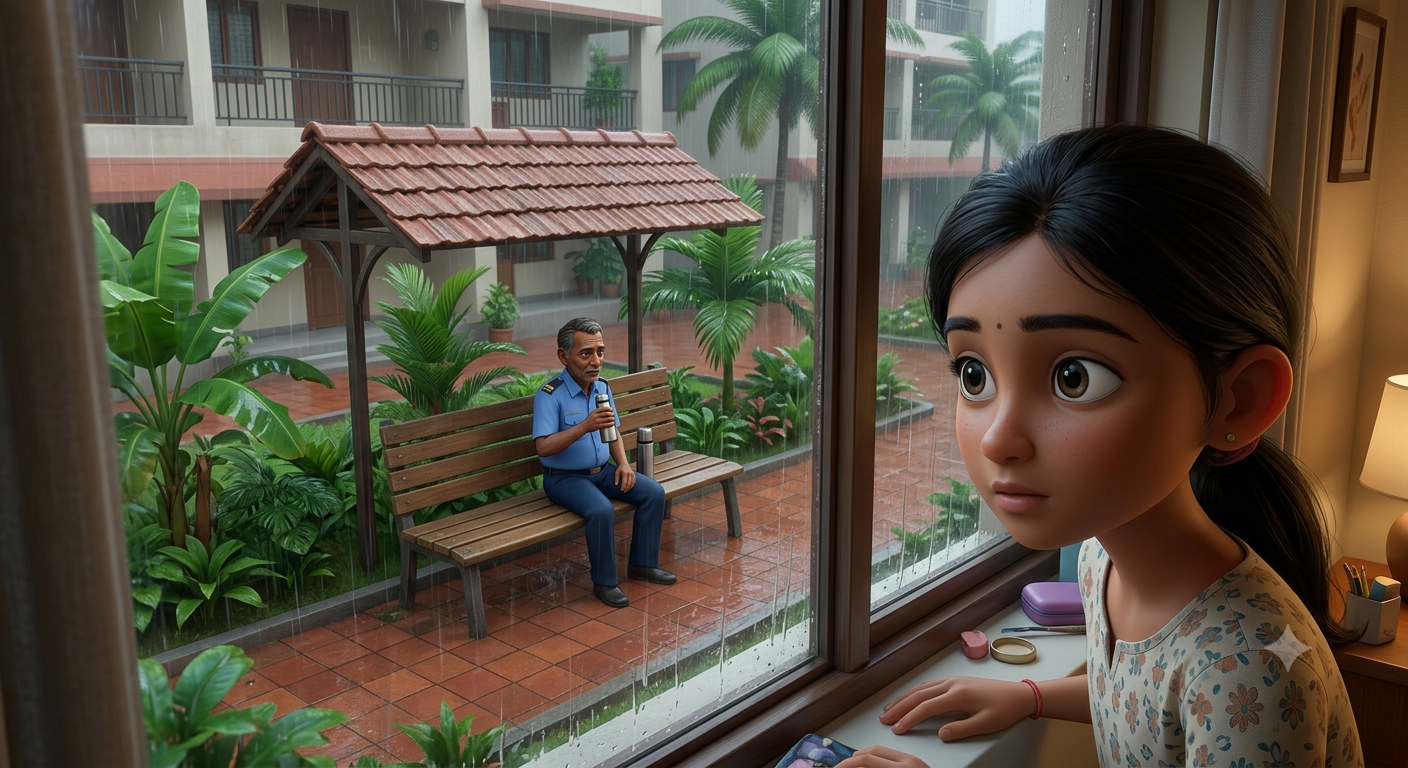
Every afternoon in a quiet apartment in Kochi, twelve-year-old Meera noticed something unusual. The security guard, Mr. Joseph, always sat on the same wooden bench during lunch break, but she had never seen him open a lunch box. One rainy evening, she finally asked her mother why.
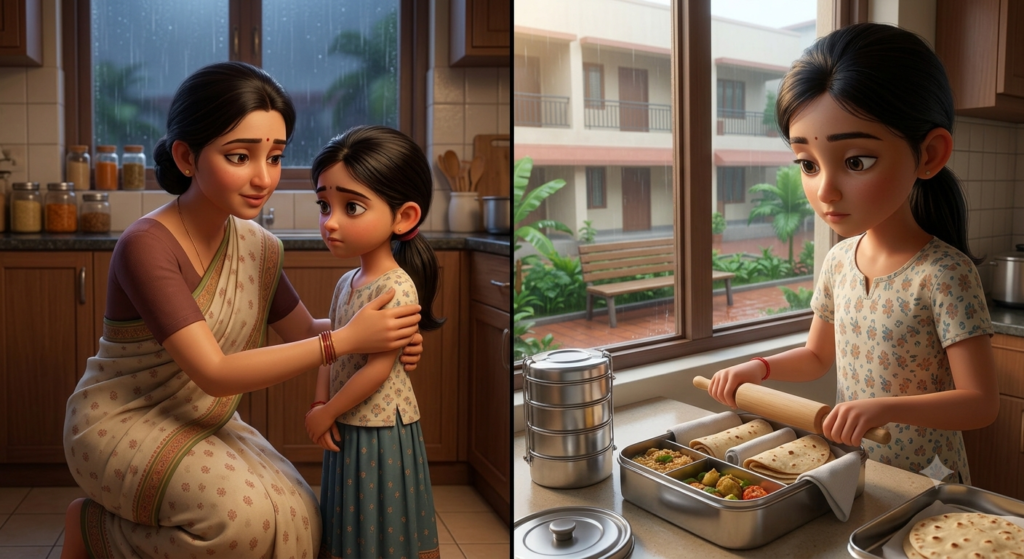
Her mother gently replied, “His family lives in another town. To save money, he sometimes skips lunch.” Meera didn’t say anything else, but the thought stayed with her. The next morning, she quietly packed two extra chapatis in her lunch box without telling anyone.

After school, she walked to the security cabin and shyly handed the small box to Mr. Joseph. “I packed a little too much today,” she smiled. He understood what she was doing but accepted it with gratitude. The following day, another neighbour left a banana on his table. A few days later, someone brought a flask of tea. Soon, without any announcement or planning, every family in the apartment began sharing a little of what they had.
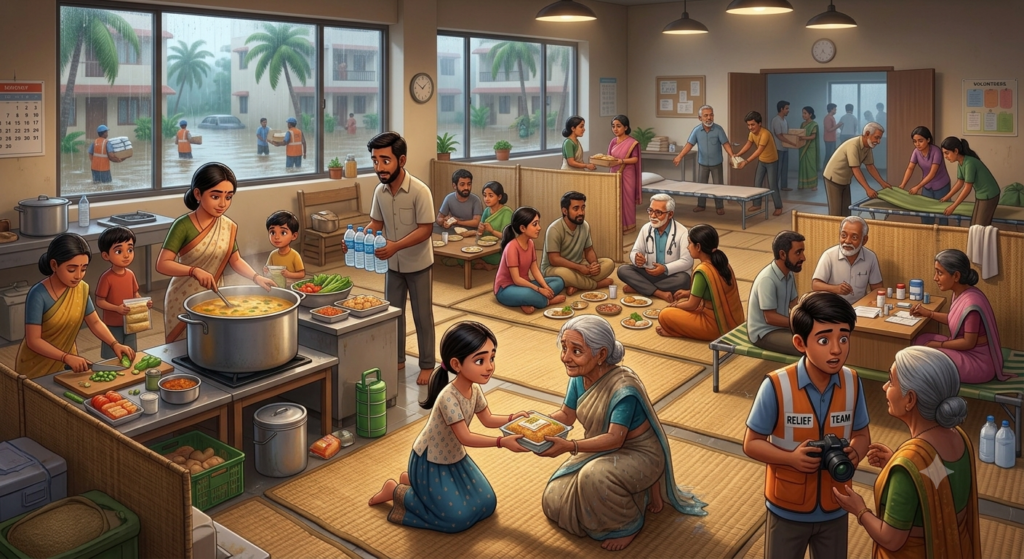
Months later, heavy floods affected several nearby neighbourhoods. The same apartment residents came together like one large family. They cooked meals, collected medicines, sheltered stranded families, and cared for one another without hesitation. A volunteer who visited the relief camp looked around in amazement and asked, “How did everyone here become so united?”
Mr. Joseph smiled, pointed towards Meera, and said, “It all began with one little lunch box.”
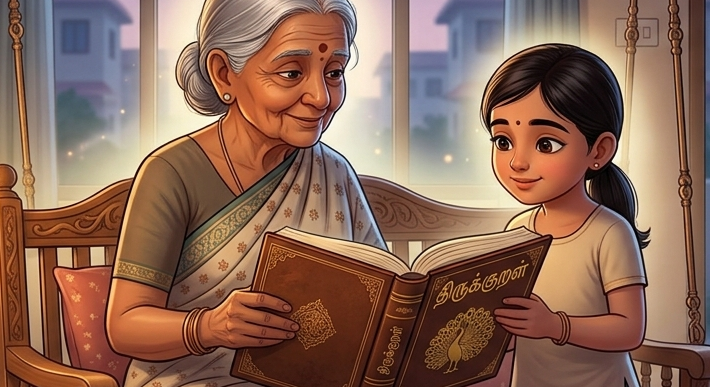
That evening, Meera’s grandmother opened her old copy of the Thirukkural and softly read:
அன்பும் அறனும் உடைத்தாயின் இல்வாழ்க்கை
பண்பும் பயனும் அது.
Anbum aṟaṉum uṭaittāyin ilvāḻkkai
paṇbum payaṉum adhu.
She explained, “A family is not remembered for the size of its house or the wealth it owns. A home filled with love and righteousness quietly spreads goodness far beyond its own walls.”
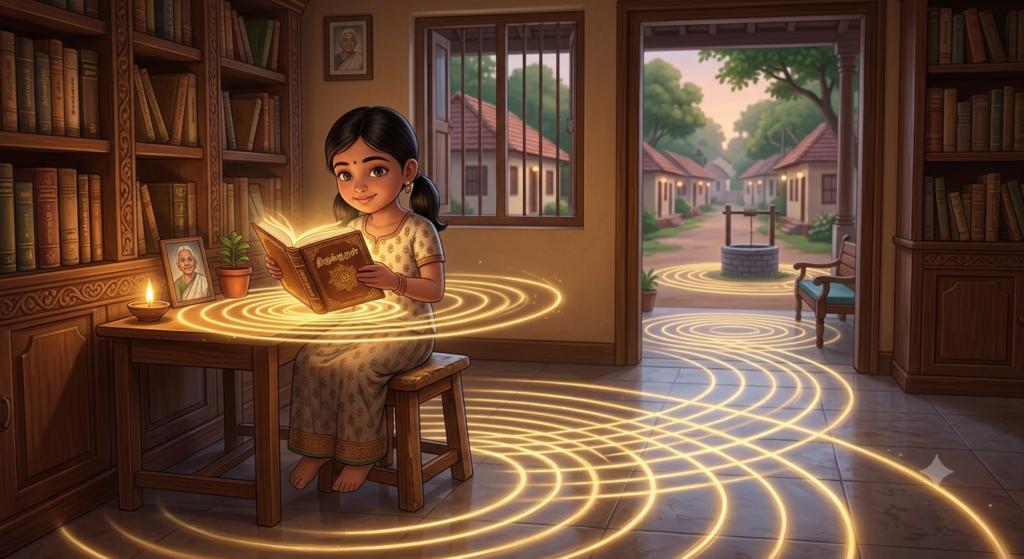
From that day, Meera understood that true kindness never stops with one person. Like ripples in a pond, it reaches hearts we may never even know.
Moral
A home built on love and righteousness becomes a source of goodness for the entire community.
Let’s read the same story in Tamil…
ஒரு மதிய உணவுப் பெட்டியின் தொடக்கம்
கொச்சியில் உள்ள ஒரு அமைதியான அடுக்குமாடிக் குடியிருப்பில் பன்னிரண்டு வயது மீரா தினமும் ஒரு விஷயத்தைக் கவனித்தாள். பாதுகாவலராக இருந்த ஜோசப் அங்கிள் மதிய நேரத்தில் எப்போதும் அதே பெஞ்சில் அமர்ந்திருப்பார். ஆனால் அவர் உணவுப் பெட்டியைத் திறந்து சாப்பிடுவதை அவள் ஒருபோதும் பார்த்ததில்லை. ஒரு மழை நாளில் இதற்கான காரணத்தை அம்மாவிடம் கேட்டாள்.
அம்மா மெதுவாக, “அவருடைய குடும்பம் வேறு ஊரில் இருக்கிறது. செலவைக் குறைக்க சில நாட்களில் மதிய உணவையே தவிர்த்துவிடுவார்,” என்றார். அந்த வார்த்தைகள் மீராவின் மனதில் ஆழமாகப் பதிந்தன. மறுநாள் யாரிடமும் சொல்லாமல் தனது உணவுப் பெட்டியில் இரண்டு கூடுதல் சப்பாத்திகளை வைத்துக்கொண்டு பள்ளிக்குச் சென்றாள்.
மாலை வீட்டிற்கு வந்ததும், ஜோசப் அங்கிளிடம் சென்று, “இன்று எனக்கு கொஞ்சம் அதிகமாக எடுத்துவந்துவிட்டேன். நீங்கள் சாப்பிடுங்கள்,” என்று கொடுத்தாள். அது அன்புக்காகத்தான் என்று அவர் புரிந்துகொண்டார். மறுநாளே மற்றொரு வீட்டிலிருந்து ஒரு வாழைப்பழம் வந்தது. சில நாட்களில் மற்றவர்கள் தேநீர், பழங்கள், சிற்றுண்டி என்று பகிர ஆரம்பித்தனர். எந்தக் கூட்டமும் இல்லாமல், எந்த அறிவிப்பும் இல்லாமல், அந்தக் குடியிருப்பில் பகிர்ந்து வாழும் ஒரு அழகான பழக்கம் உருவானது.
சில மாதங்களுக்குப் பிறகு, அருகிலுள்ள பகுதிகளில் கடும் வெள்ளம் ஏற்பட்டது. அந்தக் குடியிருப்பில் இருந்த அனைவரும் ஒன்றுபட்டு உணவு சமைத்தனர், மருந்துகள் சேகரித்தனர், பாதிக்கப்பட்ட குடும்பங்களுக்கு தங்குமிடம் கொடுத்தனர். உதவ வந்த ஒரு தன்னார்வலர், “இவ்வளவு ஒற்றுமை எப்படி உருவானது?” என்று வியப்புடன் கேட்டார்.
ஜோசப் அங்கிள் சிரித்தபடி மீராவைச் சுட்டிக்காட்டி, “இது எல்லாம் ஒரு சிறிய மதிய உணவுப் பெட்டியிலிருந்துதான் ஆரம்பமானது,” என்றார்.
அன்று மாலை பாட்டி தனது பழைய திருக்குறள் புத்தகத்தைத் திறந்து வாசித்தார்:
அன்பும் அறனும் உடைத்தாயின் இல்வாழ்க்கை
பண்பும் பயனும் அது.
பின்னர் அவர் கூறினார்: “ஒரு வீட்டின் பெருமை அதன் வசதிகளில் இல்லை. அந்த வீட்டில் அன்பும் அறமும் வாழ்ந்தால், அந்த நன்மை அக்கம் பக்கத்தாரிடமும், சமூகத்திடமும் பரவி பலரின் வாழ்க்கையை மாற்றும்.”
அன்று மீரா ஒரு உண்மையை உணர்ந்தாள். அன்பு என்பது ஒருவரிடம் முடிவதில்லை. அது ஒரு வீட்டிலிருந்து இன்னொரு வீட்டிற்குப் பரவி, ஒரு சமூகத்தையே குடும்பமாக மாற்றும்.
நீதி
அன்பும் அறமும் நிறைந்த குடும்பம், தன் வீட்டை மட்டுமல்ல; சுற்றியுள்ள உலகையும் நல்லதாக்கும்.
எழுத்துப்பிரதி
Anbum aṟaṉum uṭaittāyin ilvāḻkkai
paṇbum payaṉum adhu
மூலத் தமிழ்
அன்பும் அறனும் உடைத்தாயின் இல்வாழ்க்கை
பண்பும் பயனும் அது
Breaking it down
- அன்பும் (Anbum) – அன்பு, பாசம் (Love and affection)
- அறனும் (Aṟaṉum) – அறம், நல்வழி (Virtue and righteousness)
- உடைத்தாயின் (Uṭaittāyin) – கொண்டிருந்தால் (If one possesses)
- இல்வாழ்க்கை (Ilvāḻkkai) – குடும்ப வாழ்க்கை (Family life)
- பண்பும் (Paṇbum) – சிறந்த இயல்பும் (Its true character)
- பயனும் (Payaṉum) – அதன் உண்மையான நன்மையும் (Its true benefit)
- அது (Adhu) – அதுவே (That alone is)
Trivia
இந்தக் குறள் இல்வாழ்க்கை அதிகாரத்தில் இடம்பெறுகிறது. திருவள்ளுவர் கூறுவதாவது, ஒரு குடும்பத்தின் உண்மையான செல்வம் வீடு, பணம் அல்லது பொருள் அல்ல. அந்த வீட்டில் வாழும் அன்பும் அறமும்தான் அதன் பெருமையும் பயனும்.
இன்றைய ஆய்வுகளும் இதையே உறுதிப்படுத்துகின்றன. குழந்தைகள் வளரும்போது அவர்கள் அதிகம் நினைவில் வைத்துக்கொள்வது விலை உயர்ந்த பரிசுகளை அல்ல; வீட்டில் அனுபவித்த அன்பு, கருணை, பகிர்ந்துண்ணும் பழக்கம் மற்றும் குடும்ப ஒற்றுமையைத்தான்.
This bilingual story from ancient Tamil wisdom makes timeless life lessons accessible to readers worldwide—whether you’re discovering these universal truths for the first time, or sharing the beauty of your Tamil heritage with friends from any culture. Reading both English and Tamil versions side by side helps build language confidence, cultural connection, and a lifelong love for meaningful stories—perfect for classrooms, families, and friends around the globe.
Record your kid telling this story and the Kural, and we will host it on our YouTube page.
<YouTube link>