

When a new apartment complex opened in Ahmedabad, every family received a small golden-colored keychain engraved with the words “Community Hall.” The residents’ association trusted everyone to use the hall responsibly for birthdays, meetings, and celebrations.

Among the residents was thirteen-year-old Rohan. His father had recently become the secretary of the association, and people admired their family. One weekend, while everyone was away, Rohan used the hall without permission for a private gaming party. His friends scribbled on the walls, left food scattered everywhere, and broke several chairs before leaving.

When the residents discovered the damage, they were shocked. They couldn’t believe it had happened under the secretary’s own family’s responsibility.

That evening, Rohan’s father quietly placed the golden key on the dining table. “It’s strange,” he said. “This key didn’t damage the hall.” Rohan looked confused. His father continued, “The key only gave access. Character decides what we do after the door opens.” Those words stayed with Rohan.
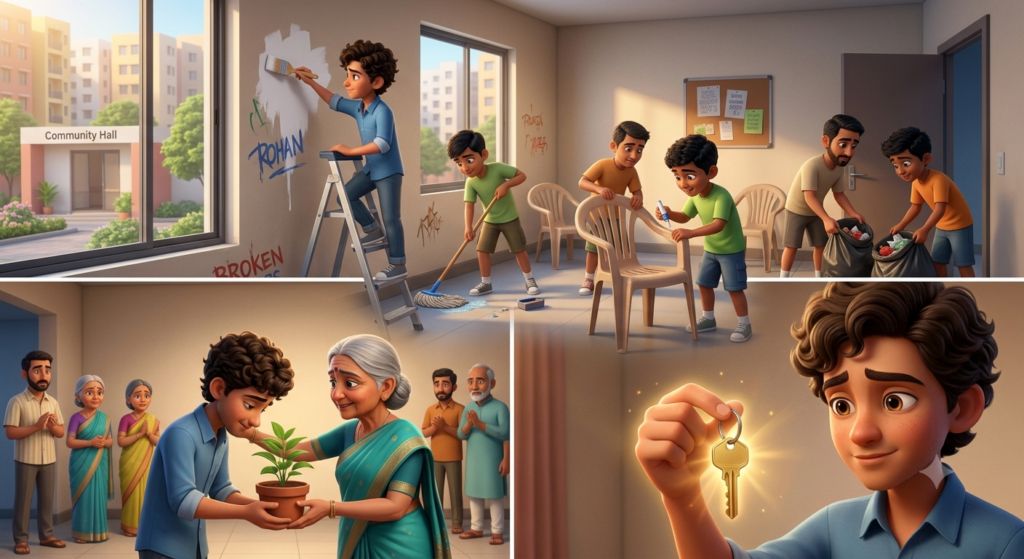
The next morning, he gathered his friends. They cleaned the hall, repaired what they could, and apologized to every resident. Trust slowly returned—not because of his father’s position, but because Rohan learned to deserve it.
His grandmother later shared this Kural:
இறப்பே புரிந்த தொழிற்றாம் சிறப்புந்தான்
சீரல் லவர்கண் படின்.
Iṟappē purindha tozhiṟṟām siṟappundhān
sīral lavar kaṇ paḍin.
She explained, “Power, wealth, or honour become dangerous when they fall into the hands of those who lack character. Greatness doesn’t change a person—it reveals who they truly are.”

Rohan never looked at the golden key the same way again. He realized that privileges are not rewards to enjoy—they are responsibilities to protect.
Moral
Honour and privilege have value only in the hands of those with good character. Without character, even greatness becomes harmful.
Let’s read the same story in Tamil…
பொன்னிறச் சாவியின் பாடம்
அகமதாபாத்தில் புதிதாக கட்டப்பட்ட ஒரு குடியிருப்பில், ஒவ்வொரு குடும்பத்திற்கும் “சமூகக் கூடம்” என்ற பெயர் பொறிக்கப்பட்ட ஒரு பொன்னிற சாவிக் கொத்து வழங்கப்பட்டது. பிறந்தநாள் விழா, கூட்டம், குடும்ப நிகழ்ச்சிகள் போன்றவற்றிற்கு அனைவரும் பொறுப்புடன் பயன்படுத்துவார்கள் என்ற நம்பிக்கையில்தான் அந்தச் சாவி கொடுக்கப்பட்டது.
அந்தக் குடியிருப்பின் சங்கச் செயலாளராக ரோஹனின் அப்பா தேர்ந்தெடுக்கப்பட்டார். அனைவரும் அவரை மதித்தனர். ஒரு வார இறுதியில், யாருக்கும் சொல்லாமல் ரோஹன் தனது நண்பர்களுடன் சமூகக் கூடத்தில் வீடியோ கேம் விருந்து வைத்தான். விளையாட்டும் ஆரவாரமும் முடிந்தபின், சுவர்களில் கிறுக்கல்கள், உடைந்த நாற்காலிகள், சிதறிய உணவுப் பொருட்கள் என்று கூடம் மோசமான நிலையில் இருந்தது.
இதைக் கண்ட குடியிருப்பினர் மிகவும் வருந்தினர். “பொறுப்பு உள்ள குடும்பத்திலிருந்தே இப்படியா?” என்ற ஏமாற்றம் எல்லோரிடமும் இருந்தது.
அன்று இரவு ரோஹனின் அப்பா அந்தப் பொன்னிறச் சாவியை மேசையின் மீது வைத்தார்.
“இந்தச் சாவி எந்தத் தவறும் செய்யவில்லை,” என்றார்.
ரோஹன் ஆச்சரியமாகப் பார்த்தான்.
“இது கதவை மட்டும் திறக்கிறது. அந்தக் கதவுக்குப் பிறகு என்ன செய்கிறோம் என்பதை முடிவு செய்வது நம் குணம்தான்.”
அந்த வார்த்தைகள் ரோஹனின் மனதில் பதிந்துவிட்டன.
மறுநாள் அவன் நண்பர்களை அழைத்தான். அனைவரும் சேர்ந்து கூடத்தைச் சுத்தம் செய்தனர். உடைந்தவற்றைச் சரிசெய்தனர். குடியிருப்பில் இருந்த ஒவ்வொருவரிடமும் மன்னிப்பு கேட்டனர். காலப்போக்கில் மக்கள் மீண்டும் அவர்களை நம்பத் தொடங்கினர். அந்த நம்பிக்கை, செயலாளர் மகன் என்பதற்காக அல்ல; தனது தவறை உணர்ந்து திருந்திய ரோஹனின் பண்புக்காக.
அப்போது அவனது பாட்டி இந்தக் குறளைச் சொன்னார்:
இறப்பே புரிந்த தொழிற்றாம் சிறப்புந்தான்
சீரல் லவர்கண் படின்.
பின்னர் அவர் கூறினார்: “பதவி, செல்வம், பெருமை—இவை நல்ல குணம் உள்ளவரிடம் இருந்தால் உலகிற்கு நன்மை செய்யும். ஆனால் பண்பில்லாதவரிடம் சேர்ந்தால், அதே பெருமை அழிவிற்கே வழிவகுக்கும்.”
அன்று ரோஹன் ஒரு உண்மையைப் புரிந்துகொண்டான். சாவி கதவைத் திறக்கும்; ஆனால் மனிதனின் குணம்தான் வாழ்க்கையைத் திறக்கும்.
நீதி
பதவியும் பெருமையும் மட்டும் போதாது. அவற்றை உயர்வாக மாற்றுவது நல்ல குணம்தான்.
எழுத்துப்பிரதி
Iṟappē purindha tozhiṟṟām siṟappundhān
sīral lavar kaṇ paḍin
மூலத் தமிழ்
இறப்பே புரிந்த தொழிற்றாம் சிறப்புந்தான்
சீரல் லவர்கண் படின்
Breaking it down
- இறப்பே (Iṟappē) – அழிவைப் போன்றது; தீய விளைவை உண்டாக்குவது.
- புரிந்த (Purindha) – உண்டாக்கும், செய்யும்.
- தொழிற்றாம் (Tozhiṟṟām) – செயலாக மாறும்.
- சிறப்பும் (Siṟappum) – பெருமை, பதவி, செல்வம், உயர்வு.
- தான் (Thān) – அதுவே.
- சீரல் லவர்கண் (Sīral Lavar Kaṇ) – நல்ல பண்பில்லாதவரிடம்.
- படின் (Paḍin) – சேர்ந்தால், கிடைத்தால்.
Trivia
இந்தக் குறள் “பெருமை” அதிகாரத்தில் வருகிறது. திருவள்ளுவர் கூறுவது, பெருமை என்பது செல்வம், பதவி அல்லது அதிகாரம் மட்டுமல்ல; அவற்றைச் சரியான முறையில் பயன்படுத்தும் பண்பும் அவசியம் என்பதாகும். தகுதியற்றவரிடம் பெருமை சேர்ந்தால், அது நன்மையை விட தீமையையே அதிகம் உருவாக்கும்.
இன்றைய உலகிலும் இதே கருத்து தலைமைத்துவப் பயிற்சிகளில் பேசப்படுகிறது. ஒரு பதவி ஒருவரை பெரியவராக மாற்றாது; அந்தப் பதவியை அவர் எப்படிப் பயன்படுத்துகிறார் என்பதே அவரது உண்மையான பெருமையை நிர்ணயிக்கிறது.
This bilingual story from ancient Tamil wisdom makes timeless life lessons accessible to readers worldwide — whether you’re discovering these universal truths for the first time, or sharing the beauty of your Tamil heritage with friends from any culture. Reading both English and Tamil versions side by side helps build language confidence, cultural connection, and a lifelong love for meaningful stories — perfect for classrooms, families, and friends around the globe.
Record your kid telling this story and the Kural, we will host it on our YouTube page.
<Youtube link>