
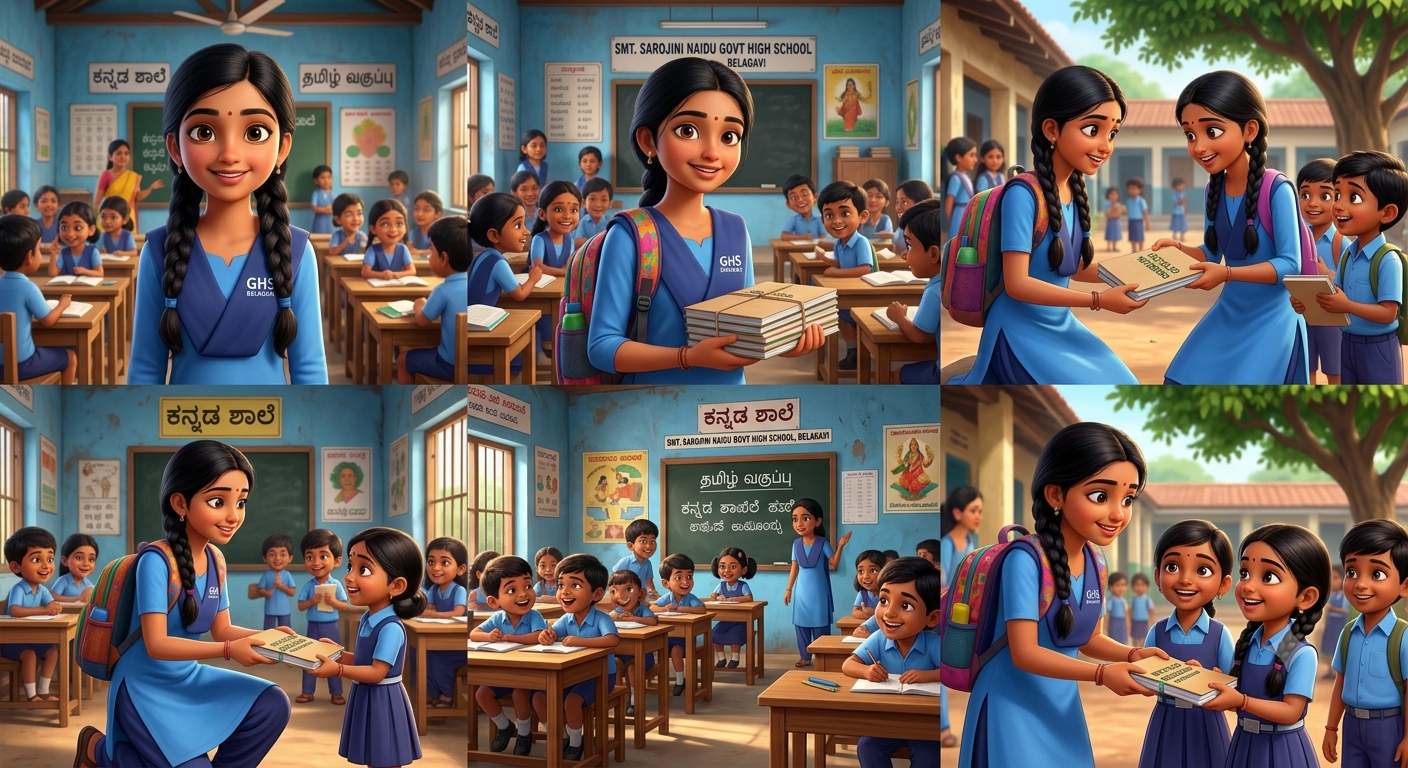
In a government school in Belagavi, fifteen-year-old Sanjana had a habit that many of her classmates found strange. At the end of every academic year, instead of selling her old notebooks for scrap, she carefully sorted the unused pages, bound them into neat notebooks, and donated them to younger students who couldn’t afford new ones.

Her friends often teased her. “You could earn money by selling all this paper,” one of them said. Another laughed, “You’re giving away things that still belong to you.” Sanjana simply smiled and continued her work. She never expected anything in return. Years passed.

After finishing college, Sanjana started a small design studio. One day, she received an email from a young architect who wanted to collaborate with her on a large community project. During their first meeting, he smiled and asked, “Do you remember making notebooks from old pages when we were in school?” Sanjana looked surprised.

“I was one of the children who received them,” he said. “My parents couldn’t afford school supplies then. Those notebooks helped me continue studying without missing classes. I never forgot your kindness.” The project they worked on together became the biggest opportunity of Sanjana’s career.

That evening, her mother softly recited:
அழக்கொண்ட எல்லாம் அழப்போம் இழப்பினும்
பிற்பயக்கும் நற்பா லவை.
Aḻakkonda ellām aḻappōm iḻappinum
piṟpayakkum naṟpāl avai.
She explained, “Anything gained through unfair means will eventually disappear. But good deeds, even if they seem like a loss today, will return with greater blessings in the future.”
Sanjana smiled. She had once given away a few notebooks. Years later, life had returned something much greater—not just success, but the joy of knowing that kindness never goes to waste.
Moral
What is gained through wrongdoing never lasts, but every good deed eventually brings lasting rewards, even if it first feels like a sacrifice.
Let’s read the same story in Tamil…
பழைய நோட்டுப் புத்தகங்களின் புதிய பயணம்
பெலகாவியில் உள்ள அரசு பள்ளியில் படித்த பதினைந்து வயது சஞ்சனாவுக்கு ஒரு வித்தியாசமான பழக்கம் இருந்தது. ஒவ்வொரு கல்வியாண்டின் முடிவிலும், பயன்படுத்தாமல் மீதமிருந்த நோட்டுப் புத்தகப் பக்கங்களை அழகாக ஒன்றுசேர்த்து புதிய நோட்டுப் புத்தகங்களாக கட்டி, புதிய கல்வியாண்டில் படிக்க வரும் ஏழை மாணவர்களுக்கு கொடுத்துவிடுவாள்.
“இதை பழைய காகிதமாக விற்றால் பணம் கிடைக்கும். ஏன் கொடுக்கிறாய்?” என்று நண்பர்கள் அடிக்கடி கேட்டார்கள். “உனக்கே பயன்படும் பொருளை நீயே விட்டுக்கொடுக்கிறாயே!” என்று சிலர் ஆச்சரியப்பட்டார்கள். ஆனால் சஞ்சனா யாரிடமும் விளக்கம் சொல்லாமல் தனது வழக்கத்தைத் தொடர்ந்து செய்தாள். பதிலுக்கு எதையும் எதிர்பார்க்கவில்லை.
பல ஆண்டுகள் கழித்து, கல்லூரி படிப்பை முடித்த சஞ்சனா ஒரு வடிவமைப்பு நிறுவனத்தைத் தொடங்கினாள். ஒரு நாள், ஒரு பெரிய சமூகத் திட்டத்தில் இணைந்து பணியாற்ற அழைப்பு வந்தது. அந்தத் திட்டத்தை வழிநடத்திய இளம் கட்டிடக் கலைஞரைச் சந்தித்தபோது, அவர் சிரித்தபடி, “என்னை நினைவிருக்கிறதா?” என்று கேட்டார்.
சஞ்சனா யோசித்தாள். அவர் மெதுவாகச் சொன்னார்: “நீ பள்ளியில் செய்த அந்த நோட்டுப் புத்தகங்களில் ஒன்றைப் பெற்ற மாணவன் நான்தான். என் வீட்டில் புதிய நோட்டு வாங்கும் வசதி இல்லை. நீ கொடுத்த அந்தப் புத்தகம் எனக்கு படிப்பைத் தொடர உதவியது. அந்த உதவியை நான் ஒருபோதும் மறக்கவில்லை.”
அந்தத் திட்டம் சஞ்சனாவின் வாழ்க்கையில் மிகப் பெரிய வாய்ப்பாக அமைந்தது.
அன்று மாலை அவளது அம்மா இந்தக் குறளை வாசித்தார்:
அழக்கொண்ட எல்லாம் அழப்போம் இழப்பினும்
பிற்பயக்கும் நற்பா லவை.
பின்னர் அவர் கூறினார்: “தவறான வழியில் பெற்றது ஒருநாள் அழிந்தே போகும். ஆனால் நல்ல மனதுடன் செய்த உதவி, இன்று இழப்பாகத் தோன்றினாலும், சரியான நேரத்தில் பல மடங்கு நன்மையாகத் திரும்பி வரும்.”
அப்போது சஞ்சனா ஒரு உண்மையை உணர்ந்தாள். நாம் செய்யும் நன்மை எப்போது, எப்படி திரும்பி வரும் என்பதை நாம் அறிய முடியாது. ஆனால் அது ஒருபோதும் வீணாகாது.
நீதி
நல்ல செயல்கள் உடனே பலன் தராவிட்டாலும், காலம் கடந்தும் நம் வாழ்க்கையில் நன்மையாகத் திரும்பி வரும்.
எழுத்துப்பிரதி
Aḻakkonda ellām aḻappōm iḻappinum
piṟpayakkum naṟpāl avai
மூலத் தமிழ்
அழக்கொண்ட எல்லாம் அழப்போம் இழப்பினும்
பிற்பயக்கும் நற்பா லவை
Breaking it down
- அழக்கொண்ட (Aḻakkonda) – தவறான வழியில் பெற்ற (Obtained unjustly), acquired through wrongful means.
- எல்லாம் (Ellām) – அனைத்தும் (Everything).
- அழப்போம் (Aḻappōm) – அழிந்துபோகும் (Will perish), will be lost.
- இழப்பினும் (Iḻappinum) – இழப்பாகத் தோன்றினாலும் (Even if it seems like a loss).
- பிற்பயக்கும் (Piṟpayakkum) – பின்னர் பலன் தரும் (Will bear fruit later).
- நற்பால் (Naṟpāl) – நல்ல செயல்கள் (Good and righteous deeds).
- அவை (Avai) – அவை (Those).
Trivia
இந்தக் குறள் “வினைத்தூய்மை” அதிகாரத்தில் வருகிறது. தவறான வழியில் சம்பாதித்த செல்வம் நிலைக்காது; நேர்மையுடன் செய்யப்படும் நல்ல செயல்கள் உடனடியாகப் பலன் தராவிட்டாலும், காலப்போக்கில் நிலையான நன்மையைத் தரும் என்று திருவள்ளுவர் கூறுகிறார்.
இன்றைய உலகிலும் இதே கருத்து “Reputation is earned over time” என்ற தலைமைத்துவக் கொள்கையில் பேசப்படுகிறது. நேர்மை மற்றும் நல்லெண்ணத்துடன் செய்யப்படும் செயல்கள், பல ஆண்டுகளுக்குப் பிறகும் எதிர்பாராத வாய்ப்புகளையும் நம்பிக்கையையும் உருவாக்குகின்றன.
This bilingual story from ancient Tamil wisdom makes timeless life lessons accessible to readers worldwide — whether you’re discovering these universal truths for the first time, or sharing the beauty of your Tamil heritage with friends from any culture. Reading both English and Tamil versions side by side helps build language confidence, cultural connection, and a lifelong love for meaningful stories — perfect for classrooms, families, and friends around the globe.
Record your kid telling this story and the Kural, we will host it on our YouTube page.
<Youtube link>