

The annual Robotics Challenge in Bengaluru had one special rule—every team had to build a robot that could complete five different tasks without stopping. Twelve-year-old Aarav and his friends had spent weeks building their robot, “Spark.”

During the practice round, Spark picked up blocks perfectly, crossed obstacles with ease, and even waved at the audience. Just before the final event, however, the robot suddenly began spinning in circles instead of moving forward. The entire team froze.
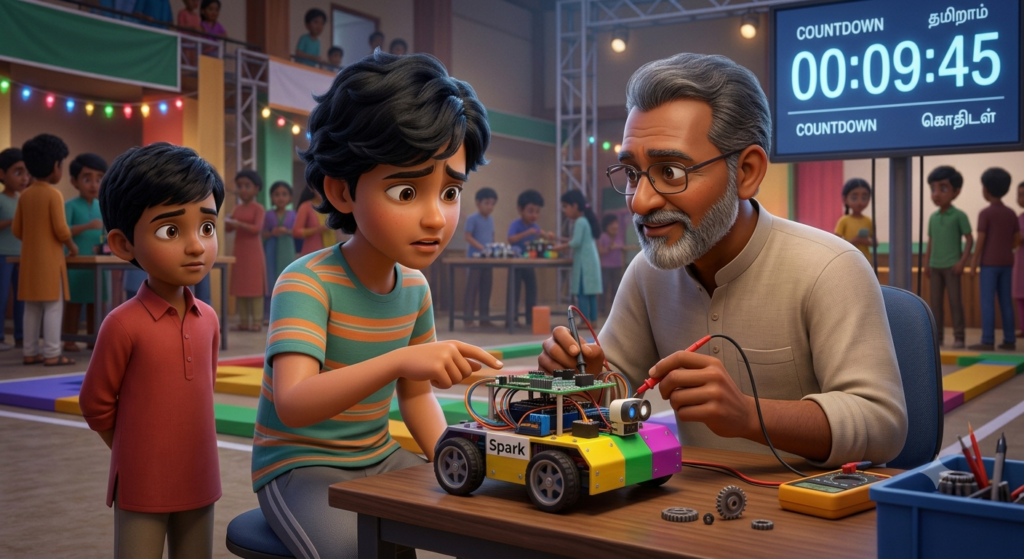
“I think I know what’s wrong,” Aarav said at first. For nearly an hour, he kept changing the code, but nothing worked. The countdown to the competition had already begun. A younger participant quietly walked past and said, “There’s a robotics mentor at the help desk. He’s helping anyone who asks.” Aarav hesitated. If he went there, everyone would know his team needed help. But after taking a deep breath, he carried Spark to the mentor’s table and politely asked, “Could you please look at this? I think we’ve missed something.”

The mentor didn’t rewrite the program or build the robot for them. He simply smiled, pointed to one tiny sensor that had been connected the wrong way, and asked Aarav to check it himself. Within minutes, Spark came to life and completed every task just as it had during practice. When the winners were announced, Aarav’s team proudly accepted the Innovation Award. As reporters congratulated him, Aarav said, “The best decision we made today wasn’t fixing our robot. It was being humble enough to ask for help before it was too late.”

That evening, Aarav opened his Thirukkural book and smiled as he read:
உறைசிறியார் உள்நடுங்கல் அஞ்சிக் குறைபெறின்
கொள்வர் பெரியார்ப் பணிந்து.
He finally understood that truly intelligent people are not those who know everything—they are the ones who are never afraid to learn from those who know more.
Moral
Recognising our limitations and humbly seeking guidance from the wise leads to success and growth.
Let’s read the same story in Tamil…
உதவி கேட்ட ரோபோ
பெங்களூரில் நடைபெற்ற குழந்தைகளுக்கான ரோபோட்டிக்ஸ் போட்டியில், ஒரு ரோபோ ஐந்து பணிகளைத் தொடர்ந்து செய்து முடிக்க வேண்டும் என்ற சவால் வைக்கப்பட்டது. பன்னிரண்டு வயது ஆரவும் அவன் நண்பர்களும் பல வாரங்களாக உழைத்து “ஸ்பார்க்” என்ற ரோபோவை உருவாக்கினர். பயிற்சியில் அது தடைகளைத் தாண்டியது, பொருட்களை எடுத்துச் சென்றது, பார்வையாளர்களைப் பார்த்து கையசைத்தது. ஆனால் இறுதிப் போட்டி தொடங்குவதற்கு சில நிமிடங்களுக்கு முன், ரோபோ நேராகச் செல்லாமல் ஒரே இடத்தில் சுற்றத் தொடங்கியது. அனைவரும் பதற்றமடைந்தனர்.
“இதைக் கண்டிப்பாக என்னாலே சரிசெய்ய முடியும்,” என்று ஆரவ் நினைத்தான். பலமுறை நிரலை மாற்றியும் எந்த மாற்றமும் ஏற்படவில்லை. போட்டி தொடங்க இன்னும் சில நிமிடங்களே இருந்தன. அப்போது அருகே சென்ற சிறுவன் ஒருவர், “உதவி மேசையில் இருக்கும் ரோபோட்டிக்ஸ் நிபுணர் யாராக இருந்தாலும் வழிகாட்டுகிறார்,” என்றான். ஒரு கணம் ஆரவ் தயங்கினான். “நாம் உதவி கேட்டால் எல்லோரும் என்ன நினைப்பார்கள்?” என்ற எண்ணம் வந்தது. ஆனால் உடனே ரோபோவை எடுத்துக்கொண்டு அந்த நிபுணரிடம் சென்று, “எங்கோ ஒரு தவறு செய்திருக்கிறோம். தயவுசெய்து பார்த்து சொல்ல முடியுமா?” என்று பணிவுடன் கேட்டான்.
அந்த நிபுணர் ரோபோவைச் சரிசெய்யவில்லை. அமைதியாக ஒரு சிறிய சென்சாரைக் காட்டி, “இதைக் கவனமாகப் பாரு,” என்றார். தவறான இணைப்பைச் சரிசெய்தவுடன் ஸ்பார்க் மீண்டும் இயங்கத் தொடங்கியது. போட்டியில் அனைத்து பணிகளையும் வெற்றிகரமாக முடித்த அந்த ரோபோ, ஆரவின் குழுவிற்கு புதுமை விருதைப் பெற்றுத் தந்தது. பரிசு வழங்கும் விழாவில், “இன்று எங்களுக்கு வெற்றியைக் கொடுத்தது ரோபோ மட்டும் அல்ல; சரியான நேரத்தில் உதவி கேட்கத் தயங்காத மனப்பான்மையும் தான்,” என்று ஆரவ் கூறியபோது அனைவரும் கைதட்டினர்.
அன்று இரவு ஆரவ் தனது திருக்குறள் புத்தகத்தைத் திறந்து இந்தக் குறளை வாசித்தான்:
உறைசிறியார் உள்நடுங்கல் அஞ்சிக் குறைபெறின்
கொள்வர் பெரியார்ப் பணிந்து.
Uṟaisiṟiyār uḷnaṭuṅgal añcik kuṟaippeṟin
koḷvar periyār paṇinthu.
அப்போது அவனுக்குப் புரிந்தது. எல்லாவற்றையும் தெரிந்திருப்பவர்தான் அறிவாளி அல்ல; தெரியாததை ஒப்புக்கொண்டு கற்றுக்கொள்ளத் தயங்காதவர்தான் உண்மையான அறிவாளி.
நீதி
தன் குறையை உணர்ந்து, அனுபவமிக்கவர்களிடம் பணிவுடன் வழிகாட்டுதல் பெறுவது வெற்றிக்கான அறிவார்ந்த வழியாகும்.
எழுத்துப்பிரதி
Uṟaisiṟiyār uḷnaṭuṅgal añcik kuṟaippeṟin
koḷvar periyār paṇinthu.
மூலத் தமிழ்
உறைசிறியார் உள்நடுங்கல் அஞ்சிக் குறைபெறின்
கொள்வர் பெரியார்ப் பணிந்து.
Breaking it down
- உறைசிறியார் – தமக்குக் குறை இருப்பதை உணரும்வர் (Those who recognise their limitations)
- உள்நடுங்கல் – உள்ளத்தில் அச்சம் கொள்ளுதல் (Being inwardly concerned)
- அஞ்சிக் – அஞ்சி (Fearing a mistake)
- குறைபெறின் – தமக்குக் குறை இருப்பதை உணர்ந்தால் (If they realise they lack something)
- கொள்வர் – நாடுவார்கள், ஏற்றுக்கொள்வார்கள் (Will seek)
- பெரியார்ப் பணிந்து – பெரியோரிடம் பணிவுடன் (Humbly approaching the wise)
Trivia
இந்தக் குறள் வினைசெயல்வகை அதிகாரத்தில் இடம்பெறுகிறது. ஒரு செயலில் தமக்குக் குறை இருப்பதை உணர்ந்தால், அகந்தையால் மறைக்காமல் அனுபவமிக்கவர்களிடம் பணிவுடன் ஆலோசனை பெற வேண்டும் என்று திருவள்ளுவர் அறிவுறுத்துகிறார். உதவி கேட்பது பலவீனத்தின் அடையாளமல்ல; தொடர்ந்து கற்றுக்கொண்டு வளர விரும்பும் மனப்பான்மையின் அடையாளமாகும்.
இன்றைய உலகில் சிறந்த விஞ்ஞானிகள், விளையாட்டு வீரர்கள், கலைஞர்கள் மற்றும் தொழில்நுட்ப நிபுணர்களுக்குக் கூட வழிகாட்டிகள் (mentors) இருக்கிறார்கள். தொடர்ந்து கற்றுக்கொள்வதே உண்மையான முன்னேற்றத்தின் ரகசியம்.
This bilingual story from ancient Tamil wisdom makes timeless life lessons accessible to readers worldwide—whether you’re discovering these universal truths for the first time, or sharing the beauty of your Tamil heritage with friends from any culture. Reading both English and Tamil versions side by side helps build language confidence, cultural connection, and a lifelong love for meaningful stories—perfect for classrooms, families, and friends around the globe.
Record your kid telling this story and the Kural, and we will host it on our YouTube page.
<YouTube link>