
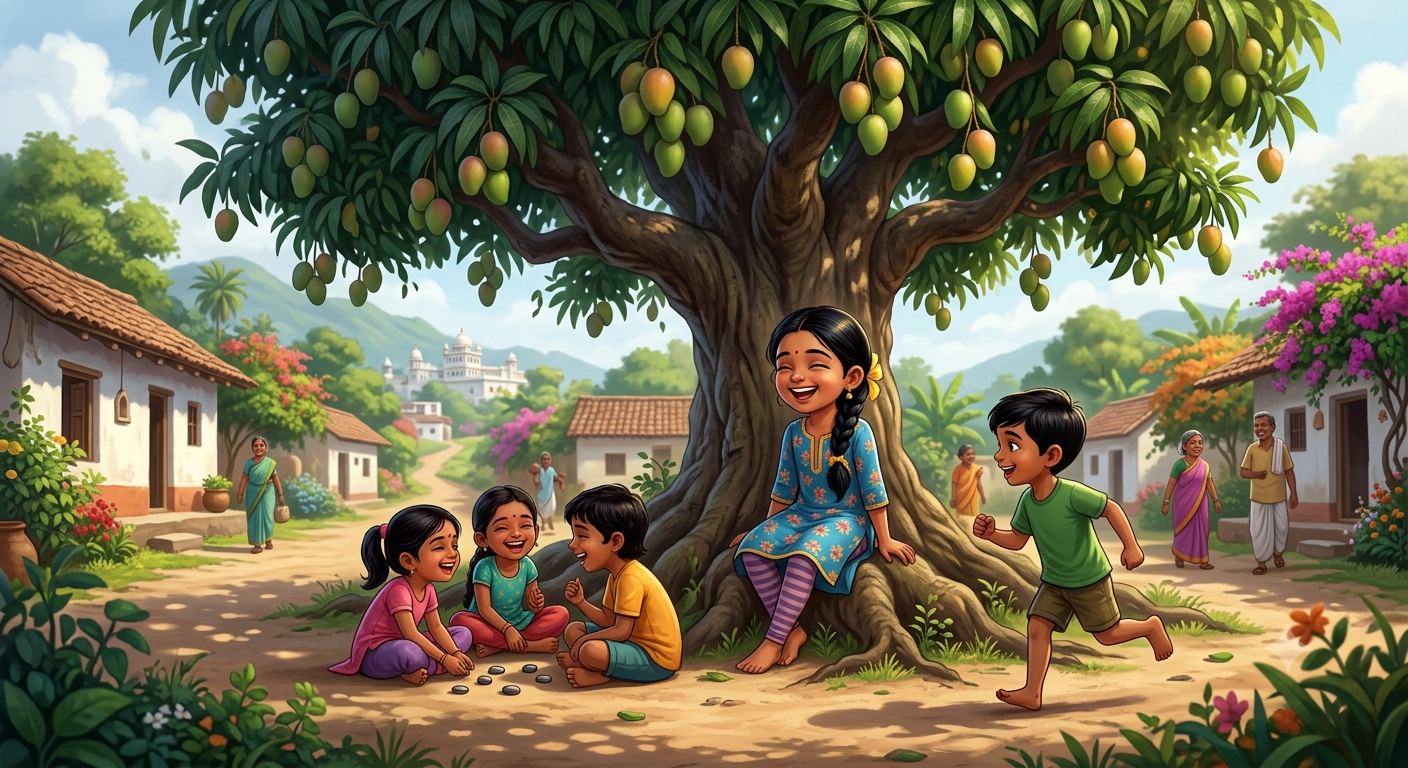
In a peaceful village near Udaipur stood a magnificent mango tree that had watched generations grow up beneath its branches. Every summer, children from every corner of the village gathered there to play games, share stories, and wait for ripe mangoes to fall. The tree belonged to no one, yet everyone felt it belonged to them.
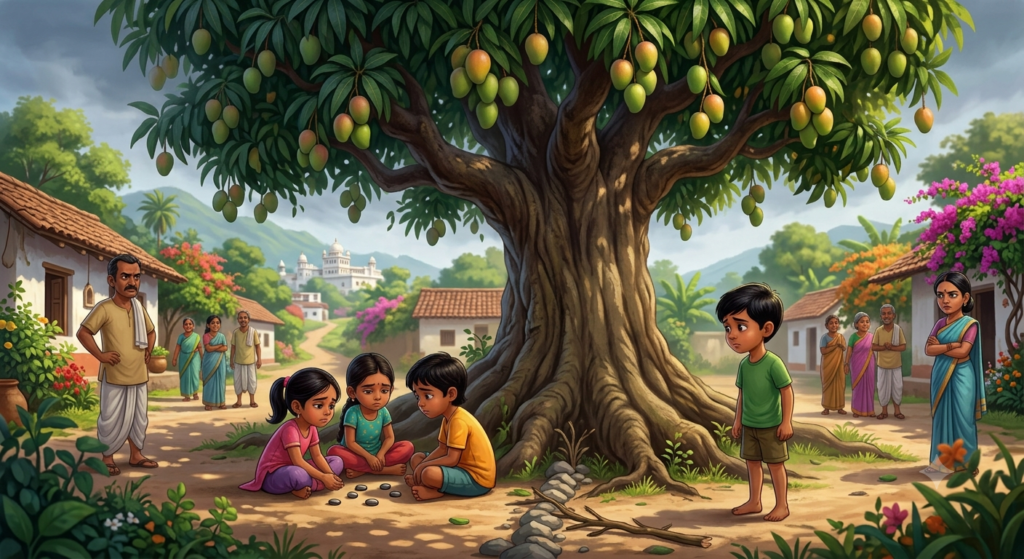
One year, a disagreement arose between two families over the land surrounding the tree. What began as a simple argument slowly turned into bitterness. They stopped speaking to each other, celebrated festivals separately, and even told their children not to play together. The village that had once felt like one family slowly became divided.
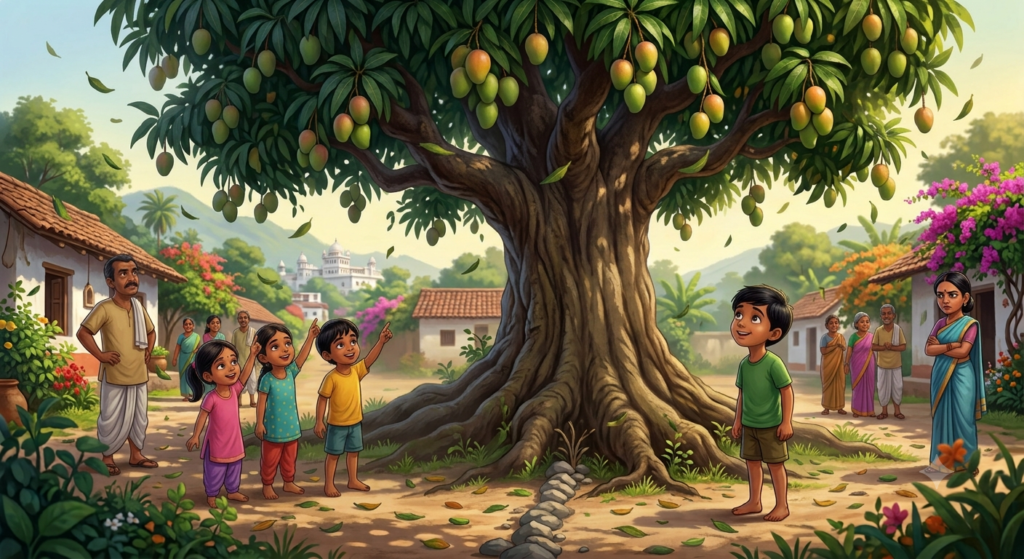
As the mango season arrived, the children noticed something beautiful. The tree never dropped its fruits only on one side. Its branches stretched over both families, its shade welcomed everyone, and the wind carried its leaves wherever nature wished. The tree never cared about arguments, wealth, or status. It simply continued doing what it had always done—giving equally to all.
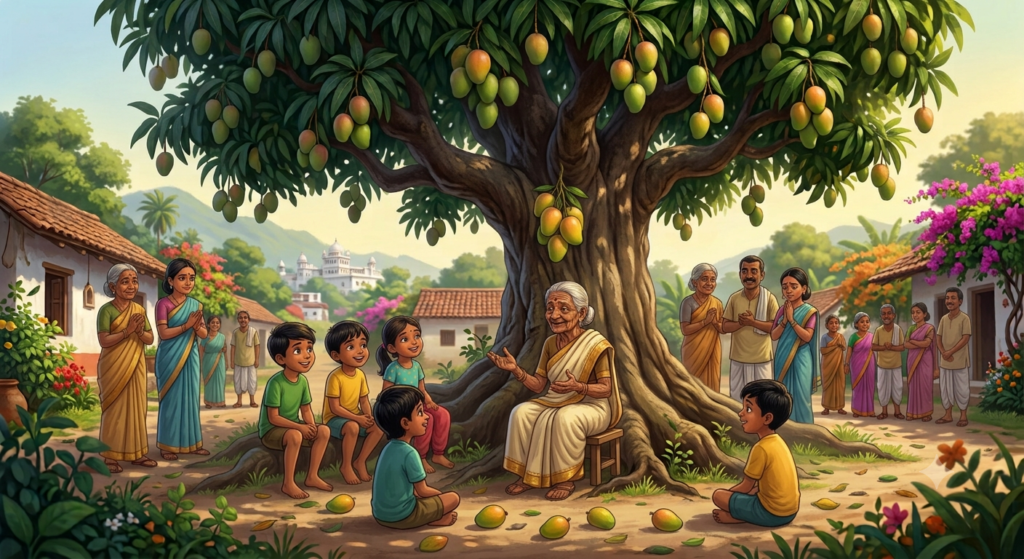
Watching this every day, the oldest woman in the village gathered the children beneath the tree. “Look carefully,” she said. “The tree has not changed. Only our hearts have.” Her words spread through the village, making everyone reflect on their behaviour. Slowly, the families spoke to one another again, settled their differences, and the laughter of children returned beneath the same branches.
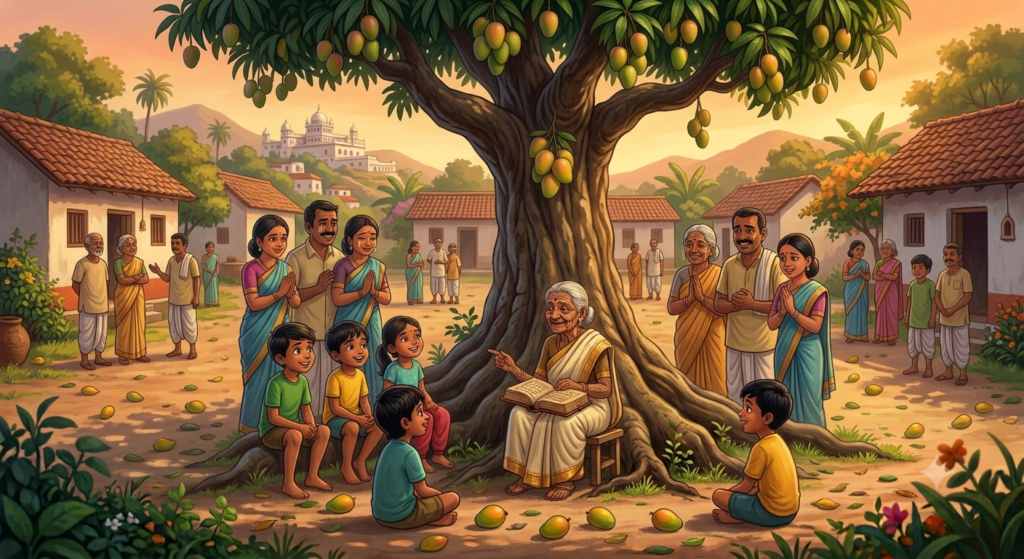
That evening, the old woman opened her worn copy of the Thirukkural and recited:
கேடும் பெருக்கமும் இல்லல்ல நெஞ்சத்துக்
கோடாமை சான்றோர்க் கணி.
Kēḍum perukkamum illalla neñjaththuk
kōḍāmai sāṉṟōrk kaṇi.
She explained, “Life will always bring both gain and loss. But a wise person’s greatest ornament is a heart that never bends away from fairness. Just like this tree, we should treat everyone equally, no matter what changes around us.”
From that day onward, whenever the children picked a mango, they remembered that true greatness is measured not by what we have, but by how fairly we treat others.
Moral
A fair heart remains steady through success and failure. Treating everyone equally is the true mark of wisdom.
Let’s read the same story in Tamil…
யாரையும் பாகுபடுத்தாத மாமரம்
உதய்பூருக்கு அருகிலிருந்த ஒரு சிறிய கிராமத்தின் நடுவில் தலைமுறைகளாக நின்று கொண்டிருந்த ஒரு பெரிய மாமரம் இருந்தது. கோடை காலம் வந்தாலே எல்லா தெருக்களிலும் இருந்த குழந்தைகள் அதன் நிழலில் கூடி விளையாடுவார்கள். பழுத்த மாம்பழங்கள் கீழே விழும் நேரத்தைக் காத்திருந்து மகிழ்ச்சியாக சிரித்துக்கொண்டிருப்பார்கள். அந்த மரம் யாருக்குச் சொந்தம் என்று யாரும் நினைத்ததில்லை; அது எல்லோருடைய மரமாகவே இருந்தது.
ஒரு வருடம், அந்த மரத்தைச் சுற்றியிருந்த நிலத்தைப் பற்றி இரண்டு குடும்பங்களுக்கு இடையே தகராறு ஏற்பட்டது. ஆரம்பத்தில் சிறிய கருத்து வேறுபாடாக இருந்தது. ஆனால் நாளடைவில் அது மனக்கசப்பாக மாறியது. ஒருவருடன் ஒருவர் பேசுவதை நிறுத்தினர். குழந்தைகளைக்கூட சேர்ந்து விளையாட விடவில்லை. ஒரே கிராமத்தில் வாழ்ந்தாலும், மனங்கள் இரண்டாகப் பிரிந்துவிட்டன.
மாம்பழக் காலம் வந்தது. அப்போது குழந்தைகள் ஒரு விஷயத்தைக் கவனித்தனர். மாமரம் ஒருபோதும் யார் எந்தக் குடும்பத்தைச் சேர்ந்தவர்கள் என்று பார்த்ததில்லை. அதன் நிழல் இரு குடும்பங்களையும் சமமாகக் காத்தது. அதன் பழங்கள் இரு பக்கங்களிலும் சமமாக விழுந்தன. மனிதர்கள் மட்டுமே பாகுபாடு பார்த்தார்கள்; மரம் மட்டும் எல்லோரிடமும் ஒரே அன்புடன் இருந்தது.
இதைக் கவனித்த கிராமத்தின் வயதான பாட்டி ஒரு நாள் அனைவரையும் மரத்தடியில் அழைத்தார். “இந்த மரத்தைப் பாருங்கள்,” என்றார். “இது பல ஆண்டுகளாக யாரையும் வேறுபடுத்திப் பார்த்ததில்லை. ஆனால் நாம்தான் நம் மனதைப் பிரித்துக்கொண்டோம்.” அந்த வார்த்தைகள் அனைவரின் மனதையும் தொட்டன. சில நாட்களிலேயே இரு குடும்பங்களும் பேசித் தீர்வு கண்டனர். மீண்டும் குழந்தைகளின் சிரிப்பால் அந்த மாமர நிழல் நிரம்பியது.
அன்று மாலை பாட்டி தனது பழைய திருக்குறள் புத்தகத்தைத் திறந்து வாசித்தார்:
கேடும் பெருக்கமும் இல்லல்ல நெஞ்சத்துக்
கோடாமை சான்றோர்க் கணி.
பின்னர் அவர் கூறினார்: “வாழ்க்கையில் இழப்பும் வரும், இலாபமும் வரும். ஆனால் எந்தச் சூழ்நிலையிலும் நியாயத்திலிருந்து விலகாத மனம்தான் சான்றோரின் உண்மையான அணிகலன். இந்த மாமரம் போல எல்லோரையும் சமமாக நடத்த கற்றுக்கொண்டால், எந்த உறவும் நீண்ட நாட்கள் நிலைக்கும்.”
அன்றிலிருந்து குழந்தைகள் மாம்பழம் எடுக்கும்போதெல்லாம், அந்த மரம் கற்றுக்கொடுத்த நியாயத்தின் பாடத்தை மறக்கவில்லை.
நீதி
இலாபமும் இழப்பும் மாறி மாறி வரும். ஆனால் நியாயத்தை விட்டுவிடாத மனம்தான் மனிதனின் மிகப் பெரிய அழகு.
எழுத்துப்பிரதி
Kēḍum perukkamum illalla neñjaththuk
kōḍāmai sāṉṟōrk kaṇi.
மூலத் தமிழ்
கேடும் பெருக்கமும் இல்லல்ல நெஞ்சத்துக்
கோடாமை சான்றோர்க் கணி.
Breaking it down
- கேடும் (Kēḍum) – இழப்பு, துன்பம் (Loss or adversity)
- பெருக்கமும் (Perukkamum) – வளர்ச்சி, இலாபம் (Gain or prosperity)
- இல்லல்ல (Illalla) – வாழ்க்கையில் தவிர்க்க முடியாதவை (Natural parts of life)
- நெஞ்சத்துக் (Neñjaththuk) – மனதில் (In the heart)
- கோடாமை (Kōḍāmai) – நியாயத்திலிருந்து விலகாமை; பாரபட்சமின்மை (Impartiality and fairness)
- சான்றோர்க் (Sāṉṟōrk) – உயர்ந்த பண்புடையவர்களுக்கு (For the wise and virtuous)
- கணி (Kaṇi) – அணிகலன்; சிறந்த அழகு (Ornament or finest quality)
Trivia
இந்தக் குறள் நடுவுநிலைமை அதிகாரத்தில் இடம்பெறுகிறது. திருவள்ளுவர், வாழ்க்கையில் இலாபமும் இழப்பும் இயல்பானவை என்றாலும், அவற்றால் பாதிக்கப்படாமல் நியாயமாக இருப்பதே சான்றோரின் மிகப் பெரிய பண்பு என்று கூறுகிறார்.
இன்றைய நீதித்துறை, கல்வி, விளையாட்டு, நிறுவன மேலாண்மை போன்ற துறைகளிலும் இதே கருத்து முக்கியமானதாகக் கருதப்படுகிறது. அனைவரையும் சமமாக நடத்தும் மனப்பான்மை நம்பிக்கையை உருவாக்குகிறது; நம்பிக்கைதான் நல்ல சமூகத்தின் அடித்தளம்.
This bilingual story from ancient Tamil wisdom makes timeless life lessons accessible to readers worldwide—whether you’re discovering these universal truths for the first time, or sharing the beauty of your Tamil heritage with friends from any culture. Reading both English and Tamil versions side by side helps build language confidence, cultural connection, and a lifelong love for meaningful stories—perfect for classrooms, families, and friends around the globe.
Record your kid telling this story and the Kural, and we will host it on our YouTube page. <YouTube link>