
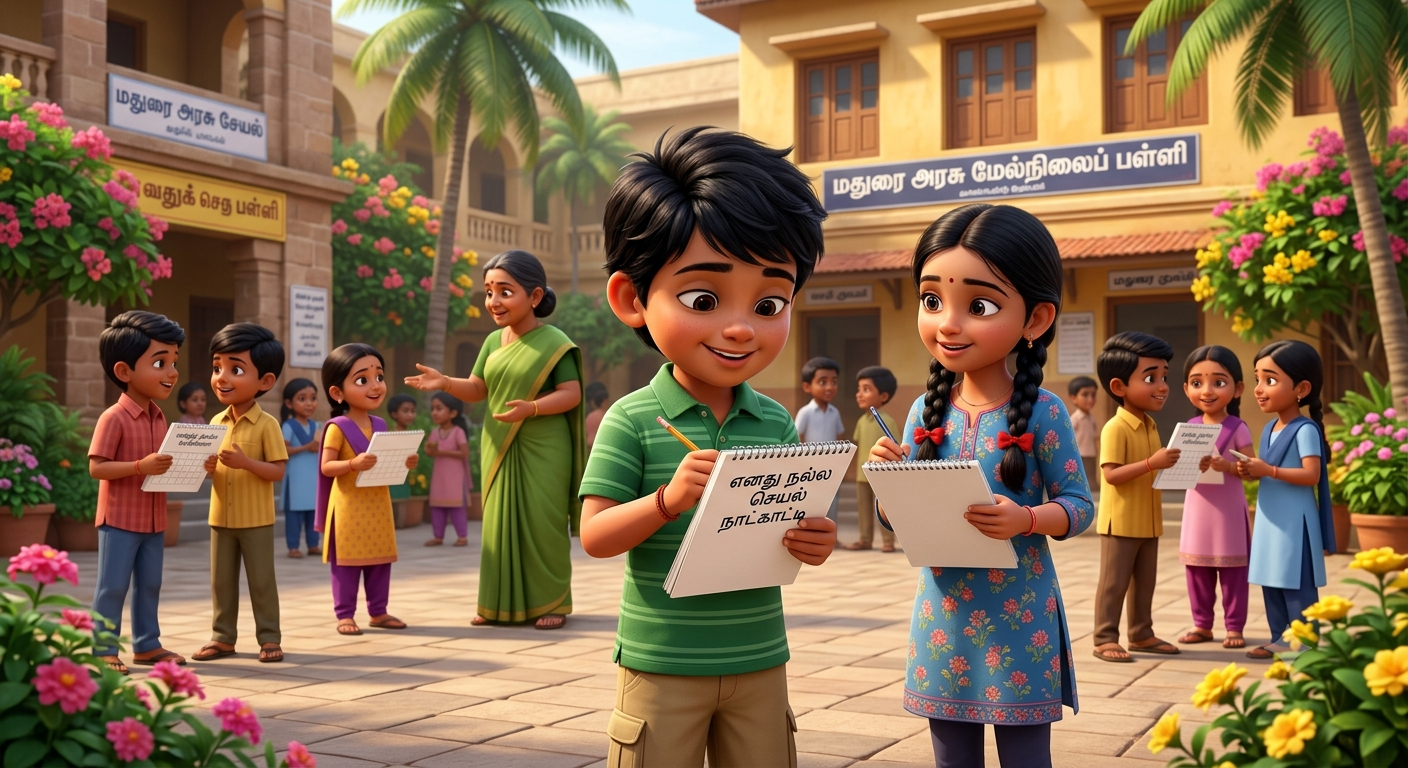
At a school in Madurai, every student received a blank calendar on the first day of the month. But it wasn’t for homework or exams. The principal called it the “Good Deed Calendar.” The rule was simple—at the end of each day, write down one good thing you did for someone else.
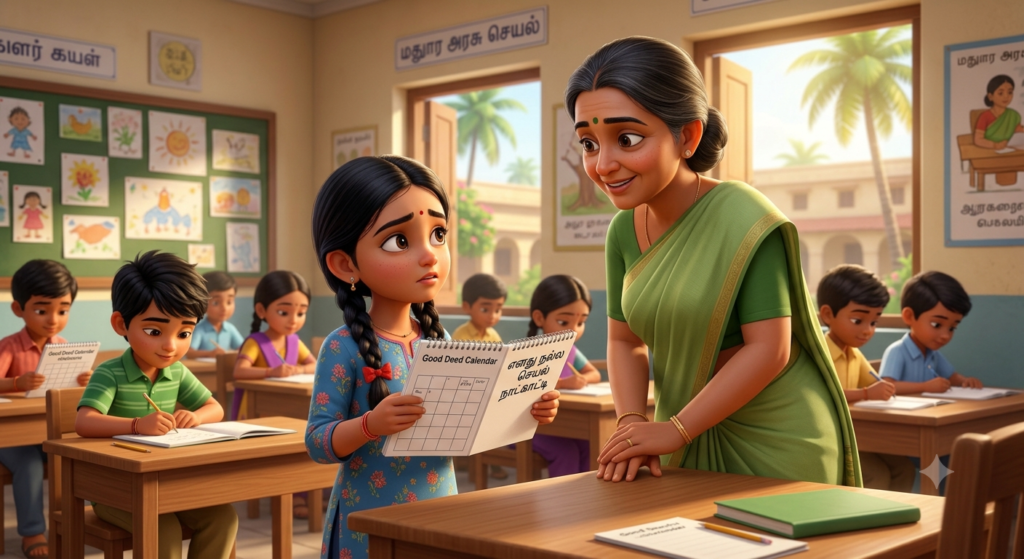
Twelve-year-old Diya was excited at first. She helped her grandmother water plants, shared her lunch with a friend, and taught her little brother multiplication. But after a week, she worried that some days weren’t “special” enough. “Do tiny acts even matter?” she asked her teacher.
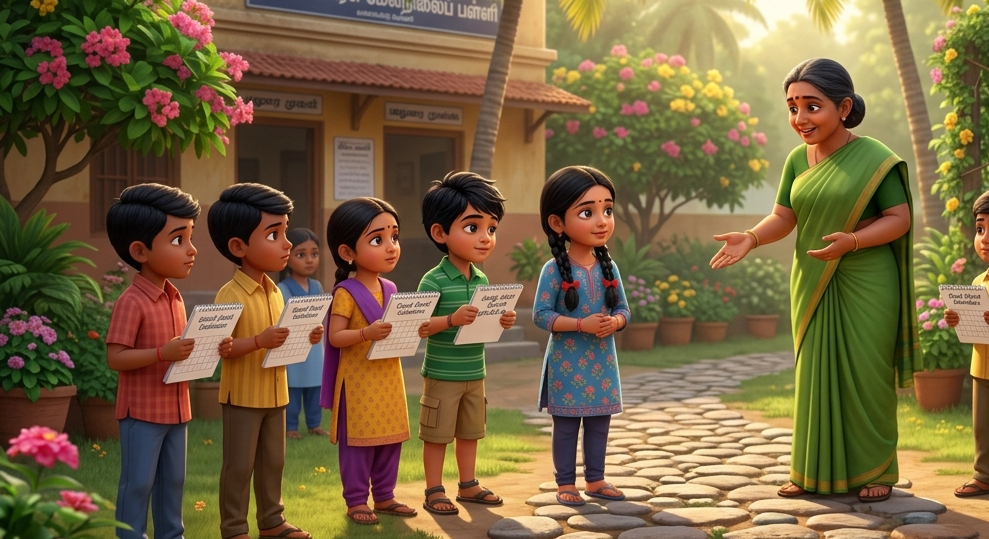
The teacher smiled and showed the class an old stone path in the school garden. “This path wasn’t built in one day,” she said. “Each stone was placed one by one. That’s how a beautiful path is made.”
She then recited a Thirukkural:
வீழ்நாள் படாஅமை நன்றாற்றின் அஃதொருவன்
வாழ்நாள் வழியடைக்கும் கல்
Vīḻnāḷ paṭāamai naṉṟāṟṟin ahdhoruvan
vāḻnāḷ vazhiyaḍaikkum kal
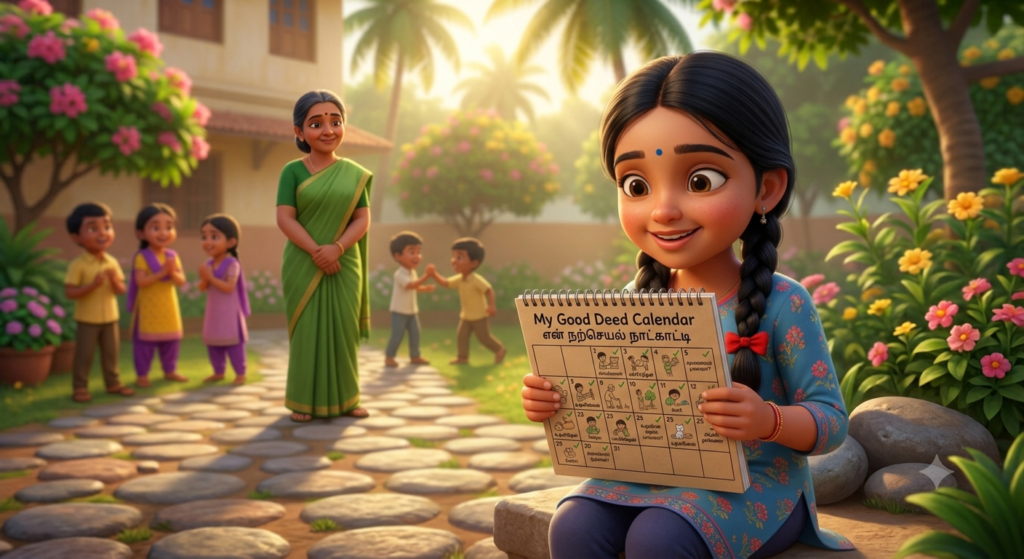
She explained, “A day without a good deed is like leaving a gap in the path of life. Every small act of kindness becomes a strong stone that builds our character.”
At the end of the month, Diya’s calendar was filled—not with grand achievements, but with dozens of little acts of goodness. She realised that a meaningful life is built one good day at a time.
Moral
A meaningful life is not created by one great achievement, but by doing good consistently every single day.
Let’s read the same story in Tamil…
நல்ல செயல் நாட்காட்டி
மதுரையில் உள்ள ஒரு பள்ளியில், மாதத்தின் முதல் நாளில் ஒவ்வொரு மாணவருக்கும் ஒரு வெற்று நாட்காட்டி வழங்கப்பட்டது. அது வீட்டுப்பாடம் எழுதுவதற்காக அல்ல. தலைமை ஆசிரியர் அதை “நல்ல செயல் நாட்காட்டி” என்று அழைத்தார். தினமும் மாலையில், அந்த நாளில் செய்த ஒரு நல்ல செயலை மட்டும் அதில் எழுத வேண்டும் என்பதே விதி.
பன்னிரண்டு வயது தியா ஆரம்பத்தில் மிகுந்த உற்சாகத்துடன் இருந்தாள். பாட்டிக்கு செடிகளுக்கு தண்ணீர் ஊற்ற உதவினாள், தோழியுடன் மதிய உணவைப் பகிர்ந்தாள், தம்பிக்கு பெருக்கலை கற்றுக்கொடுத்தாள். ஆனால் ஒரு வாரம் கழித்து அவள் ஆசிரியரிடம், “சில நாட்களில் நான் செய்தது மிகவும் சிறிய உதவிதான். அவையும் முக்கியமா?” என்று கேட்டாள்.
ஆசிரியர் சிரித்தபடி பள்ளித் தோட்டத்தில் இருந்த கல் நடைபாதையைக் காட்டினார். “இந்தப் பாதை ஒரே நாளில் உருவாகவில்லை. ஒவ்வொரு கல்லாக வைத்து தான் இது முழுமையான பாதையாக மாறியது,” என்றார்.
பிறகு அவர் திருவள்ளுவரின் குறளைச் சொன்னார்:
வீழ்நாள் படாஅமை நன்றாற்றின் அஃதொருவன்
வாழ்நாள் வழியடைக்கும் கல்.
“ஒவ்வொரு நாளும் ஒரு நல்ல செயலைச் செய்தால், அது வாழ்வின் பாதையில் வைக்கப்படும் ஒரு உறுதியான கல்லைப் போன்றது. சிறிய நன்மைகள்தான் பெரிய மனிதரை உருவாக்குகின்றன,” என்று ஆசிரியர் விளக்கினார்.
மாதம் முடிந்தபோது தியாவின் நாட்காட்டி சிறிய சிறிய நல்ல செயல்களால் நிரம்பியிருந்தது. அன்றுதான் அவள் உணர்ந்தாள்—ஒரு நல்ல வாழ்க்கை என்பது ஒரு பெரிய செயலில் இல்லை; தினமும் செய்யப்படும் சிறிய நன்மைகளின் கூட்டுத்தொகையில்தான் உள்ளது.
நீதி
ஒவ்வொரு நாளும் செய்யும் ஒரு சிறிய நல்ல செயலும், வாழ்வை அர்த்தமுள்ளதாக்கும். தொடர்ந்து செய்யும் அறமே மனிதனின் உண்மையான செல்வம்.
எழுத்துப்பிரதி
Vīḻnāḷ paṭāamai naṉṟāṟṟin ahdhoruvan
vāḻnāḷ vazhiyaḍaikkum kal
மூலத் தமிழ்
வீழ்நாள் படாஅமை நன்றாற்றின் அஃதொருவன்
வாழ்நாள் வழியடைக்கும் கல்
Breaking it down
- வீழ்நாள் படாஅமை – வீணாகக் கழியாத நாள் (A day not wasted)
- நன்று ஆற்றின் – நல்ல செயல் செய்தால் (If one performs good deeds)
- அஃது – அது (That)
- ஒருவன் வாழ்நாள் – மனிதனின் வாழ்நாள் (A person’s life)
- வழி அடைக்கும் கல் – வாழ்வை உறுதியாக்கும் அடிக்கல் (The stone that strengthens life’s path)
Trivia
இந்தக் குறள் அறன் வலியுறுத்தல் அதிகாரத்தில் இடம்பெறுகிறது. ஒரு நாளைக்கூட வீணாக்காமல், தினமும் நல்ல செயல்களைச் செய்வதே அர்த்தமுள்ள வாழ்க்கையின் அடித்தளம் என்று திருவள்ளுவர் கூறுகிறார். பெரிய நன்மைகள் அரிதாக வரும்; ஆனால் தினசரி சிறிய நற்குணங்கள்தான் வாழ்வை உயர்த்துகின்றன.
This bilingual story from ancient Tamil wisdom makes timeless life lessons accessible to readers worldwide—whether you’re discovering these universal truths for the first time, or sharing the beauty of your Tamil heritage with friends from any culture. Reading both English and Tamil versions side by side helps build language confidence, cultural connection, and a lifelong love for meaningful stories—perfect for classrooms, families, and friends around the globe.
Record your kid telling this story and the Kural, and we will host it on our YouTube page.
<Youtube link>