
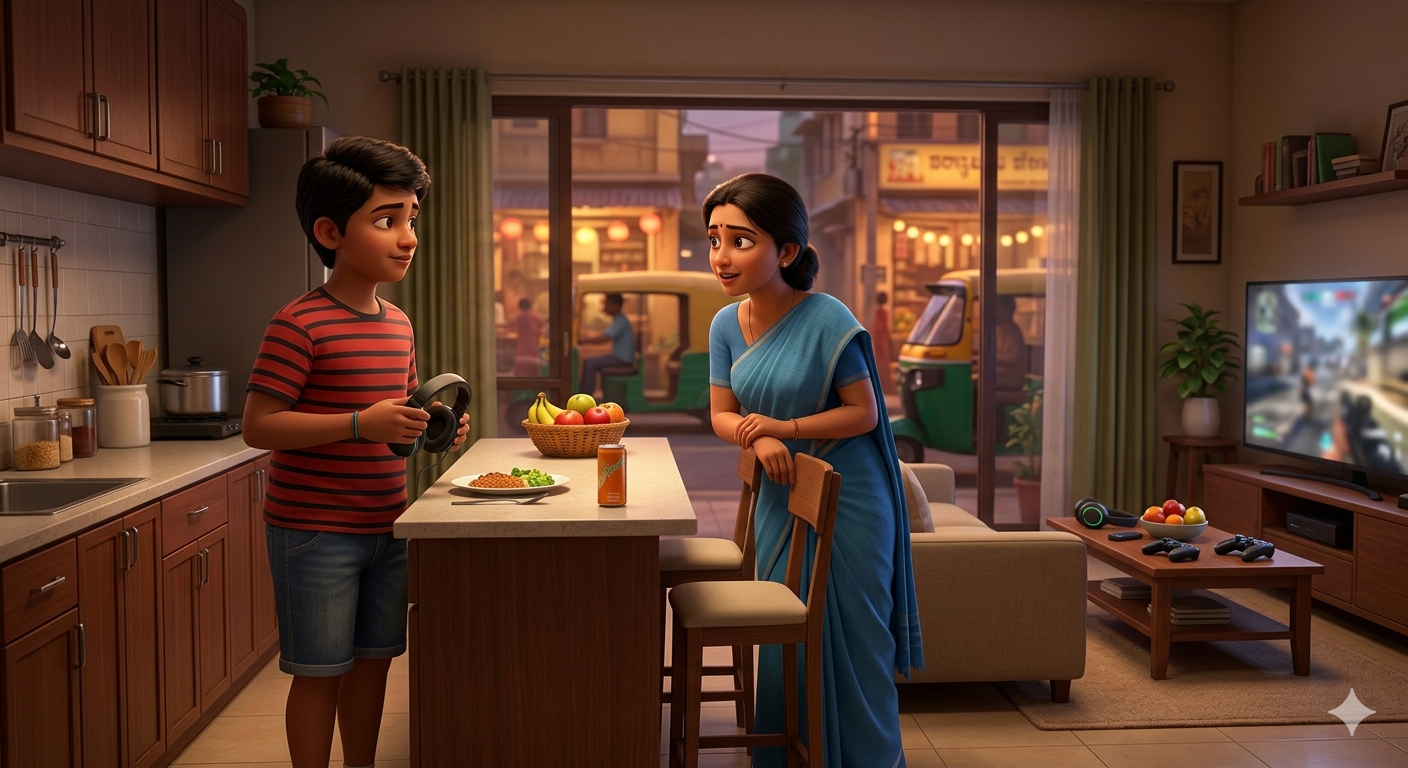
In the busy city of Bengaluru, 14-year-old Danish loved food more than anything else. Every evening after school, he would stop by a snack shop near his apartment and buy spicy fries, burgers, and giant soft drinks. At home too, he kept munching while gaming online with his cousins.
His mother, a pediatric nurse, often warned him gently.
“Your body needs balance, Danish. Too much food can quietly harm your health.”
But Danish would laugh and say,
“Come on, Amma! I’m still young.”
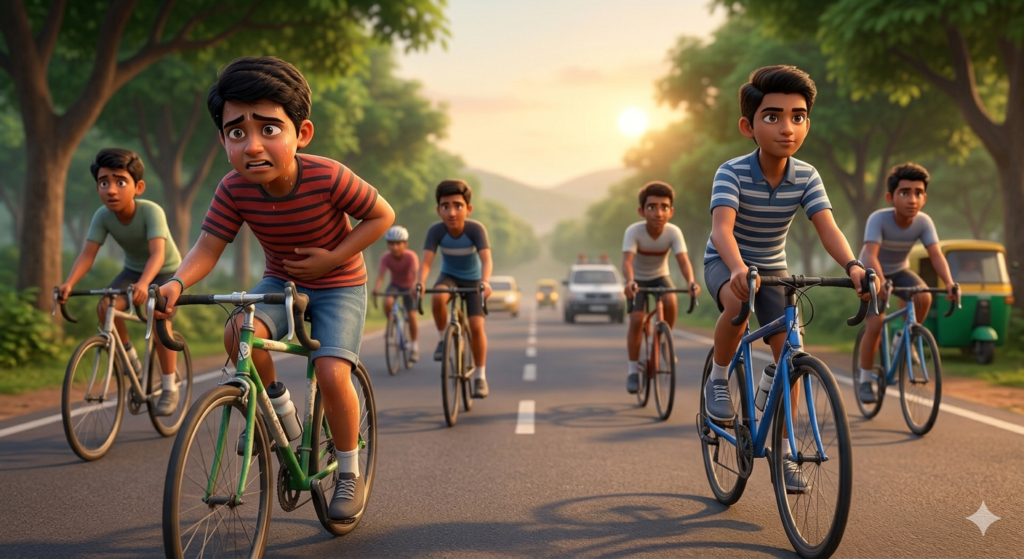
A few weeks later, his school announced a long-distance cycling event. Danish excitedly joined because the winner would represent the school at a city-level competition.
During the first practice ride, Danish struggled badly. After just a few kilometers, he felt exhausted. His stomach cramped, and he could barely keep up with the group. Meanwhile, his classmate Nivaan rode smoothly beside him.
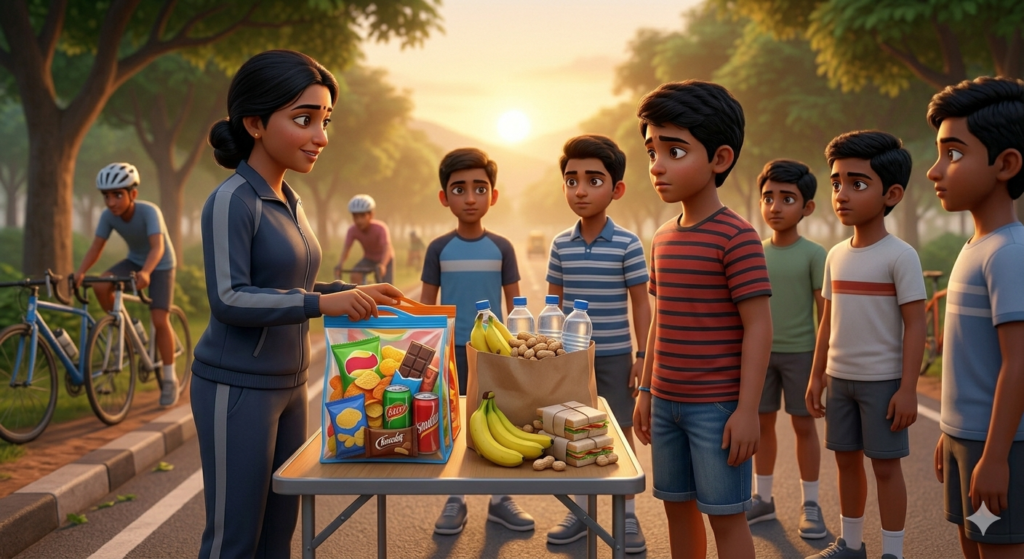
Their coach, Mrs. Farzana, noticed the problem.
The next day, she brought two bags to practice. One was packed with chips, sugary sodas, and chocolates. The other had bananas, peanuts, sandwiches, and water bottles.
She smiled and said,
“A true athlete knows when to stop eating — not just when to start.”
Her words stayed in Danish’s mind.
That evening, he looked at the half-empty junk food packets on his table and decided to change. Slowly, he reduced overeating. He ate proper meals, drank more water, and stopped snacking late at night.
Within a month, Danish felt completely different.
He slept better. His body felt lighter. Most importantly, he could cycle longer without getting tired.

Finally, the competition day arrived.
The race stretched across the lakeside roads of Bengaluru. Many students slowed down midway, but Danish stayed steady. Near the finish line, he gathered all his strength and pedaled ahead to secure second place for his school.
His coach proudly smiled and recited a Thirukkural:
Māṟupāḍu illāda uṇḍi maṟutt uṇṇin
Ūṟupāḍu illai uyirkku.
மாறுபாடு இல்லாத உண்டி மறுத்துண்ணின்
ஊறுபாடு இல்லை உயிர்க்கு.
Danish finally understood the wisdom behind the verse. Eating with self-control was not punishment — it was the secret to strength, health, and happiness.
Moral
If a person eats with moderation and avoids overeating, the body will remain free from suffering and illness.
Let’s read the same story in Tamil…
சைக்கிள் சாம்பியனின் ரகசியம்
பெங்களூரு நகரின் பரபரப்பான பகுதியில் பதினான்கு வயது டேனிஷ் தனது பெற்றோருடன் வாழ்ந்து வந்தான். டேனிஷ்க்கு சாப்பாடு என்றாலே உயிர். பள்ளி முடிந்து வீட்டிற்கு வரும் வழியிலேயே அருகிலிருந்த ஸ்நாக்ஸ் கடையில் நின்று பர்கர், ஃபிரைஸ், குளிர்பானம் என்று வாங்கிச் சாப்பிடுவான்.
வீட்டிற்கு வந்த பிறகும் ஆன்லைன் விளையாட்டு விளையாடிக்கொண்டே நொறுக்குத்தீனி சாப்பிடுவதை நிறுத்தவே மாட்டான்.
அவனுடைய அம்மா குழந்தைகள் மருத்துவமனையில் நர்ஸாக வேலை பார்த்தார். தினமும் மெதுவாக அறிவுரை சொல்வார்.
“டேனிஷ்… அளவுக்கு அதிகமா சாப்பிட்டா உடம்பு பாதிக்கப்படும்.”
ஆனால் டேனிஷ் சிரித்தபடி,
“எனக்கு ஒன்றும் ஆகாது அம்மா!” என்று சொல்லிவிடுவான்.
சில வாரங்கள் கழித்து பள்ளியில் நீண்ட தூர சைக்கிள் போட்டி அறிவிக்கப்பட்டது. வெற்றி பெறுபவர்கள் நகர அளவிலான போட்டிக்கு செல்ல வேண்டும்.
டேனிஷும் மிகுந்த ஆர்வத்துடன் சேர்ந்தான்.
முதல் பயிற்சியிலேயே அவனுக்கு சிரமம் ஆரம்பமானது. கொஞ்ச தூரம் மிதித்தவுடன் மூச்சு வாங்க ஆரம்பித்தது. வயிற்றுவலியும் வந்தது. மற்ற மாணவர்கள் வேகமாக சென்றபோது டேனிஷ் பின்னால் தள்ளப்பட்டான்.
அதை கவனித்தார் பயிற்சியாளர் பர்ஸானா மேடம்.
அடுத்த நாள் அவர் இரண்டு பைகளைக் கொண்டு வந்தார். ஒன்றில் சிப்ஸ், சாக்லேட், குளிர்பானங்கள். மற்றொன்றில் வாழைப்பழம், கடலை, சாண்ட்விச், தண்ணீர் பாட்டில்கள்.
அவர் சிரித்தபடி சொன்னார்:
“சாப்பிடத் தெரிந்தவனைவிட, எப்போது நிறுத்தணும் என்று தெரிந்தவன்தான் உண்மையான வீரன்.”
அந்த வார்த்தை டேனிஷின் மனதில் பதிந்தது.
அன்று இரவு மேசையில் இருந்த காலியான ஜங்க் உணவுப் பாக்கெட்டுகளை பார்த்தான். அப்போது அவன் ஒரு முடிவு எடுத்தான்.
அதிகமாக சாப்பிடுவதை மெதுவாகக் குறைத்தான். நேரத்திற்கு உணவு சாப்பிட்டான். தண்ணீர் அதிகமாக குடிக்க ஆரம்பித்தான். இரவு நேர நொறுக்குத்தீனியையும் நிறுத்தினான்.
ஒரு மாதத்திலேயே பெரிய மாற்றம் தெரிந்தது.
காலை எழுந்ததும் உடல் சுறுசுறுப்பாக இருந்தது. சைக்கிளை நீண்ட தூரம் சோர்வில்லாமல் ஓட்ட முடிந்தது.
இறுதியாக போட்டி நாள் வந்தது.
பெங்களூருவின் ஏரிக்கரை சாலைகளில் போட்டி நடைபெற்றது. பல மாணவர்கள் நடுவிலேயே சோர்ந்து போனார்கள். ஆனால் டேனிஷ் அமைதியாக தொடர்ந்து மிதித்தான்.
இறுதி நேரத்தில் முழு வேகத்துடன் சென்று தனது பள்ளிக்காக இரண்டாம் இடத்தை வென்றான்.
பர்ஸானா மேடம் பெருமையுடன் திருக்குறளைச் சொன்னார்:
மாறுபாடு இல்லாத உண்டி மறுத்துண்ணின்
ஊறுபாடு இல்லை உயிர்க்கு.
அப்போது டேனிஷ்க்கு அந்தக் குறளின் உண்மையான அர்த்தம் புரிந்தது.
அளவாக சாப்பிடுவது ஒரு கட்டுப்பாடு அல்ல — நல்ல ஆரோக்கியத்திற்கான ரகசியம்.
நீதி
அளவாக உணவு உண்டால் உடல் ஆரோக்கியமாகவும் நோயின்றியும் இருக்கும்.
எழுத்துப்பிரதி
Māṟupāḍu illāda uṇḍi maṟutt uṇṇin
Ūṟupāḍu illai uyirkku
மூலத் தமிழ்
மாறுபாடு இல்லாத உண்டி மறுத்துண்ணின்
ஊறுபாடு இல்லை உயிர்க்கு
Breaking it down
- மாறுபாடு (Māṟupāḍu) – மாறு பாடு (Disorder/Illness), bodily imbalance or disease.
- இல்லாத (Illāda) – இல்லை ஆத (Without), free from or not having.
- உண்டி (Uṇḍi) – உண் டி (Food/Meal), what is eaten for nourishment.
- மறுத்துண்ணின் (Maṟutt-uṇṇin) – மறுத்து உண்ணின் (If one eats with restraint), eating with control and moderation.
- ஊறுபாடு (Ūṟupāḍu) – ஊறு பாடு (Suffering/Affliction), pain, illness, or bodily trouble.
- இல்லை (Illai) – இல்லை (There is not), absence of something.
- உயிர்க்கு (Uyirkku) – உயிர் க்கு (To life/body), for the living body or life itself.
Trivia
“உண்டி” என்ற சொல் சங்ககால இலக்கியங்களில் உணவு மற்றும் வாழ்வாதாரத்தை குறிக்கப் பயன்படுத்தப்பட்டது. இன்று பொதுவாக “உணவு” என்ற சொல் அதிகமாக பயன்படுத்தப்பட்டாலும், “உண்டி” என்ற சொல் இன்னும் பழமொழிகளிலும் இலக்கியங்களிலும் வாழ்கிறது.
“அளவாக உண்பது” என்ற கருத்து உலகின் பல பழமையான மருத்துவ முறைகளிலும் இருந்தது. ஆயுர்வேதம் மற்றும் கிரேக்க மருத்துவ அறிஞர் ஹிப்போக்ரட்டீஸ் (கி.மு. 400) ஆகியோரும் உணவில் கட்டுப்பாடு ஆரோக்கியத்தின் அடிப்படை என்று கூறியுள்ளனர்.
Boilerplate
This bilingual story from ancient Tamil wisdom makes timeless life lessons accessible to readers worldwide — whether you’re discovering these universal truths for the first time, or sharing the beauty of your Tamil heritage with friends from any culture. Reading both English and Tamil versions side by side helps build language confidence, cultural connection, and a lifelong love for meaningful stories — perfect for classrooms, families, and friends around the globe.
Record your kid telling this story and the Kural, we will host it on our YouTube page.
<Youtube link>