

Every evening, a small community centre in Madurai opened its doors to children who came there to read, play board games, and finish their homework. The centre had a simple rule: whoever borrowed a key for one of the activity rooms had to return it to the reception desk before leaving.
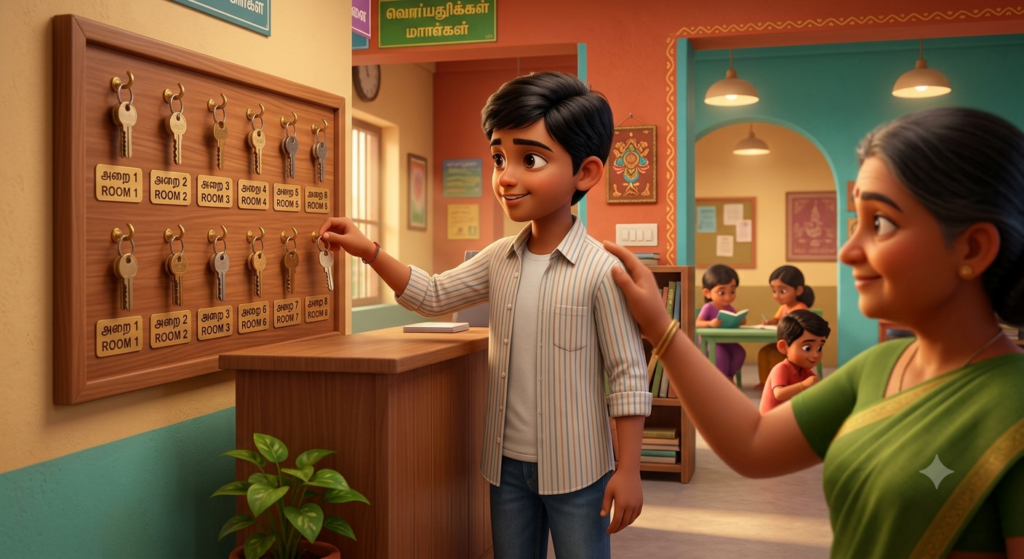
One month, the centre coordinator, Harini, asked a fourteen-year-old student named Kabir to help manage the keys during the evening hours. Kabir was careful and responsible, so Harini trusted him with the job. At first, everything went smoothly. He kept the keys arranged on a labelled board and made sure each one was returned.
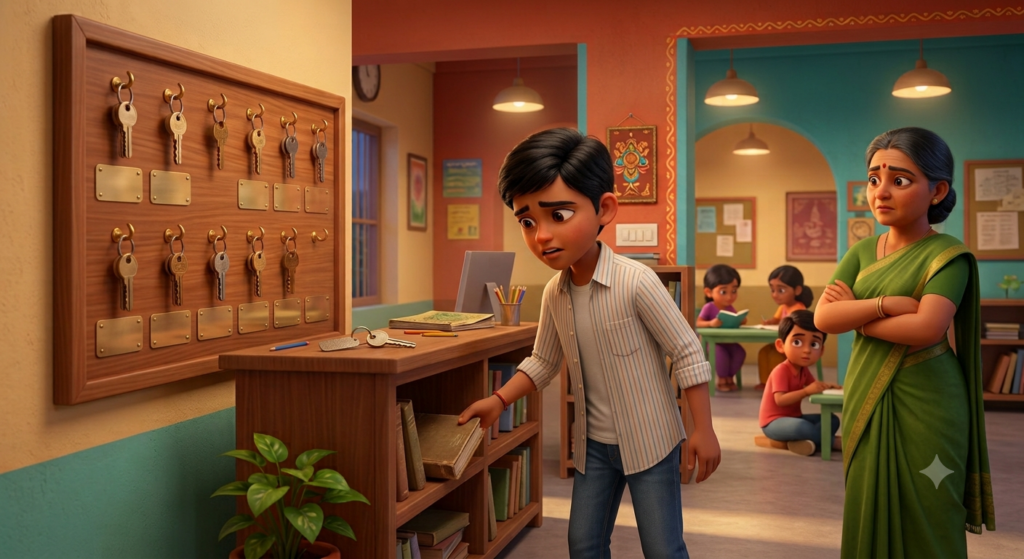
After a few weeks, Harini noticed that the key for the art room was occasionally missing from the board. Whenever someone asked for it, Kabir would search around and eventually find it on a table or inside another room.
“Maybe everyone is simply forgetting to return it,” Kabir said.
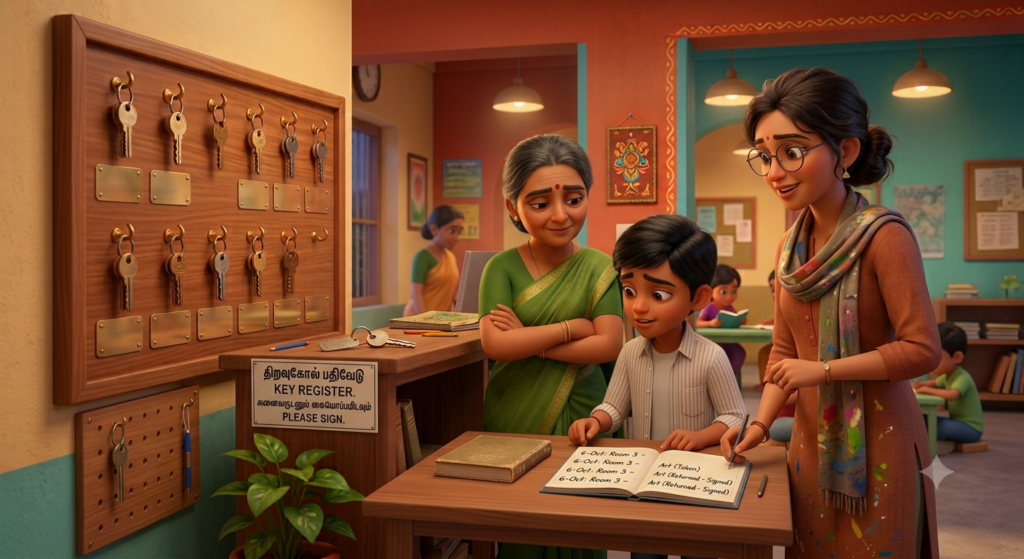
Harini did not blame him. Instead, she began checking the key board briefly each evening and asking Kabir what had happened whenever a key was missing. After a few days, she noticed something neither of them had realised: the art teacher often took the key directly from the board when she arrived late and forgot to tell Kabir.
Harini spoke to the teacher, and they changed the system. From then on, every person who took a key had to mark it in a small register.
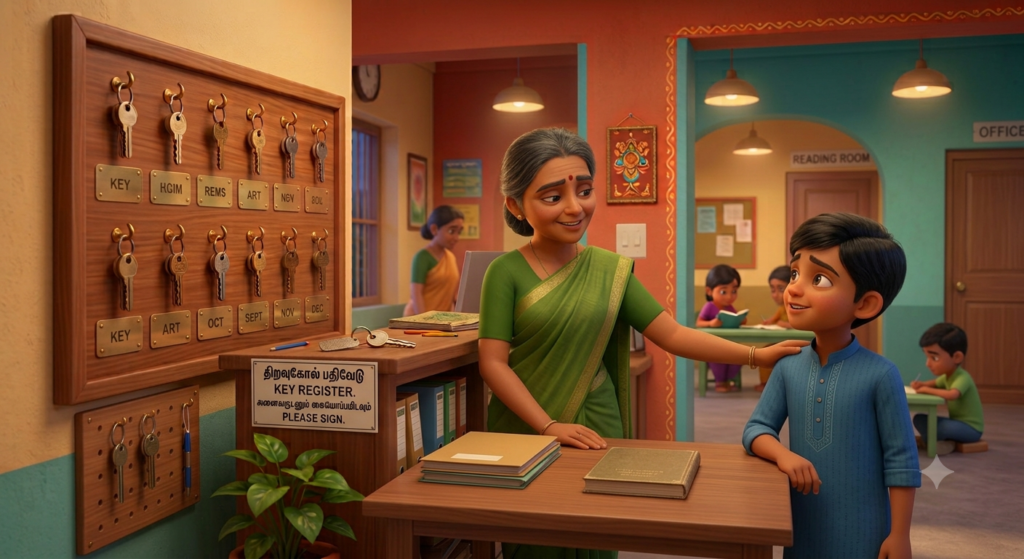
Within a week, the problem disappeared.
Kabir felt relieved. “I thought you were checking me because you thought I was making mistakes,” he said.
Harini smiled. “I trusted you enough to give you the responsibility. Checking the work doesn’t mean I don’t trust you. It means I care about the responsibility you are carrying.”
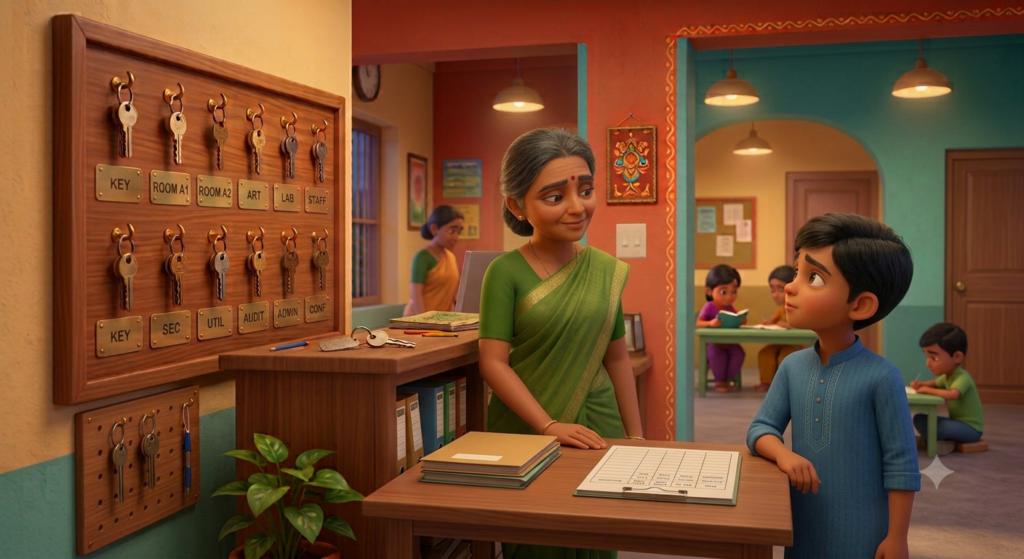
Kabir looked at the neatly arranged keys and understood something important. A responsibility does not stay safe simply because a good person is given the job. The person doing the work must remain careful, and the person who entrusted the responsibility must continue to pay attention.
Kabir remembered the words of Thiruvalluvar:
நாடோறும் நாடுக மன்னன் வினைசெய்வான்
கோடாமை கோடா துலகு
Naatorum Naatuka Mannan Vinaiseyvaan
Kotaamai Kotaa Thulaku
Thiruvalluvar reminds us that when someone entrusted with a responsibility continues to do the work correctly, everything depending on that work stays in order. A responsible leader therefore should not simply hand over a duty and forget about it; they should keep observing how the work is being carried out.
Kabir realised that Harini’s regular checks had not been a sign of doubt. They had helped him understand the responsibility better and had also uncovered a problem in the system. When both the person doing the work and the person overseeing it remain attentive, small problems can be corrected before they become bigger ones.
Moral
Giving someone responsibility is only the beginning. The person entrusted with the work must remain sincere and careful, while the person in charge should continue to observe and support the work.
Let’s read the same story in Tamil…
காணாமல் போன சாவி
மதுரையில் இருந்த ஒரு சிறிய சமூகக் கற்றல் மையம், ஒவ்வொரு மாலையும் குழந்தைகளுக்காகத் திறக்கப்படும். அங்கு அவர்கள் புத்தகங்கள் படிப்பார்கள், பலகை விளையாட்டுகள் விளையாடுவார்கள், வீட்டுப்பாடங்களையும் முடிப்பார்கள். அந்த மையத்தில் ஒரு சிறிய விதி இருந்தது. யார் எந்த அறையின் சாவியை எடுத்தாலும், மாலை முடிவதற்குள் அதை வரவேற்பு மேசையில் மீண்டும் வைத்துவிட வேண்டும்.
அந்த மையத்தின் ஒருங்கிணைப்பாளராக ஹரிணி இருந்தார். ஒரு நாள், பதினான்கு வயதான கபீர் என்ற மாணவனிடம் மாலை நேரங்களில் சாவிகளைப் பார்த்துக்கொள்ளும் பொறுப்பைக் கொடுத்தார். கபீர் பொறுப்புடன் செயல்படுபவன் என்பதால், ஹரிணி அவனை நம்பி அந்த வேலையை ஒப்படைத்தார். ஆரம்பத்தில் எல்லாமே சரியாக நடந்தது. ஒவ்வொரு சாவியும் எந்த அறைக்கானது என்று பெயருடன் வரிசையாக வைத்தான். எடுத்துச் செல்லப்பட்ட சாவிகள் மீண்டும் வந்துவிட்டதா என்பதையும் கவனித்தான்.
சில வாரங்களுக்குப் பிறகு, கலை அறையின் சாவி மட்டும் சில நேரங்களில் காணாமல் போகத் தொடங்கியது. யாராவது அந்த அறைக்குச் செல்ல வேண்டுமென்றால், கபீர் சாவியைத் தேட வேண்டியிருந்தது. சில சமயம் அது ஒரு மேசையின் மீது கிடைக்கும்; சில சமயம் வேறு அறையில் இருக்கும்.
“எல்லாரும் சாவியை எடுத்த இடத்திலேயே வைக்க மறந்துடுறாங்க போல,” என்று கபீர் நினைத்தான்.
ஹரிணி அவனை குறை சொல்லவில்லை. அதற்குப் பதிலாக, ஒவ்வொரு மாலையும் சாவிகள் இருக்கும் பலகையைச் சுருக்கமாகச் சரிபார்க்கத் தொடங்கினார். ஏதாவது சாவி காணவில்லை என்றால், கபீரிடம் என்ன நடந்தது என்று கேட்டுத் தெரிந்துகொண்டார்.
சில நாட்களுக்குப் பிறகு, ஹரிணி ஒரு விஷயத்தைக் கவனித்தார். கலை ஆசிரியர் சில நேரங்களில் தாமதமாக வரும்போது, கபீரிடம் சொல்லாமல் நேரடியாக சாவியை எடுத்துச் செல்வது தெரியவந்தது. அதைத் திருப்பிக் கொடுத்தாலும், சாவியை எடுத்ததாக யாரிடமும் பதிவு செய்வதில்லை.
ஹரிணி ஆசிரியரிடம் இதைப் பற்றி பேசினார். அதன் பிறகு ஒரு புதிய முறையை அறிமுகப்படுத்தினர். யார் சாவியை எடுத்தாலும், அருகில் வைக்கப்பட்டிருந்த சிறிய பதிவேட்டில் அதைப் பதிவு செய்ய வேண்டும்.
ஒரே வாரத்தில் பிரச்சினை முற்றிலும் தீர்ந்துவிட்டது.
கபீருக்கு நிம்மதியாக இருந்தது. “நான் ஏதாவது தப்பு பண்றேன்னு நினைச்சுதான் தினமும் என்னைச் செக் பண்றீங்கன்னு நினைச்சேன்,” என்றான்.
ஹரிணி சிரித்துக்கொண்டே, “உனக்கு இந்தப் பொறுப்பைக் கொடுத்ததே உன்னை நம்பித்தான். வேலையைச் சரிபார்ப்பது உன்னை நம்பவில்லை என்பதற்காக இல்லை. நீ ஏற்றுக்கொண்டிருக்கும் பொறுப்பு சரியாகச் செல்கிறதா என்பதைப் பார்த்துக்கொள்வதற்காக,” என்றார்.
கபீர் சாவிகள் அனைத்தும் மீண்டும் சரியாக வரிசையில் இருந்ததைப் பார்த்தான். அப்போது அவனுக்கு ஒரு முக்கியமான விஷயம் புரிந்தது. ஒரு நல்ல மனிதரிடம் பொறுப்பை ஒப்படைத்துவிட்டால் மட்டும் அந்த வேலை எப்போதும் சரியாக நடக்காது. வேலையைச் செய்பவர் தொடர்ந்து கவனமாக இருக்க வேண்டும். அதே நேரத்தில், அந்தப் பொறுப்பை ஒப்படைத்தவரும் வேலையின் நிலையை தொடர்ந்து கவனிக்க வேண்டும்.
கபீருக்கு திருவள்ளுவரின் வார்த்தைகள் நினைவுக்கு வந்தன:
நாடோறும் நாடுக மன்னன் வினைசெய்வான்
கோடாமை கோடா துலகு
ஒருவரிடம் ஒரு பொறுப்பு ஒப்படைக்கப்பட்ட பிறகு, அவர் தன் கடமையை நேர்மையாகவும் தவறாமலும் செய்து வந்தால், அவரைச் சார்ந்த பணிகளும் சரியாக நடைபெறும் என்பதைத் திருவள்ளுவர் இந்தக் குறளில் உணர்த்துகிறார். அதனால் பொறுப்பை ஒப்படைத்தவர், அதைச் செய்துவிட்டு மறந்துவிடாமல், அந்த வேலை எவ்வாறு நடைபெறுகிறது என்பதையும் தொடர்ந்து கவனிக்க வேண்டும்.
கபீருக்கு இப்போது ஹரிணி தன்னைச் சோதித்தது போலத் தெரியவில்லை. மாறாக, அவளுடைய கவனிப்பு தான் பிரச்சினையின் உண்மையான காரணத்தைக் கண்டுபிடிக்க உதவியது என்பதைப் புரிந்துகொண்டான். வேலையைச் செய்பவரும், அதை வழிநடத்துபவரும் தங்கள் பொறுப்பில் கவனமாக இருந்தால், சிறிய பிரச்சினைகளையே பெரியதாக மாறுவதற்கு முன்பே சரிசெய்ய முடியும்.
நீதி
ஒருவரிடம் பொறுப்பை ஒப்படைப்பது மட்டுமே போதாது. அந்தப் பொறுப்பை ஏற்றவர் அதை நேர்மையாகவும் கவனமாகவும் செய்ய வேண்டும். அதே நேரத்தில், பொறுப்பை வழங்கியவரும் அதன் செயல்பாட்டை தொடர்ந்து கவனிக்க வேண்டும்.
எழுத்துப்பிரதி
Naatorum Naatuka Mannan Vinaiseyvaan
Kotaamai Kotaa Thulaku
மூலத் தமிழ்
நாடோறும் நாடுக மன்னன் வினைசெய்வான்
கோடாமை கோடா துலகு
Breaking it down
- நாடோறும் நாடுக — நாள்தோறும் ஆராய்ந்து கவனிக்க வேண்டும்.
- மன்னன் வினைசெய்வான் — பொறுப்பை ஏற்று வேலையைச் செய்பவன்.
- கோடாமை — தன் கடமையிலிருந்து விலகாமல் இருப்பது.
- கோடா துலகு — அவன் சரியாகச் செயல்பட்டால், அவனைச் சார்ந்த பணிகளும் சரியாக நடைபெறும்.
- ஒரு நல்ல தலைமை என்பது பொறுப்பை ஒப்படைப்பது மட்டுமல்ல; அது எவ்வாறு நடைபெறுகிறது என்பதையும் கவனிப்பதாகும்.
Trivia
Thirukkural #520 is the final Kural in Adhikaram #52 — தெரிந்து வினையாடல் (Selection and Employment). This chapter contains Kurals 511–520 and focuses on choosing the right people for responsibilities and ensuring that entrusted work is carried out properly.
This bilingual story from ancient Tamil wisdom makes timeless life lessons accessible to readers worldwide—whether you’re discovering these universal truths for the first time, or sharing the beauty of your Tamil heritage with friends from any culture. Reading both English and Tamil versions side by side helps build language confidence, cultural connection, and a lifelong love for meaningful stories—perfect for classrooms, families, and friends around the globe.
Record your kid telling this story and the Kural, and we will host it on our YouTube page.
<Youtube Link>