

Every Saturday, the children in a small neighbourhood in Coimbatore gathered at the community ground to play and ride bicycles. One week, the residents decided to organise a bicycle race for the children. The winner would receive a new bicycle helmet and a small trophy.
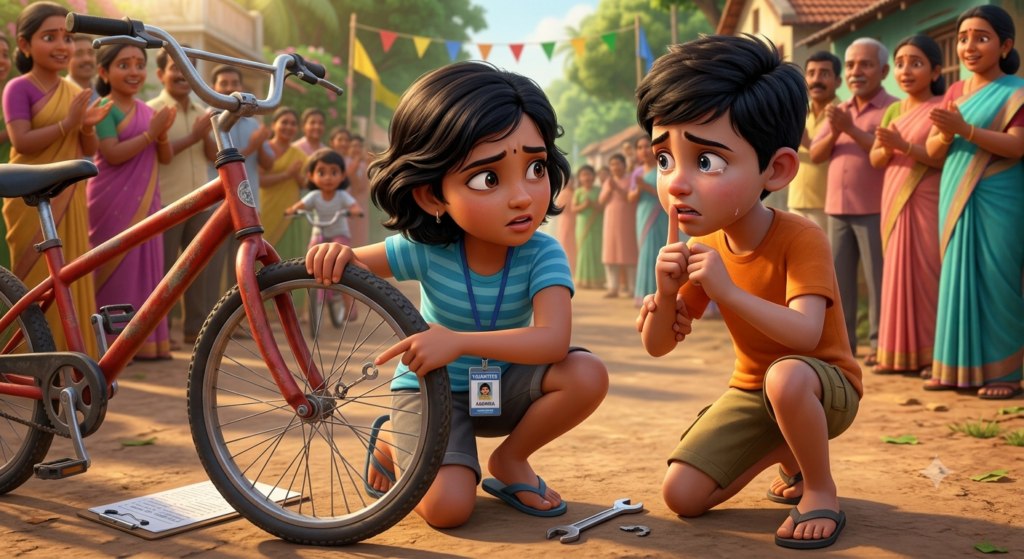
Twelve-year-old Aadhira was one of the volunteers helping to prepare the race. Just before the event began, she noticed that one of the bicycles had a slightly loose wheel. The bicycle belonged to her close friend Rithvik, who was one of the fastest riders. Rithvik asked Aadhira not to mention it because he was afraid the organisers would remove him from the race.
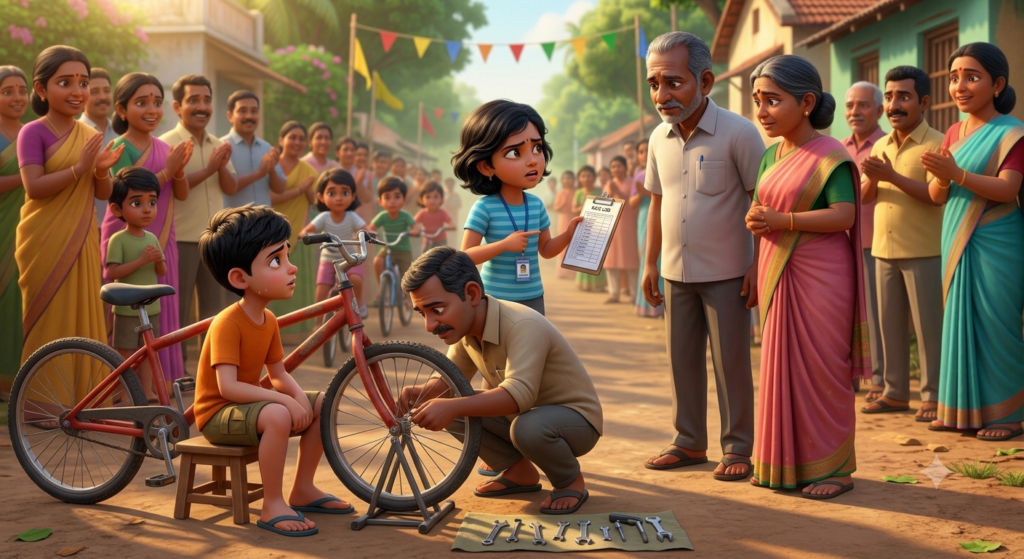
Aadhira felt uncomfortable. She wanted her friend to win, but she also knew that allowing him to race with a faulty wheel could be dangerous. She informed the organisers and suggested that they repair the bicycle before the race instead of disqualifying him.
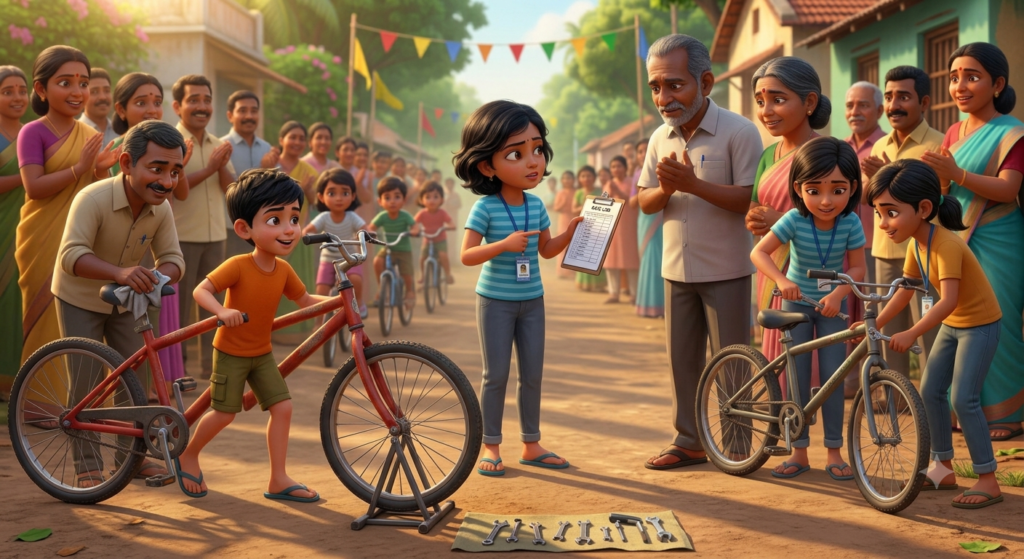
The organisers checked the bicycle and found that the wheel needed a simple repair. After a few minutes, it was fixed, and Rithvik was allowed to participate. During the race, another child who was struggling with a loose chain received the same help from the volunteers.
When the race ended, Rithvik did not win the trophy. Instead, another boy finished first. Rithvik congratulated him and thanked Aadhira for speaking up.
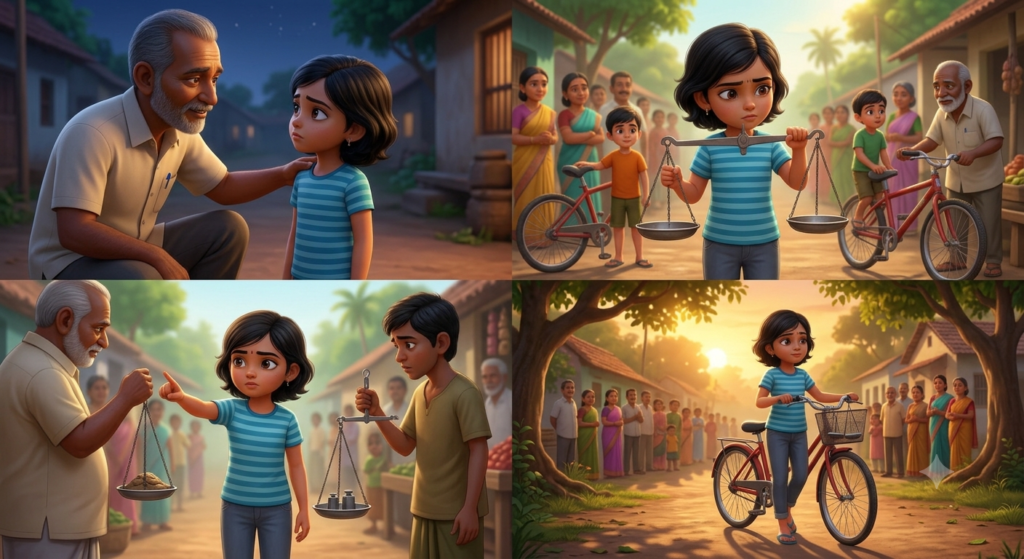
His father later told her, “You could have stayed silent because he was your friend. But you treated everyone by the same standard. That is much harder—and much more valuable.”
Aadhira remembered the words of Thiruvalluvar:
சமன்செய்து சீர்தூக்கும் கோல்போல் அமைந்தொருபால்
கோடாமை சான்றோர்க் கணி
Samanseythu seerthūkkum kōlpōl amaindhorupāl
kōdāmai sānrōrk kaṇi
Thiruvalluvar compares fairness to a weighing scale that stays balanced without leaning toward either side. Aadhira realised that being fair does not mean treating only our friends well. It means doing what is right, even when our feelings make it difficult.
Moral
True fairness means not allowing friendship, preference, or personal feelings to influence what is right. Treat everyone with the same sense of justice.
Let’s read the same story in Tamil…
சமநிலையில் இருந்த சைக்கிள்
கோயம்புத்தூரில் உள்ள ஒரு சிறிய குடியிருப்பில், ஒவ்வொரு சனிக்கிழமையும் குழந்தைகள் அனைவரும் சமூக விளையாட்டு மைதானத்தில் ஒன்றாகச் சேர்ந்து விளையாடவும் சைக்கிள் ஓட்டவும் செய்வார்கள். ஒரு வாரம், குழந்தைகளுக்காக சைக்கிள் பந்தயம் நடத்த குடியிருப்பினர் முடிவு செய்தனர். வெற்றி பெறுபவருக்கு புதிய சைக்கிள் ஹெல்மெட்டும் சிறிய கோப்பையும் வழங்கப்படவிருந்தது.
பன்னிரண்டு வயது ஆதிரா, பந்தயத்திற்கான ஏற்பாடுகளில் உதவி செய்து கொண்டிருந்தாள். போட்டி தொடங்குவதற்கு சற்று முன்பு, ஒரு சைக்கிளின் சக்கரம் சற்று தளர்வாக இருப்பதை அவள் கவனித்தாள். அந்த சைக்கிள் அவளுடைய நெருங்கிய நண்பன் ரித்விக்குடையது. அவன் மிகவும் வேகமாக சைக்கிள் ஓட்டக்கூடியவன். “இதைக் கூப்பிடாமல் விட்டுவிடு. சொன்னால் என்னை போட்டியில் இருந்து நீக்கிவிடுவார்கள்,” என்று ரித்விக் ஆதிராவிடம் கேட்டுக்கொண்டான்.
ஆதிராவுக்கு என்ன செய்வது என்று குழப்பமாக இருந்தது. தன் நண்பன் வெற்றி பெற வேண்டும் என்று அவள் விரும்பினாள். ஆனால் தளர்வான சக்கரத்துடன் அவன் போட்டியில் கலந்து கொள்வது ஆபத்தானது என்பதும் அவளுக்குத் தெரிந்தது. அதனால் அவள் ஏற்பாட்டாளர்களிடம் விஷயத்தைச் சொல்லி, அவனைப் போட்டியிலிருந்து நீக்குவதற்குப் பதிலாக முதலில் சைக்கிளைச் சரிசெய்யலாம் என்று கூறினாள்.
ஏற்பாட்டாளர்கள் சைக்கிளைச் சோதித்தபோது, சக்கரத்தில் ஏற்பட்ட பிரச்சினை சிறியதுதான் என்பது தெரியவந்தது. சில நிமிடங்களில் அதைச் சரிசெய்துவிட்டனர். ரித்விக்கும் போட்டியில் கலந்து கொள்ள அனுமதிக்கப்பட்டான். போட்டியின் போது, மற்றொரு சிறுவனின் சைக்கிள் சங்கிலி தளர்ந்தபோதும், தன்னார்வலர்கள் அதேபோல் அவனுக்கும் உதவினர்.
பந்தயம் முடிந்தபோது ரித்விக் கோப்பையை வெல்லவில்லை. வேறு ஒரு சிறுவன் முதலிடத்தைப் பெற்றான். ரித்விக் அவனை வாழ்த்திவிட்டு, தனக்காக சரியான முடிவை எடுத்ததற்காக ஆதிராவுக்கும் நன்றி கூறினான்.
பின்னர் ரித்விக்கின் தந்தை ஆதிராவிடம், “அவன் உன் நண்பன் என்பதால் நீ அமைதியாக இருந்திருக்கலாம். ஆனால் நீ அனைவருக்கும் ஒரே விதமான நியாயத்தைப் பின்பற்றினாய். அது செய்வதற்கு கடினமானது; ஆனால் அதுதான் உண்மையான நல்ல குணம்,” என்றார்.
அப்போது ஆதிராவுக்கு திருவள்ளுவரின் குறள் நினைவுக்கு வந்தது:
சமன்செய்து சீர்தூக்கும் கோல்போல் அமைந்தொருபால்
கோடாமை சான்றோர்க் கணி
தராசு எந்தப் பக்கமும் சாயாமல் சமமாக இருப்பதைப் போல, ஒருவரிடம் மட்டும் சாயாமல் நியாயமாக நடப்பதே நல்லோரின் சிறந்த பண்பு என்று திருவள்ளுவர் கூறுகிறார். அந்த நாள் ஆதிரா புரிந்துகொண்டாள்—நண்பர்களாக இருப்பது முக்கியம்; ஆனால் சரியானதைச் செய்வது அதைவிட முக்கியம்.
நீதி
நண்பர், உறவினர், பிடித்தவர் என்று பார்க்காமல் அனைவரிடமும் ஒரே அளவிலான நியாயத்துடன் நடப்பதே உண்மையான நடுநிலைமை. நம் விருப்பத்தைவிட நியாயத்திற்கு முக்கியத்துவம் கொடுப்பதே உயர்ந்த குணம்.
எழுத்துப்பிரதி
Samanseythu seerthūkkum kōlpōl amaindhorupāl
kōdāmai sānrōrk kaṇi.
மூலத் தமிழ்
சமன்செய்து சீர்தூக்கும் கோல்போல் அமைந்தொருபால்
கோடாமை சான்றோர்க் கணி.
Breaking it down
- சமன் செய்து – சமமாக வைத்து (Keeping things balanced)
- சீர் தூக்கும் கோல் – பொருளை அளக்கும் தராசு (A weighing scale)
- ஒருபால் கோடாமை – எந்தப் பக்கமும் சாயாமல் இருப்பது (Not leaning toward either side)
- சான்றோர்க்கு – நல்ல பண்புடையவர்களுக்கு (For virtuous people)
- அணி – அழகு / சிறந்த பண்பு (A beautiful quality)
Trivia
இந்தக் குறள் நடுவுநிலைமை அதிகாரத்தில் இடம்பெறுகிறது. ஒரு தராசு எந்தப் பக்கமும் சாயாமல் இருப்பதைப் போல, நல்ல மனிதர்கள் தங்கள் விருப்பு, வெறுப்பு அல்லது தனிப்பட்ட உறவுகளால் பாதிக்கப்படாமல் நியாயமாக நடக்க வேண்டும் என்பதை திருவள்ளுவர் வலியுறுத்துகிறார்.
This bilingual story from ancient Tamil wisdom makes timeless life lessons accessible to readers worldwide—whether you’re discovering these universal truths for the first time, or sharing the beauty of your Tamil heritage with friends from any culture. Reading both English and Tamil versions side by side helps build language confidence, cultural connection, and a lifelong love for meaningful stories—perfect for classrooms, families, and friends around the globe.
Record your kid telling this story and the Kural, and we will host it on our YouTube page.
<YouTube link>