
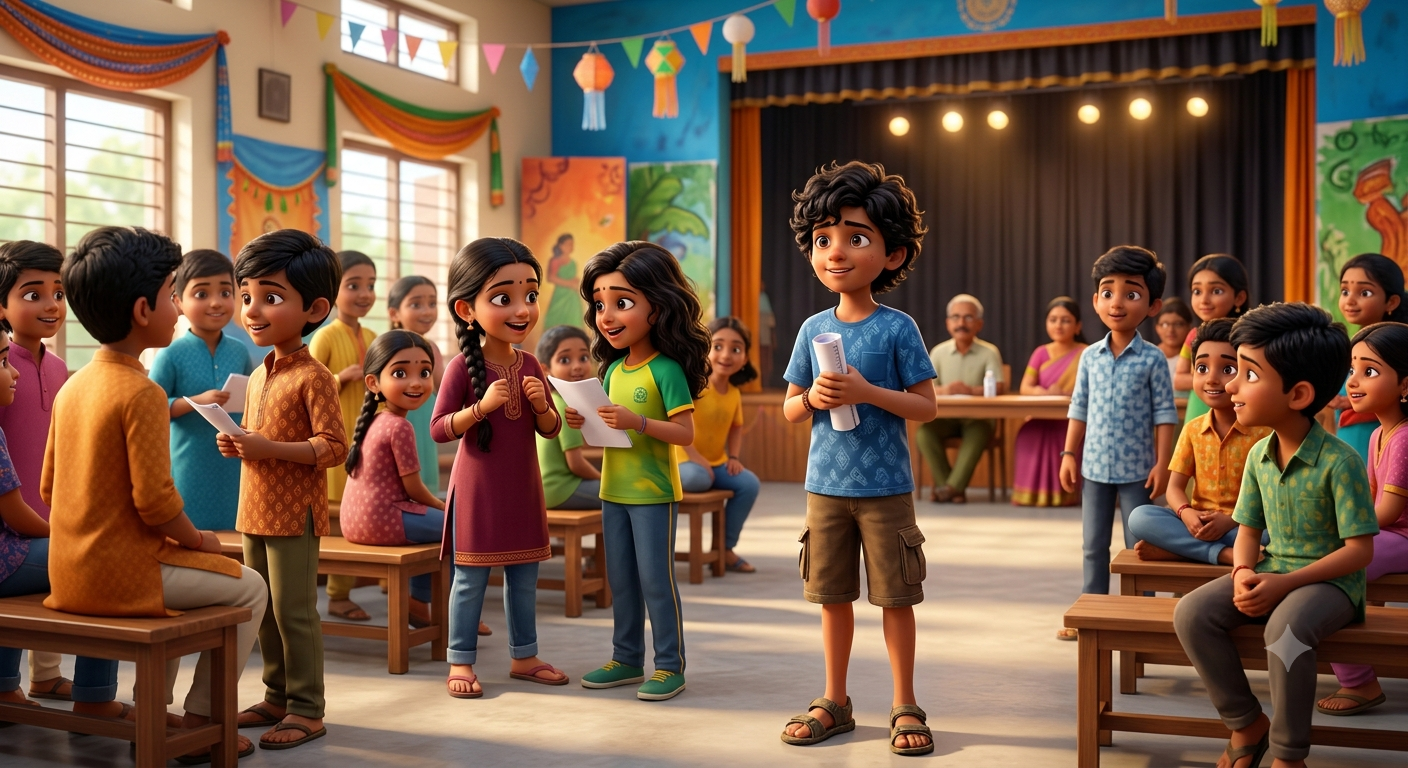
The annual school play in Madurai was the most awaited event of the year. This time, the drama teacher announced auditions for the lead role instead of selecting students directly. Twelve-year-old Nivaan had practised for weeks, while many others came hoping for a chance to perform.
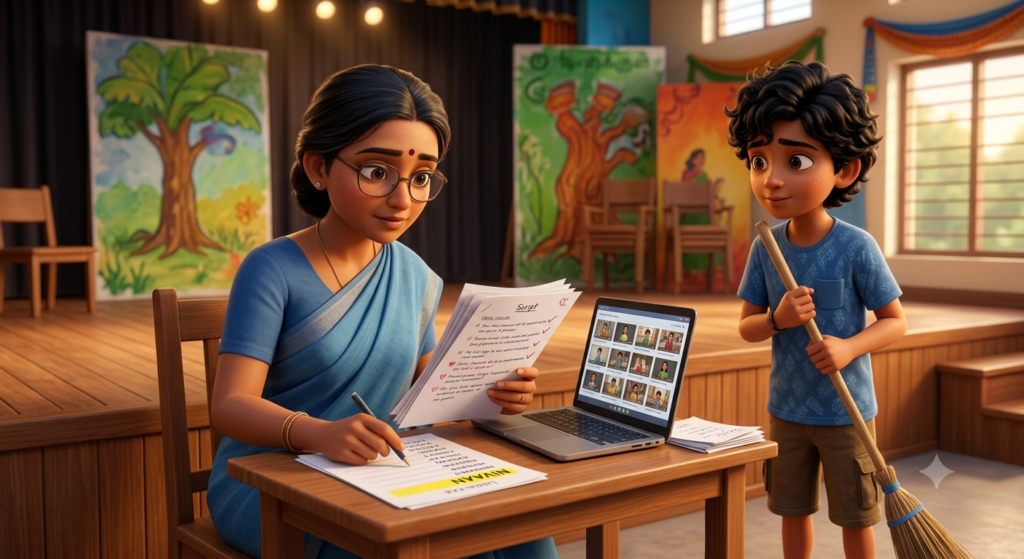
After two days of auditions, Ms. Lakshmi carefully watched every performance again before making her decision. She finally chose Nivaan for the lead role because he remembered every dialogue, encouraged nervous classmates, and stayed back to help arrange the stage after auditions.
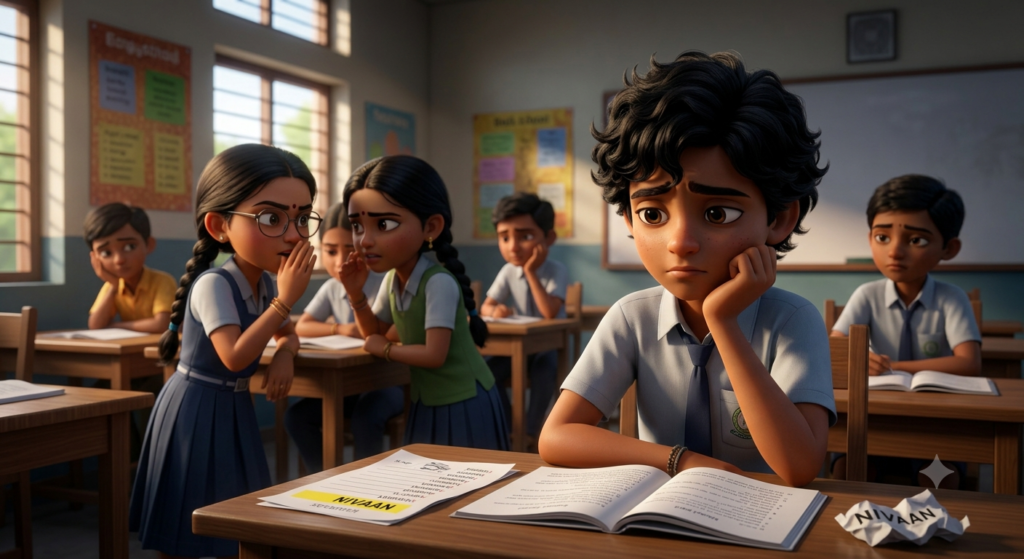
A few students were unhappy. “Maybe the teacher has favourites,” someone whispered. Without asking why the decision had been made, rumours spread through the class. Even Nivaan began wondering whether he truly deserved the role.
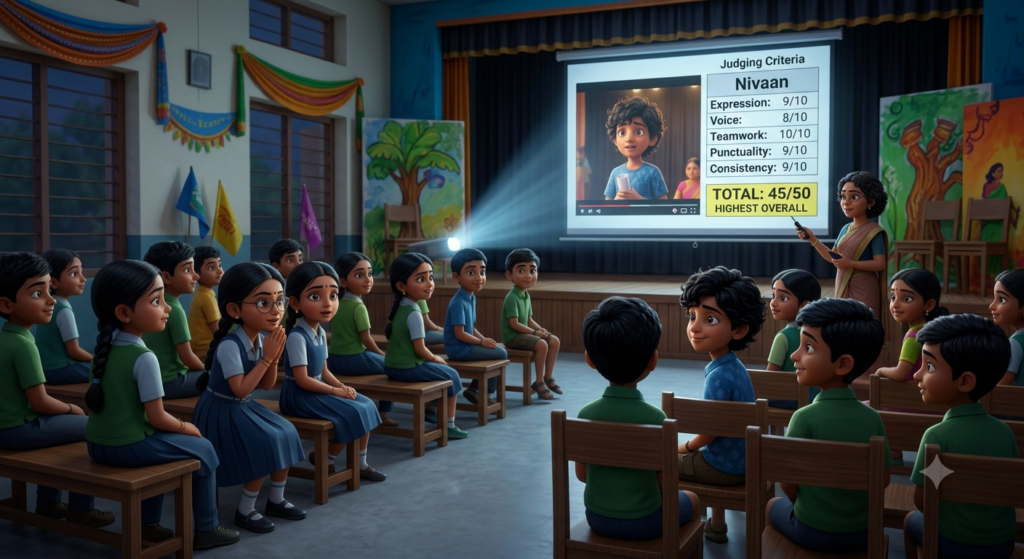
The following week, Ms. Lakshmi gathered everyone in the auditorium. She played the audition recordings on the projector and explained the judging criteria—expression, voice, teamwork, punctuality, and consistency. As the students watched, they realised that every score had been recorded fairly, and Nivaan had genuinely earned the highest overall marks.
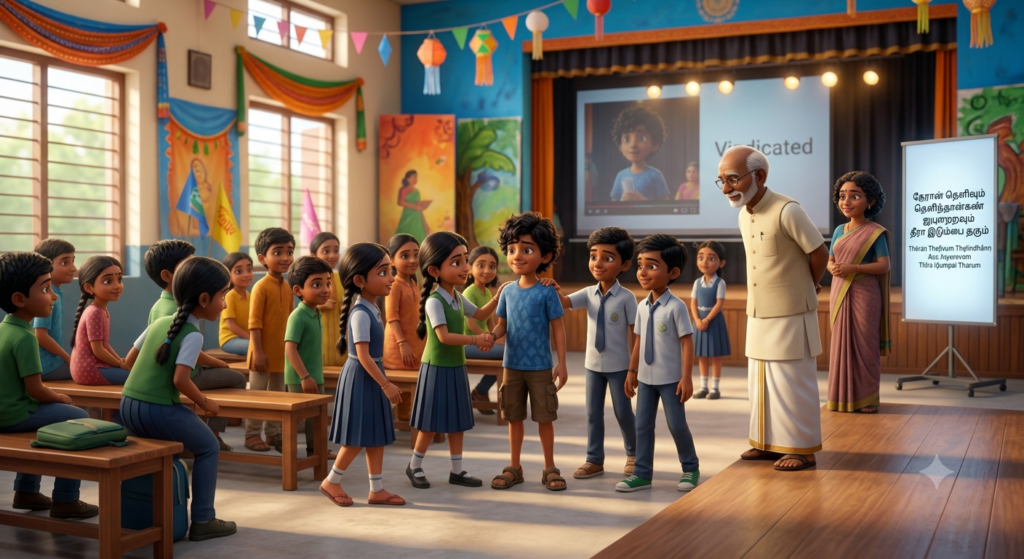
The room became silent. The students who had doubted the decision walked over to congratulate him. Nivaan smiled, not because he had won the role, but because everyone now trusted the process.
As rehearsal ended, the principal addressed the students and softly recited a Thirukkural:
தேரான் தெளிவும் தெளிந்தான்கண் ஐயுறவும்
தீரா இடும்பை தரும்
Thērāṉ Theḷivum Theḷindhāṉkaṇ Aiyuṟavum
Thīrā Iḍumpai Tharum
He explained that making decisions without proper understanding—and doubting someone who has already been proven worthy—both create endless trouble. Wisdom begins with examining the truth before forming an opinion.
Nivaan realised that fairness is not only about choosing the right person; it is also about trusting the truth once it is clearly known.
Moral
Wise people do not judge quickly or doubt without reason. Understanding the truth first prevents unnecessary conflict.
Let’s read the same story in Tamil…
பள்ளி நாடகத் தேர்வு
மதுரையில் உள்ள ஒரு பள்ளியின் ஆண்டு விழா நாடகம் எல்லா மாணவர்களும் ஆவலுடன் எதிர்பார்க்கும் நிகழ்ச்சியாக இருந்தது. இந்த முறை, முக்கியக் கதாபாத்திரத்தை ஆசிரியர் நேரடியாகத் தேர்ந்தெடுக்காமல், அனைவருக்கும் திறந்த ஆடிஷன் நடத்த முடிவு செய்தார். பன்னிரண்டு வயது நிவான் பல வாரங்களாக வசனங்களைப் பயிற்சி செய்திருந்தான். மற்ற மாணவர்களும் தங்கள் திறமையை வெளிப்படுத்த ஆர்வமாக வந்திருந்தனர்.
இரண்டு நாட்கள் நடந்த ஆடிஷனுக்குப் பிறகு, லட்சுமி ஆசிரியர் ஒவ்வொரு மாணவரின் நடிப்பையும் மீண்டும் பார்த்தார். வசனத் திறன் மட்டுமல்ல, முகபாவனை, குரல், நேர்த்தி, குழு ஒத்துழைப்பு ஆகியவற்றையும் மதிப்பீடு செய்தார். இறுதியில் முக்கிய வேடத்திற்கு நிவான் தேர்ந்தெடுக்கப்பட்டான். காரணம் அவன் சிறப்பாக நடித்ததோடு, பதற்றப்பட்ட நண்பர்களுக்கு உதவி செய்து, மேடையை ஒழுங்குபடுத்தவும் தங்கியிருந்தான்.
ஆனால் சில மாணவர்கள் உடனே சந்தேகப்படத் தொடங்கினர். “ஆசிரியருக்கு அவன்தான் பிடித்தவன்,” என்று ஒருவர் சொன்னான். உண்மையை அறியாமல் பேசத் தொடங்கிய அந்தச் சந்தேகம் வகுப்பு முழுவதும் பரவியது. அதை கேட்ட நிவானுக்கே, “நான் உண்மையிலேயே இந்த வேடத்திற்குத் தகுதியானவனா?” என்ற ஐயம் தோன்றியது.
அடுத்த வாரம், ஆசிரியர் அனைவரையும் அரங்கத்தில் கூட்டினார். ஆடிஷன் வீடியோக்களை ஒவ்வொன்றாகக் காட்டி, மதிப்பெண்கள் எப்படிக் கொடுக்கப்பட்டன என்பதையும் விளக்கினார். மாணவர்கள் பார்த்தபோது, ஒவ்வொரு முடிவும் நியாயமாகப் பதிவு செய்யப்பட்டிருந்தது. நிவான் உண்மையாகவே அதிக மதிப்பெண் பெற்றிருந்தான் என்பதை அனைவரும் புரிந்துகொண்டார்கள்.
அரங்கம் அமைதியானது. முன்பு சந்தேகப்பட்ட மாணவர்கள் நிவானிடம் வந்து வாழ்த்தினர். அவன் மகிழ்ந்தது முக்கிய வேடம் கிடைத்ததற்காக அல்ல; உண்மை தெரிந்த பிறகு அனைவரின் மனமும் தெளிந்ததற்காக.
பயிற்சி முடிவில், தலைமை ஆசிரியர் மாணவர்களிடம் ஒரு திருக்குறளைச் சொன்னார்:
தேரான் தெளிவும் தெளிந்தான்கண் ஐயுறவும்
தீரா இடும்பை தரும்
அவர் விளக்கினார்: ஆராயாமல் ஒருவரை நம்புவதும் தவறு; ஏற்கனவே தகுதி நிரூபித்தவரை காரணமின்றி சந்தேகிப்பதும் அதே அளவுக்கு துன்பத்தை உருவாக்கும். உண்மையை அறிந்த பிறகே தீர்ப்பு கூறுவது தான் அறிவு.
அன்று நிவான் ஒரு புதிய பாடத்தைக் கற்றுக்கொண்டான். நியாயம் என்பது சரியான முடிவை எடுப்பது மட்டுமல்ல; உண்மை தெளிவானபின் அதைப் நம்புவதும் ஆகும்.
நீதி
உண்மையை ஆராயாமல் தீர்ப்பு கூறாதே. தகுதியை நிரூபித்தவரை காரணமின்றி சந்தேகிப்பதும் தேவையற்ற துன்பத்தை உருவாக்கும்.
எழுத்துப்பிரதி
Thērāṉ Theḷivum Theḷindhāṉkaṇ Aiyuṟavum
Thīrā Iḍumpai Tharum
மூலத் தமிழ்
தேரான் தெளிவும் தெளிந்தான்கண் ஐயுறவும்
தீரா இடும்பை தரும்
Breaking it down
- தேரான் தெளிவும் – ஆராயாமல் ஒருவரை நம்புதல்
- தெளிந்தான்கண் – தகுதி நிரூபிக்கப்பட்டவரிடம்
- ஐயுறவும் – காரணமின்றி சந்தேகப்படுதல்
- தீரா இடும்பை – முடிவில்லாத துன்பம்
- தரும் – உண்டாக்கும்
Trivia
திருக்குறள் #510 என்பது அதிகாரம் #51 – தெரிந்து தெளிதல் பகுதியில் இடம்பெறுகிறது. எந்த மனிதரையும் அல்லது முடிவையும் ஆராய்ந்து தெளிவாகப் புரிந்துகொண்டு மதிப்பிட வேண்டும்; ஆதாரமில்லாத நம்பிக்கையும் ஆதாரமில்லாத சந்தேகமும் இரண்டும் தீமையை உருவாக்கும் என்று திருவள்ளுவர் வலியுறுத்துகிறார்.
This bilingual story from ancient Tamil wisdom makes timeless life lessons accessible to readers worldwide—whether you’re discovering these universal truths for the first time, or sharing the beauty of your Tamil heritage with friends from any culture. Reading both English and Tamil versions side by side helps build language confidence, cultural connection, and a lifelong love for meaningful stories—perfect for classrooms, families, and friends around the globe.
Record your kid telling this story and the Kural, and we will host it on our YouTube page.
<YouTube link>