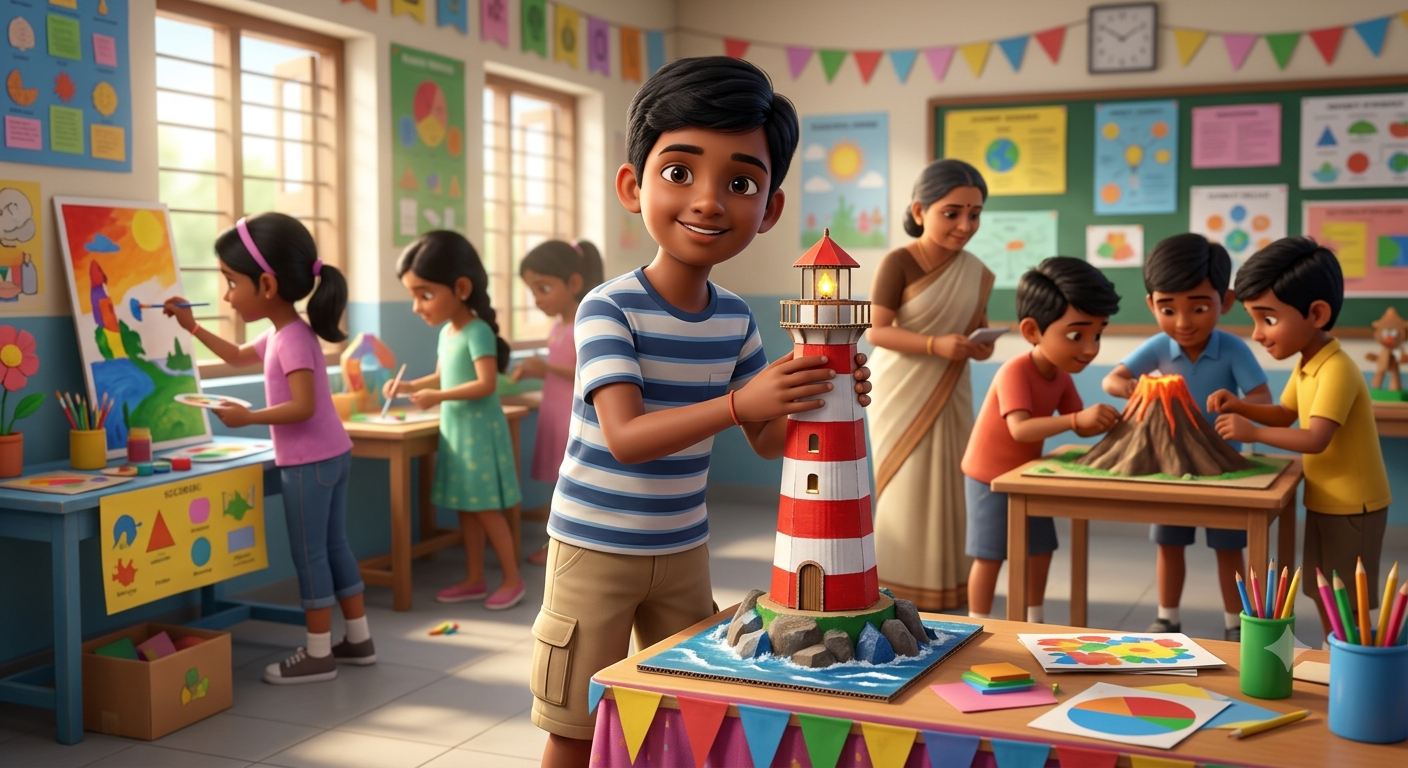
The annual school exhibition in Salem was only a day away, and every classroom was busy preparing models and artwork. Twelve-year-old Rithvik had spent an entire week building a beautiful cardboard lighthouse for the science display. He was proud of it and couldn’t wait for the judges to see it.
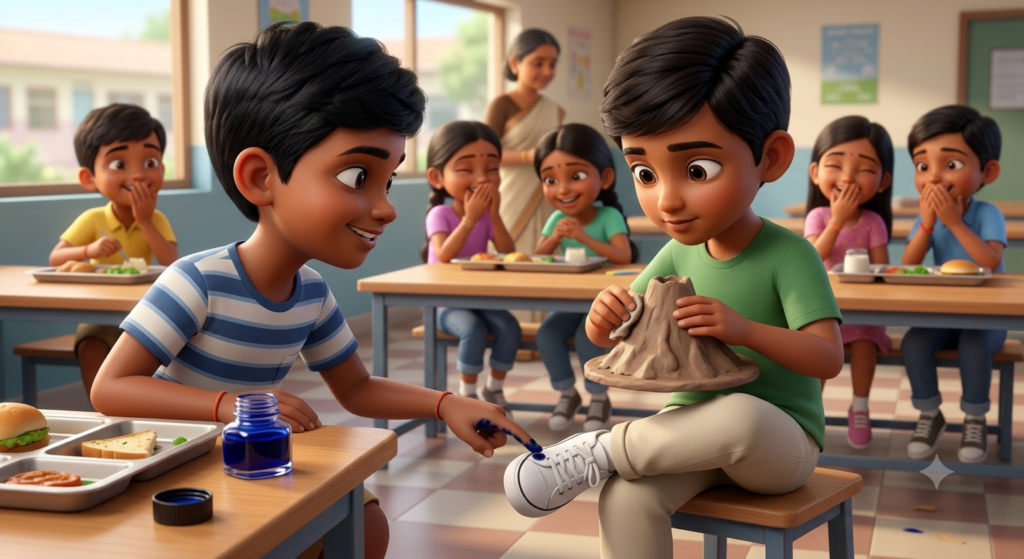
During lunch break, Rithvik noticed his classmate Ayaan polishing a clay volcano he had made. Wanting to make his friends laugh, Rithvik quietly dipped his finger into a bottle of blue ink and placed a tiny fingerprint on the side of Ayaan’s white shoes. When everyone laughed, Ayaan looked confused, wiped the stain, and smiled awkwardly without saying a word.
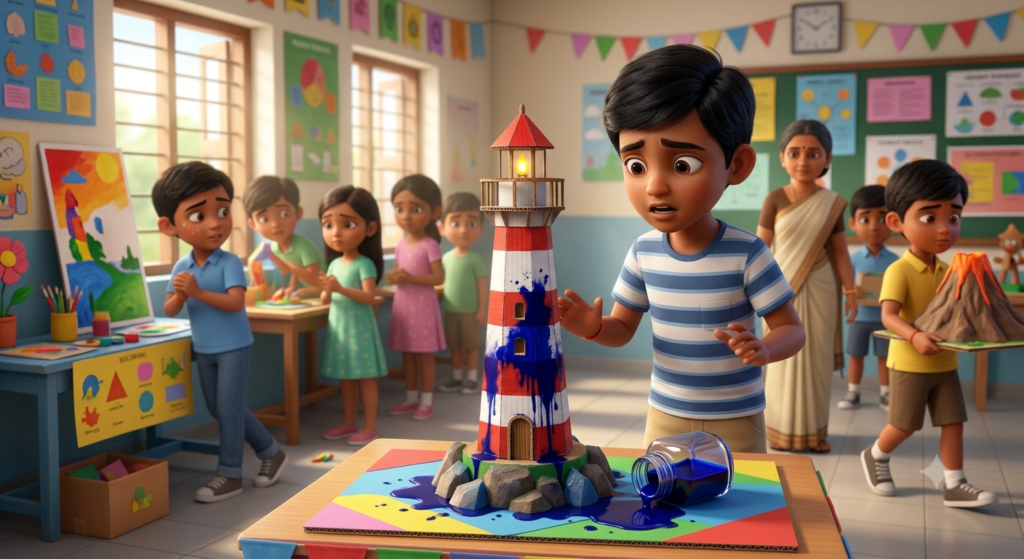
That afternoon, the students carried their projects to the exhibition hall. As Rithvik carefully lifted his lighthouse, someone accidentally brushed against his table. A bottle of blue ink tipped over and spilled across the front of his model, leaving dark stains that couldn’t be removed.
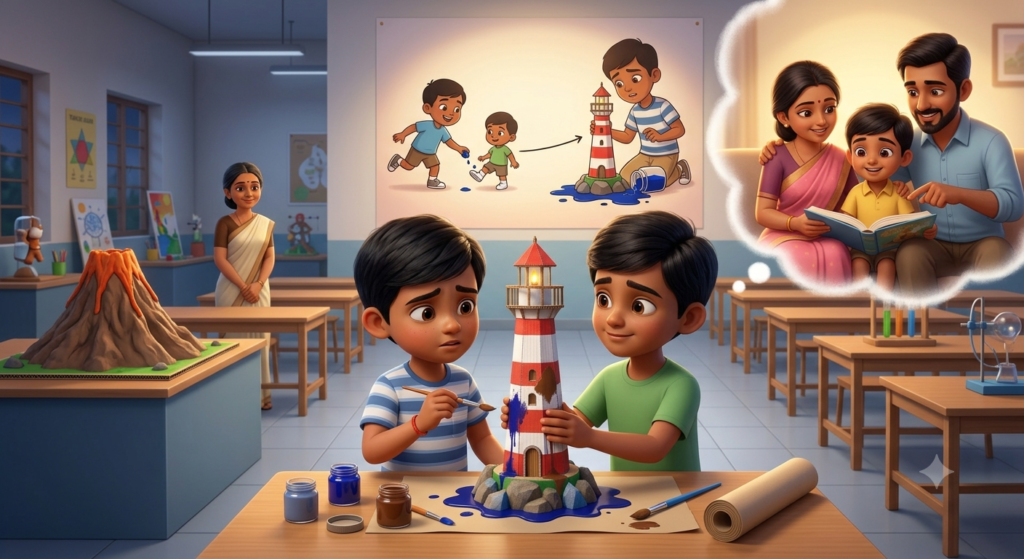
For a moment, Rithvik stood speechless. Then his eyes fell on the same blue ink bottle, and he remembered what he had done to Ayaan’s shoes only a few hours earlier. The laughter that had seemed funny at lunch no longer felt funny at all.
After the exhibition, Rithvik walked over to Ayaan and quietly apologised. Ayaan smiled and said, “It’s okay. I know you didn’t mean to hurt me.” Together, they stayed back after school and repaired the lighthouse as much as they could before the next day.
As they packed their bags, Rithvik remembered a Thirukkural his teacher had once explained:
பிறர்க்கின்னா முற்பகல் செய்யின் தமக்கின்னா
பிற்பகல் தாமே வரும்
Pirarkkinnā Murpagal Seyyin Thamakkinnā
Pirpagal Thāmē Varum
His teacher had said that pain has a way of returning to the person who causes it. We may think a hurtful act is small or harmless, but the same hurt often finds its way back into our own lives. Rithvik realised that kindness protects us just as much as it protects others.
Moral
Never cause pain for the sake of a laugh. The kindness we give—and the hurt we cause—often finds its way back to us.
Let’s read the same story in Tamil…
மையில் பதிந்த பாடம்
சேலத்தில் உள்ள ஒரு பள்ளியில் ஆண்டு அறிவியல் கண்காட்சி நடைபெறவிருந்தது. ஒவ்வொரு வகுப்பிலும் மாணவர்கள் தங்கள் மாதிரிகளையும் கலைப் படைப்புகளையும் ஆர்வமாகத் தயாரித்துக் கொண்டிருந்தனர். பன்னிரண்டு வயதான ரித்விக், அட்டைப்பெட்டியால் அழகான கலங்கரை விளக்கத்தை ஒரு வாரம் முழுவதும் உழைத்து உருவாக்கியிருந்தான். அதை நீதிபதிகள் பார்ப்பதை நினைத்தாலே அவனுக்கு மகிழ்ச்சி.
மதிய உணவு இடைவேளையில், அவனுடைய வகுப்பு நண்பன் ஆயான் களிமண்ணால் செய்த எரிமலையை சுத்தமாகத் துடைத்துக் கொண்டிருந்தான். நண்பர்களைச் சிரிக்க வைக்க வேண்டும் என்ற எண்ணத்தில், ரித்விக் அருகிலிருந்த நீல மை பாட்டிலில் விரலை நனைத்து, ஆயானின் வெள்ளை காலணியில் ஒரு சிறிய கைரேகையை வைத்தான். சுற்றியிருந்தவர்கள் சிரித்தார்கள். ஆயான் குழப்பத்துடன் கறையைத் துடைத்துவிட்டு எதுவும் பேசாமல் அமைதியாக இருந்தான்.
அன்றைய பிற்பகலில், மாணவர்கள் தங்கள் மாதிரிகளை கண்காட்சி அரங்கிற்கு எடுத்துச் சென்றனர். ரித்விக் தனது கலங்கரை விளக்கத்தை மிகவும் கவனமாகத் தூக்கிச் சென்றபோது, யாரோ தவறுதலாக மேசையைத் தொட்டார்கள். அதே நீல மை பாட்டில் கவிழ்ந்து, அவன் மாதிரியின் மீது முழுவதும் சிந்திவிட்டது. பல நாள் உழைத்த வேலை ஒரு கணத்தில் கறைபட்டது.
ரித்விக் அதிர்ச்சியுடன் நின்றான். பின்னர் அந்த மை பாட்டிலைப் பார்த்ததும், மதியம் ஆயானின் காலணியில் வைத்த கறை அவனுக்கு நினைவுக்கு வந்தது. அப்போது சிரிப்பாகத் தோன்றிய செயல், இப்போது அவனுக்கே வலியாக உணரப்பட்டது.
கண்காட்சி முடிந்த பிறகு, ரித்விக் ஆயானிடம் சென்று மனதார மன்னிப்பு கேட்டான். ஆயான் சிரித்தபடி, “பரவாயில்லை. நீ என்னை உண்மையிலேயே காயப்படுத்த நினைக்கலன்னு எனக்குத் தெரியும்,” என்றான். இருவரும் பள்ளி முடிந்த பிறகும் தங்கி, கலங்கரை விளக்கத்தை முடிந்தவரை சேர்ந்து சரிசெய்தார்கள்.
வீட்டிற்குப் புறப்படும் முன், ஆசிரியர் சொல்லியிருந்த ஒரு திருக்குறள் ரித்விக்கின் மனதில் ஒலித்தது:
பிறர்க்கின்னா முற்பகல் செய்யின் தமக்கின்னா
பிற்பகல் தாமே வரும்
அதன் பொருள் இப்போது அவனுக்கு தெளிவாகப் புரிந்தது. பிறருக்கு நாம் தரும் துன்பம் சிறியதாகத் தோன்றலாம். ஆனால் அதே துன்பம் ஒருநாள் நமக்கே திரும்பி வரும். அதனால் பிறரைப் புண்படுத்தாமல் வாழ்வதே உண்மையான அறமாகும்.
நீதி
சிரிப்புக்காக கூட பிறரைப் புண்படுத்தாதே. நாம் பிறருக்கு தரும் வலியும், தரும் அன்பும் ஒருநாள் நம்மிடமே திரும்பி வரும்.
எழுத்துப்பிரதி
Pirarkkinnā Murpagal Seyyin Thamakkinnā
Pirpagal Thāmē Varum
மூலத் தமிழ்
பிறர்க்கின்னா முற்பகல் செய்யின் தமக்கின்னா
பிற்பகல் தாமே வரும்
Breaking it down
- பிறர்க்கு இன்னா – பிறருக்கு துன்பம்
- முற்பகல் செய்யின் – இன்று நாம் செய்தால்
- தமக்கு இன்னா – அதே துன்பம் நமக்கே
- பிற்பகல் – பின்னர், காலம் தாழ்ந்து
- தாமே வரும் – தானாகவே திரும்பி வரும்
Trivia
திருக்குறள் #319 என்பது அதிகாரம் #32 – இன்னாசெய்யாமையில் இடம்பெறுகிறது. திருவள்ளுவர், பிறருக்கு துன்பம் தரும் செயல் இறுதியில் அதையே நமக்குத் திருப்பித் தரும் என்பதால், யாரையும் மனதாலும் செயலாலும் காயப்படுத்தாமல் வாழ வேண்டும் என்று வலியுறுத்துகிறார்.
This bilingual story from ancient Tamil wisdom makes timeless life lessons accessible to readers worldwide—whether you’re discovering these universal truths for the first time, or sharing the beauty of your Tamil heritage with friends from any culture. Reading both English and Tamil versions side by side helps build language confidence, cultural connection, and a lifelong love for meaningful stories—perfect for classrooms, families, and friends around the globe.
Record your kid telling this story and the Kural, and we will host it on our YouTube page.
<YouTube link>