
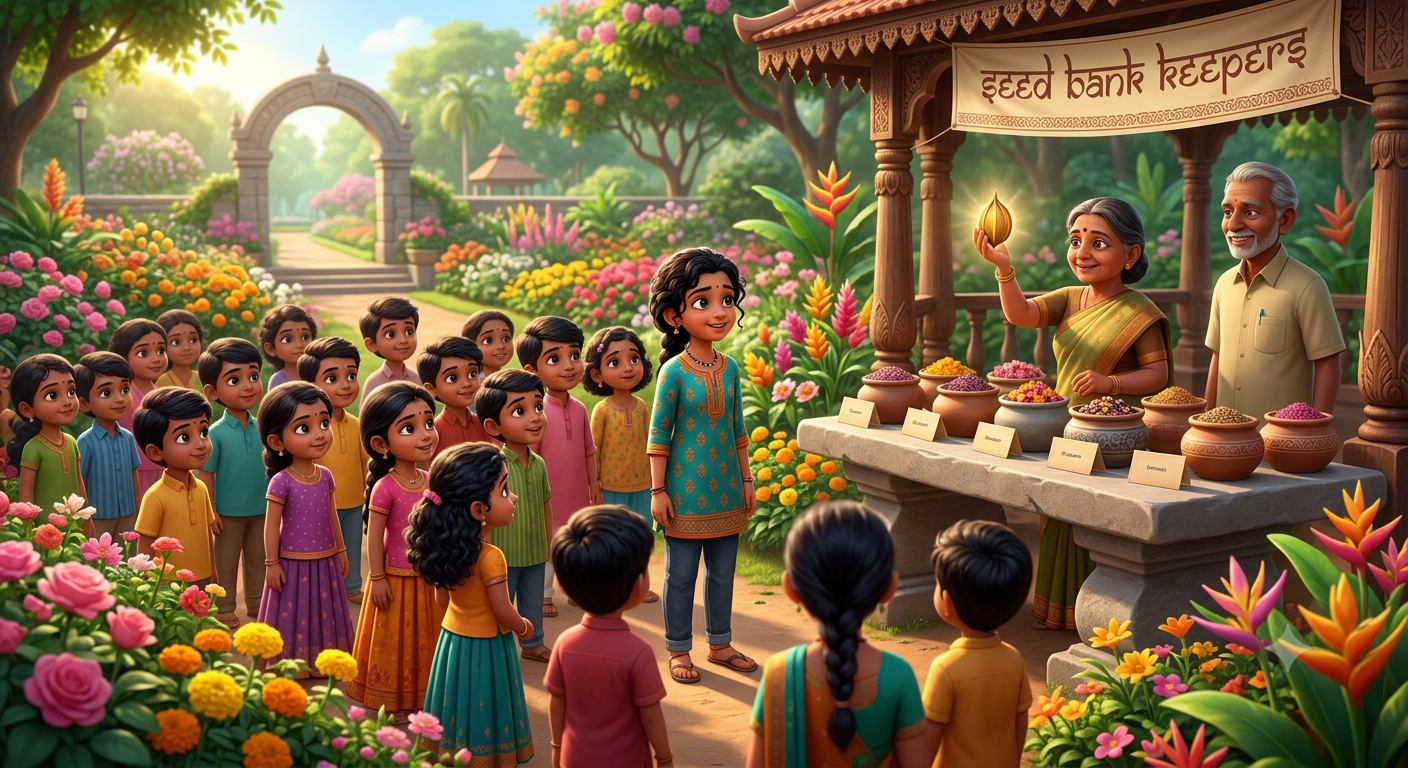
Every year, the Botanical Park in Mysuru invited children to become Seed Bank Keepers. Their job was simple but important—collect seeds from different flowers, label them carefully, and protect them until the next planting season. Twelve-year-old Vaidehi dreamed of being chosen because only one student received the responsibility.
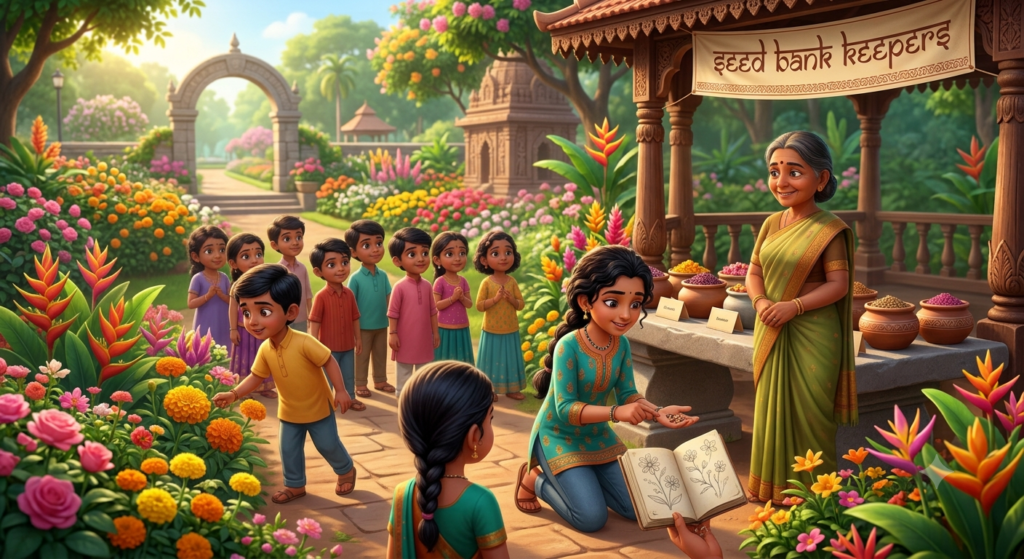
On selection day, the gardener didn’t ask who had the highest marks. Instead, he quietly watched the children throughout the morning. Vaidehi patiently helped a younger child identify flower seeds, shared her notebook without hesitation, listened carefully to the gardener’s instructions, and never rushed to collect the rarest seeds for herself. She cared more about the garden than winning.
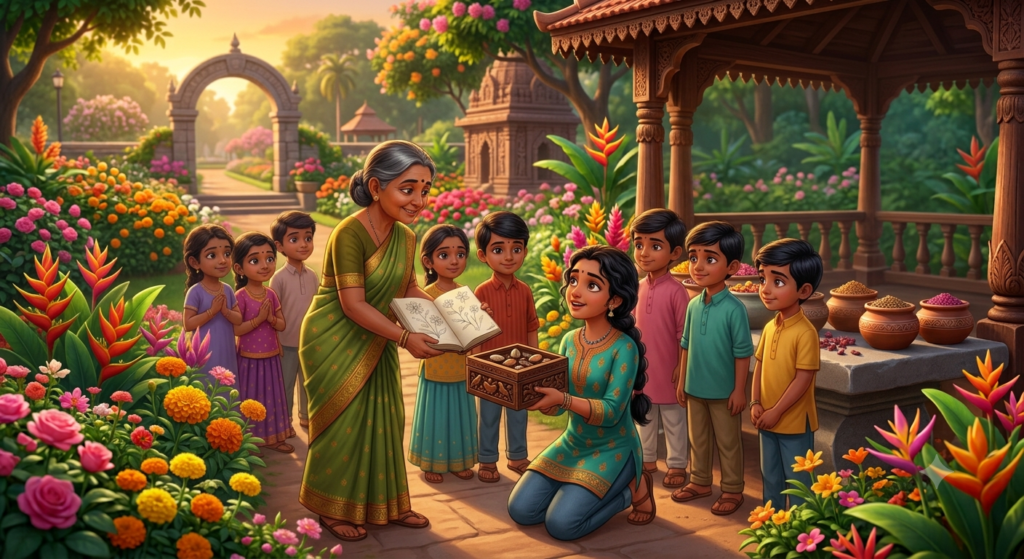
By evening, the gardener announced, “A Seed Bank Keeper needs four qualities—kindness, knowledge, confidence, and freedom from greed.” He smiled at Vaidehi and handed her the wooden seed box.
He then recited:
அன்பறிவு தேற்றம் அவாவின்மை இந்நான்கும்
நன்குடையான் கட்டே தெளிவு.
Aṉbaṟivu thēṟṟam avāviṉmai innāṉgum
naṉguḍaiyān kaṭṭē theḷivu.

Thiruvalluvar teaches that when we choose someone for responsibility, we should look beyond talent alone. A truly trustworthy person possesses love, wisdom, clarity of mind, and a heart free from greed.
As Vaidehi locked the seed box that evening, she realised the greatest responsibility is earned not by being the cleverest, but by being the most trustworthy.
Moral
When choosing someone for responsibility, look for character before talent. Kindness, wisdom, confidence, and selflessness build true trust.
Let’s read the same story in Tamil…
விதை வங்கியின் காவலர்
மைசூரிலுள்ள தாவரவியல் பூங்காவில், ஒவ்வொரு ஆண்டும் குழந்தைகளில் ஒருவரை “விதை வங்கியின் காவலர்” ஆகத் தேர்ந்தெடுப்பார்கள். பூக்களிலிருந்து விதைகளைச் சேகரித்து, அவற்றை சரியாக அடையாளம் கண்டு, அடுத்த பருவம் வரை பாதுகாப்பதே அந்தப் பொறுப்பு. பன்னிரண்டு வயது வைதேகி, இந்த ஆண்டாவது அந்த வாய்ப்பு கிடைக்க வேண்டும் என்று ஆவலுடன் இருந்தாள்.
தேர்வு நடந்த நாளில், தோட்டக்காரர் யாருடைய மதிப்பெண்ணையும் கேட்கவில்லை. அதற்கு பதிலாக, குழந்தைகள் எப்படி நடந்து கொள்கிறார்கள் என்பதை அமைதியாகக் கவனித்தார். வைதேகி ஒரு சிறுமிக்கு விதைகளை அடையாளம் காண உதவினாள், தனது குறிப்பேட்டை தயக்கமின்றி பகிர்ந்தாள், ஒவ்வொரு வழிமுறையையும் கவனமாகக் கேட்டாள், அரிய விதைகளைத் தனக்காக சேகரிக்காமல் அனைவருக்கும் சமமாக விட்டுக் கொடுத்தாள். வெற்றி பெறுவதைக் காட்டிலும் தோட்டத்தைப் பாதுகாப்பதே அவளுக்கு முக்கியமாக இருந்தது.
மாலை நேரத்தில் தோட்டக்காரர் அனைவரையும் அழைத்து, “இந்தப் பொறுப்பை ஏற்கும் ஒருவரிடம் நான்கு குணங்கள் இருக்க வேண்டும்—அன்பு, அறிவு, மனத் தெளிவு, பேராசையின்மை,” என்றார். பிறகு மரத்தால் செய்யப்பட்ட விதைப் பெட்டியை வைதேகியிடம் ஒப்படைத்தார்.
அவர் திருவள்ளுவரின் குறளைச் சொன்னார்:
அன்பறிவு தேற்றம் அவாவின்மை இந்நான்கும்
நன்குடையான் கட்டே தெளிவு
பொறுப்பை ஒப்படைக்க வேண்டியவரைத் தேர்ந்தெடுக்கும்போது திறமை மட்டும் போதாது; அன்பு, அறிவு, தெளிவு, பேராசையின்மை ஆகிய நற்குணங்களே உண்மையான நம்பிக்கைக்குரிய மனிதரை உருவாக்குகின்றன என்று திருவள்ளுவர் கூறுகிறார்.
அந்த மாலை விதைப் பெட்டியைப் பூட்டிய வைதேகி, “பெரிய பொறுப்புகள் புத்திசாலித்தனத்தால் மட்டும் கிடைப்பதில்லை; நல்ல குணங்களால் கிடைக்கின்றன,” என்பதை மனதில் பதித்துக் கொண்டாள்.
நீதி
பொறுப்பை ஏற்கத் தகுதியானவர் என்பது திறமைசாலி மட்டுமல்ல; அன்பு, அறிவு, மனத் தெளிவு, பேராசையற்ற நல்ல குணம் கொண்டவரே உண்மையான நம்பிக்கைக்குரியவர்.
எழுத்துப்பிரதி
Aṉbaṟivu thēṟṟam avāviṉmai innāṉgum
naṉguḍaiyān kaṭṭē theḷivu.
மூலத் தமிழ்
அன்பறிவு தேற்றம் அவாவின்மை இந்நான்கும்
நன்குடையான் கட்டே தெளிவு.
Breaking it down
- அன்பு – கருணையும் அக்கறையும் (Love and kindness)
- அறிவு – புரிதலும் ஞானமும் (Knowledge and wisdom)
- தேற்றம் – மனத் தெளிவும் துணிவும் (Clarity and confidence)
- அவாவின்மை – பேராசையின்மை (Freedom from greed)
- தெளிவு – நம்பிக்கையுடன் தேர்ந்தெடுத்தல் (The basis for choosing someone)
Trivia
இந்தக் குறள் தெரிந்து தெளிதல் அதிகாரத்தில் இடம்பெறுகிறது. ஒருவரிடம் பொறுப்பை ஒப்படைக்கும்போது, அவருடைய திறமையை மட்டும் அல்லாமல் அன்பு, அறிவு, மனத் தெளிவு, பேராசையின்மை என்ற நான்கு குணங்களையும் ஆராய வேண்டும் என்று திருவள்ளுவர் அறிவுறுத்துகிறார். இன்று நிறுவனங்களும் பள்ளிகளும் பேசும் character-based leadership என்ற கருத்தை இந்தக் குறள் அழகாக வெளிப்படுத்துகிறது.
This bilingual story from ancient Tamil wisdom makes timeless life lessons accessible to readers worldwide—whether you’re discovering these universal truths for the first time, or sharing the beauty of your Tamil heritage with friends from any culture. Reading both English and Tamil versions side by side helps build language confidence, cultural connection, and a lifelong love for meaningful stories—perfect for classrooms, families, and friends around the globe.
Record your kid telling this story and the Kural, and we will host it on our YouTube page.
<Youtube Link>